
Versigent said it anticipates sustained strength in its financial performance through the current quarter even as higher copper costs create short-term margin pressure, Chief Executive Officer Joe Liotine told Investing.com.
In its first earnings release following the spinoff from automobile software designer Aptiv, Versigent reported adjusted core profit of $203 million on revenue of $2.2 billion. Evercore ISI analysts characterized the results as having "handily beat" their expectations for the quarter.
The company also announced a $250 million share buyback authorization. Evercore analysts interpreted that pace as consistent with repurchases amounting to just under $1 billion over the next three years, if maintained.
Versigent reiterated its fiscal 2026 targets, forecasting revenue between $9.1 billion and $9.4 billion and adjusted earnings before interest, taxes, depreciation and amortization in a range of $950 million to $1.03 billion.
While management did not issue an explicit second-quarter numerical forecast, Liotine said the business expects "continued momentum in the second quarter, supported by disciplined execution and the same operating cadence we’ve outlined since the spin." At the same time, he highlighted that copper "is a near-term headwind."
On Wednesday, copper climbed above $14,000 per metric ton and traded close to the near-record levels reached in late January. ING analysts cited firmer Chinese demand and tightening conditions in refined copper markets for the price gains. Low inventories outside the U.S. and disruptions in key producing regions mean prices have become more sensitive to small changes in demand growth, ING said.
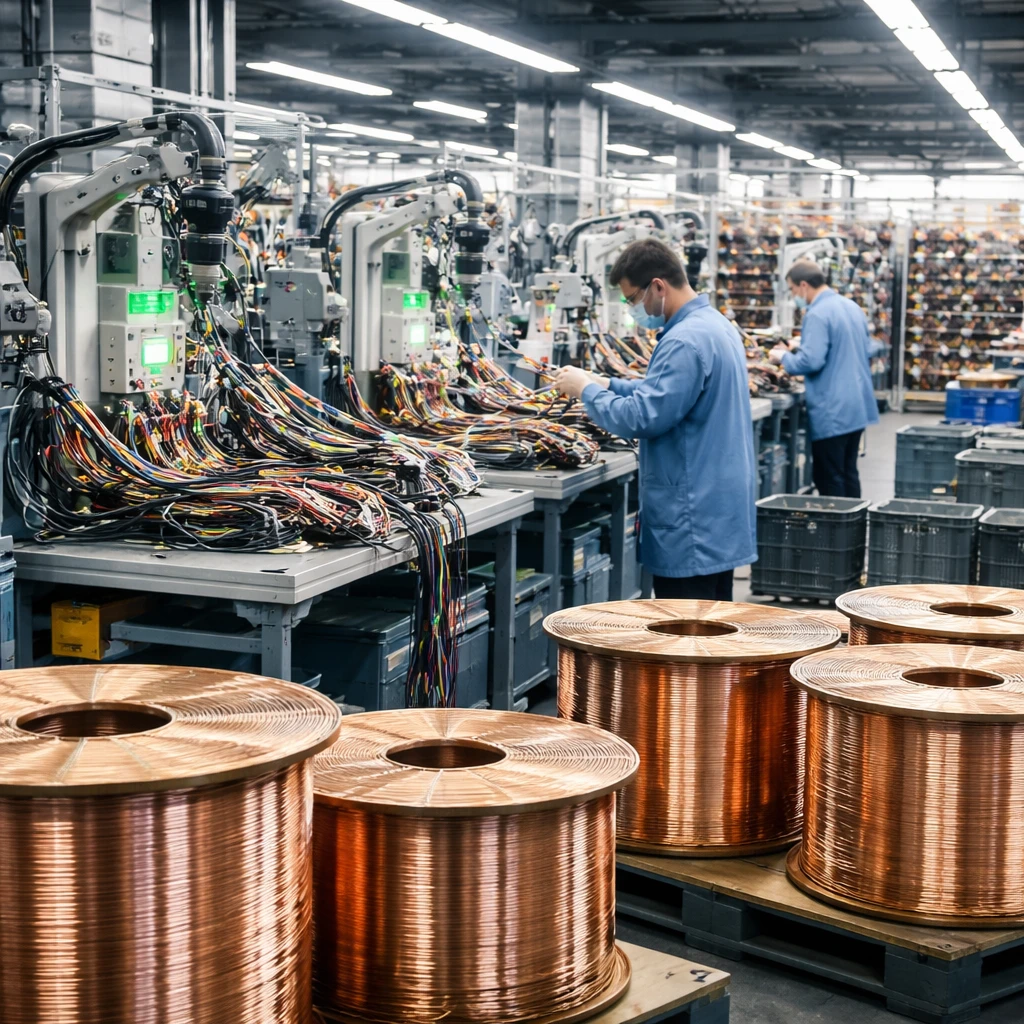
Versigent’s core operations focus on designing and manufacturing millions of miles of electric wiring harnesses. Copper is one of the company’s largest raw-material inputs, so rising metal prices directly increase production costs and can compress margins unless offset by commercial or operational measures.
"As we’ve seen prices move higher, that can create margin pressure in the period - but we’ve planned for this and are proactively managing through a combination of commercial mechanisms and operational actions," Liotine stated. He added that the company has "a good level of coverage with contract escalations but are impacted by some lag effects as prices continue to climb."
Executives previously told Evercore analysts they expect profit margins to improve sequentially through the remainder of 2026, once the company has "fully recouped" the copper recovery by the end of the second quarter or early in the following quarter.
Free cash flow was a focal point in the quarter. Following the separation from Aptiv, one-time separation expenses and capital expenditures produced negative free cash flow of $30 million in the first quarter. Liotine described that outcome as "not unusual in a year of transition, and it doesn't change how we view the full-year cash framework."
Versigent projected that it will retain between $200 million and $300 million in cash after covering operating expenses and capital investments for the year. Management expects cash generation to strengthen as separation costs decline and as product launches and productivity initiatives progress.
Post-spinoff, Versigent will concentrate on the design, manufacture and delivery of low- and high-voltage power electrical architectures, while Aptiv retained the business lines relating to advanced software, often used in assisted-driving applications.
Liotine emphasized that the company's automotive business remains the foundation of operations, but said the firm’s capabilities are transferable into other sectors such as aerospace, defense and industrial automation. He pointed to an energy storage order as a notable "win" in the first quarter.
Management said any expansion beyond the core automotive market will be selective. "Only where our engineering, manufacturing discipline and global execution translate directly and we have a clear right to win," Liotine said, adding that energy storage aligns with that approach.
Summary
Versigent posted strong first-quarter operating results after its spinoff, approved a $250 million buyback program and maintained fiscal 2026 guidance, while warning that rising copper prices are a near-term challenge. The company incurred a small negative free cash flow in the quarter due to separation costs and capex but expects cash generation to improve as transition costs decline and productivity gains take hold.
Key points
- Versigent reported adjusted core profit of $203 million on revenue of $2.2 billion in its first quarter as a standalone company and announced a $250 million share buyback authorization.
- Fiscal 2026 guidance remains intact: revenue of $9.1 billion to $9.4 billion and adjusted EBITDA of $950 million to $1.03 billion.
- Rising copper prices are a near-term headwind for manufacturing margins; the company is managing the impact via commercial escalators and operational actions, and expects margins to recover sequentially through 2026.
Risks and uncertainties
- Copper price volatility - Tightening refined copper markets, constrained supply and stronger demand make copper prices sensitive to small shifts in demand growth, which can pressure manufacturing margins for wiring harness producers like Versigent.
- Free cash flow and transition costs - One-time separation expenses and capital spending produced negative free cash flow in the quarter, and while management expects improvement, cash generation could remain constrained if separation costs or launch execution deviate from plan.
- Execution risk in diversification - Any moves into aerospace, defense, energy storage or industrial automation will be selective; the company must successfully translate automotive engineering and manufacturing capabilities to these sectors to realize wins.