
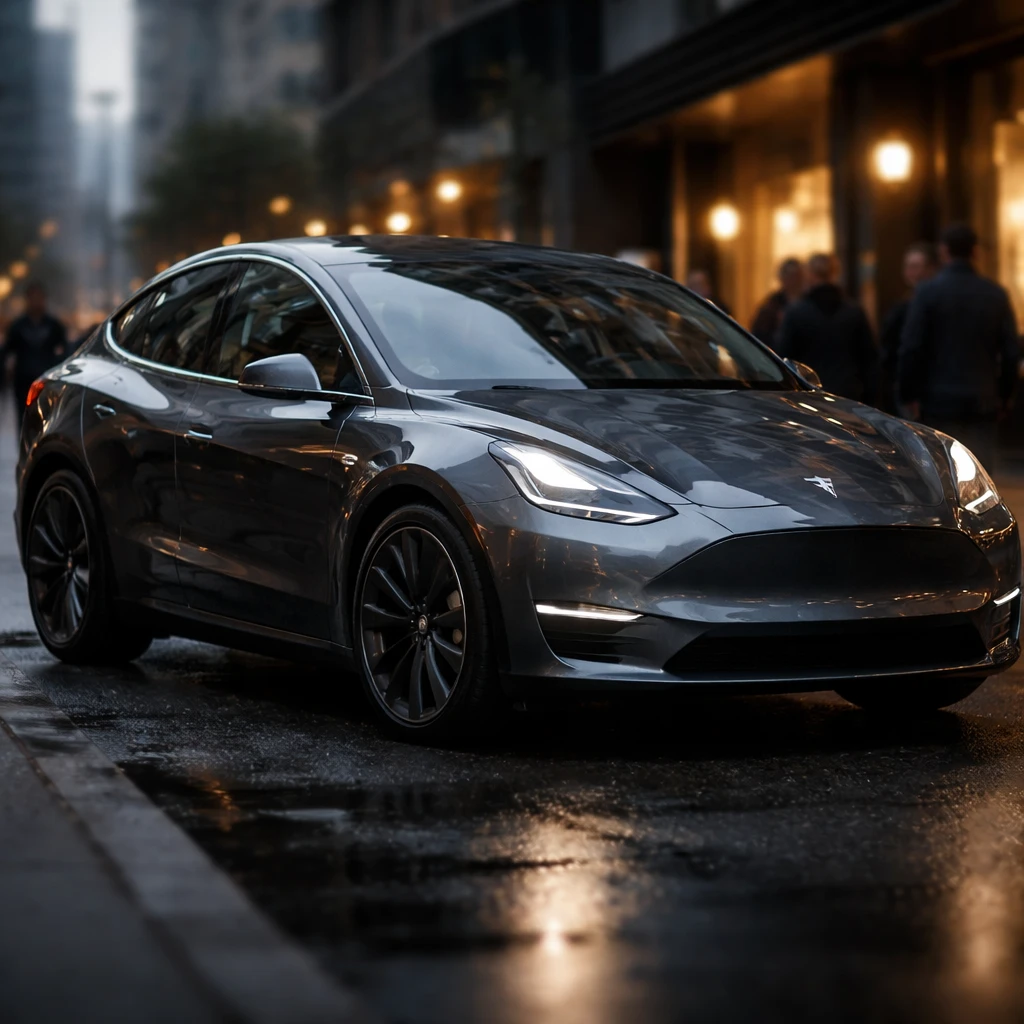
Tesla shares dropped -3.8% in morning trading today, changing hands at $394.43 as the pullback that began in recent sessions extended. The move came after Tesla raised prices on select higher-end Model Y configurations, increasing costs for some all-wheel-drive trims by $500 to $1,000 and bringing certain versions nearer to the $50,000 mark.
Investors reacted to the pricing announcement with concern that the higher sticker prices could reflect rising input costs or could dampen demand, potentially squeezing margins. The stock continued to trade lower after the adjustments as market participants weighed the implications for Tesla's core vehicle business, which remains the company’s largest revenue driver.
Sentiment was further pressured by two developments tied to Elon Musk. A federal jury rejected Musk’s claim that OpenAI had abandoned its original public-benefit mission, a legal outcome that contributed to negative sentiment around Tesla shares. In addition, market attention appears to be shifting toward other Musk-controlled ventures, including the anticipated SpaceX IPO, which some investors view as a competing investment opportunity.
On the brokerage front, Barclays placed a Hold rating on Tesla today, reflecting a cautious stance among analysts. Over the last three months Tesla's consensus remains a Hold, with 12 Buys, 12 Holds and five Sells, and an average price target of $403.86, according to the company consensus cited by market participants.
The wider market backdrop offered little support for Tesla. The S&P 500 was down -0.9% during the session, the Nasdaq fell -1.4% and the Dow Jones slipped -0.5%, as a risk-off mood took hold amid elevated bond yields and geopolitical uncertainty. EV peers were also broadly lower during the session, suggesting that macro pressure amplified company-specific concerns rather than offsetting them.
Analysts and investors noted that Tesla’s share price increasingly reflects a mixture of expectations: beyond vehicle sales, the market now prices in the company’s AI and robotics ambitions, such as robotaxis. Nonetheless, because vehicles remain Tesla’s largest business by revenue, any sign of softening demand or controversial pricing actions can carry outsized influence on the stock.
Intraday volatility was visible: shares traded in a range from a session high of $404.75 to a low of $393.63, with consistent selling pressure through the morning.
What this means
- Price increases on select Model Y trims triggered investor concern about demand elasticity and margin implications for Tesla’s core vehicle business.
- Musk-related headlines - a legal setback in the OpenAI dispute and the potential distraction of a SpaceX IPO - added to negative sentiment around the stock.
- Analyst caution and a broadly weaker market environment compounded pressure on Tesla shares, with the EV sector also trading lower.
Trading snapshot
- Morning decline: -3.8% to $394.43
- Model Y price increases: $500 to $1,000 on select all-wheel-drive configurations
- Consensus analyst mix (last three months): 12 Buys, 12 Holds, five Sells; average price target $403.86
- Major indices: S&P 500 -0.9%, Nasdaq -1.4%, Dow -0.5%
- Session range: High $404.75, Low $393.63
This combination of a disputed pricing move, negative Musk-related legal news, investor attention shifting to other Musk ventures, and a cautious analyst community helped create a challenging trading environment for the shares. While Tesla’s strategic bets beyond vehicles remain part of investor calculus, day-to-day stock moves still react strongly to signals about vehicle demand and pricing.