
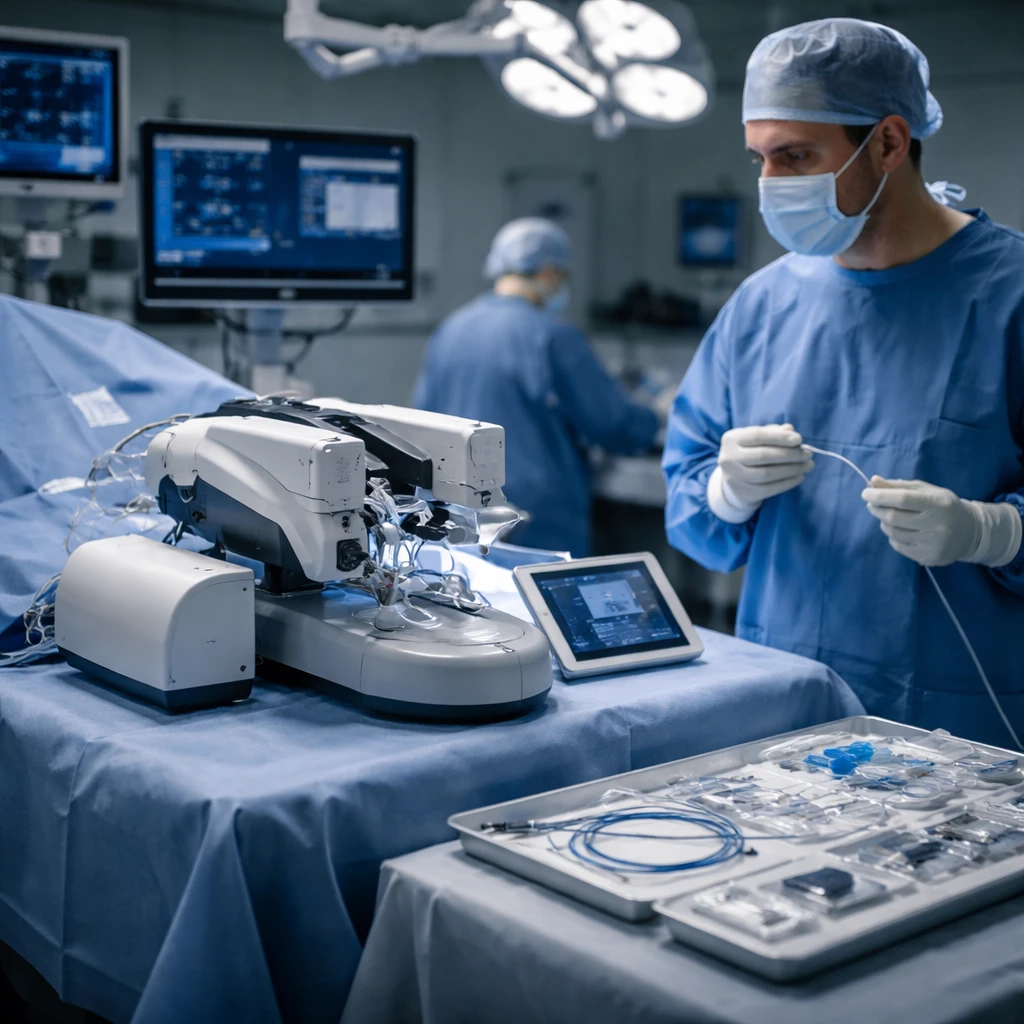
Shares of Microbot Medical Inc (NASDAQ:MBOT) declined 7.8% on Thursday after White Diamond Research published a bearish analysis questioning whether the company's LIBERTY Endovascular Robotic System can achieve commercial traction.
The research firm attached a $1 target to the stock and disclosed that it holds a short position. White Diamond said it spoke with surgeons who have experience with the LIBERTY system and found substantial reservations about the device's practicality in routine clinical use and its economic impact on hospital procedures.
Surgeon feedback and economics
In interviews cited in the report, an anonymous surgeon estimated the LIBERTY adds between $3,000 and $4,000 to the cost of a single procedure, and said that there is currently no reimbursement mechanism to cover that incremental expense. That surgeon also told the researchers that procedures take longer when using the robot and that it does not provide an accuracy advantage compared with manual techniques. The surgeon was quoted saying:
"it’s gonna be extra work for you. The case is gonna take longer. You could do this yourself without the robot faster, with equal accuracy. And it’s gonna cost you an extra $3,000."
The report also cites Dr. Charles Briggs of Tampa General Hospital, who told the researchers he employs the LIBERTY roughly once every week to week and a half. He indicated he is the only surgeon out of the hospital’s roughly 15 vascular surgeons who uses the device on a regular basis.
Device limitations and reimbursement challenges
White Diamond noted several technical and economic limitations. The LIBERTY system is only compatible with .014" guidewires, whereas most peripheral vascular procedures rely on .018" guidewires. Additionally, the research firm said the entire system - including the remote control and robotic drive unit - is disposed of after a single use, a factor that may add to per-case cost.
The report further highlights that the device lacks a dedicated reimbursement code. It also states the LIBERTY does not qualify for New Technology Add-on Payment status because, according to the authors, it has not demonstrated substantial clinical benefit for patients relative to standard procedures.
Company background referenced
White Diamond drew a comparison between Microbot Medical and XACT Robotics, another company founded by Microbot CEO Harel Gadot. The report states that XACT Robotics ceased operations in 2023 after failing to generate significant revenue despite having received FDA clearance.
Investors reacted to the report with a notable sell-off in the stock. The questions raised in the research note center on adoption hurdles, procedure economics and the absence of reimbursement support - all factors the report argues could limit commercial uptake.