
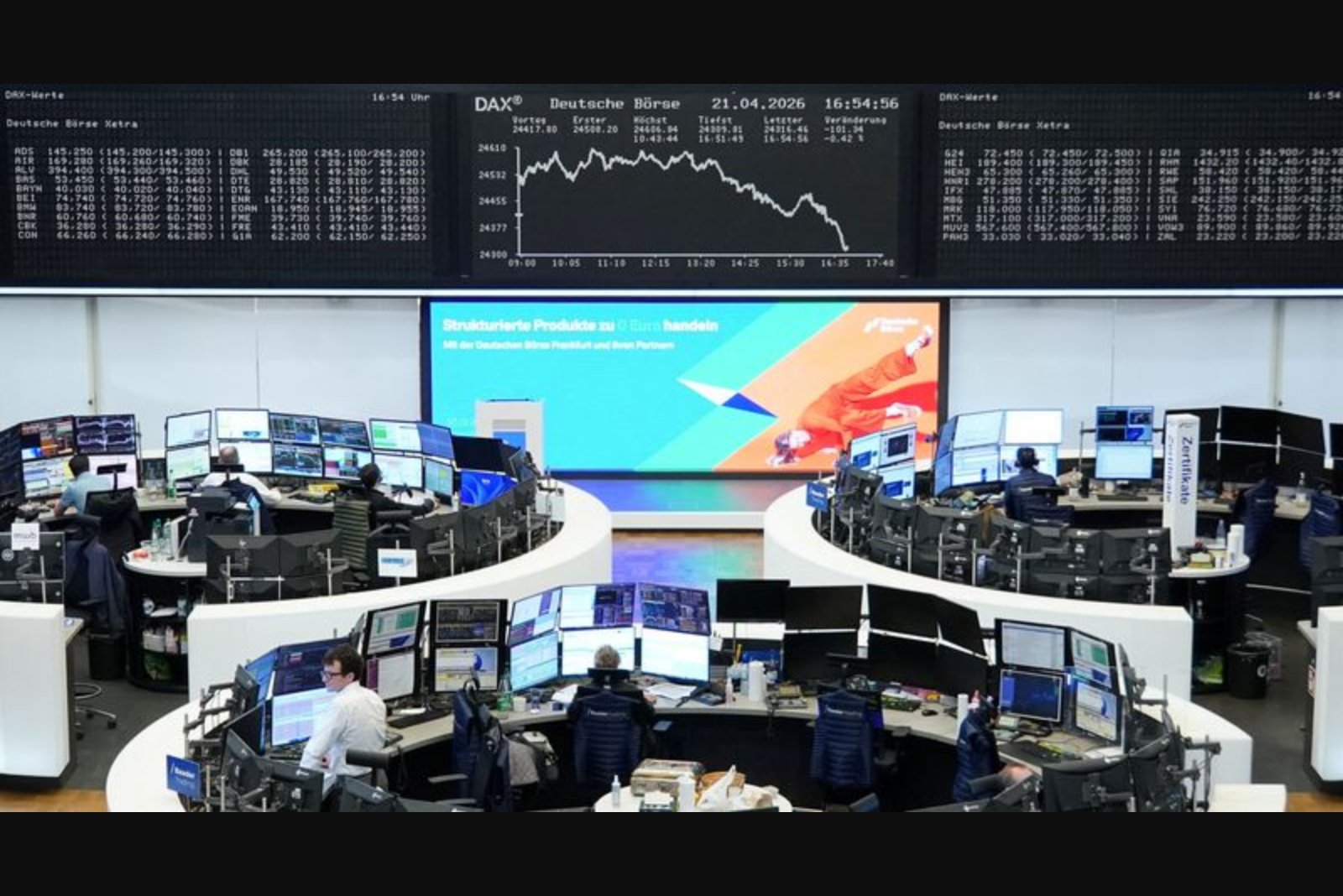
European shares edged down on Thursday as mounting shipping issues in and around the Strait of Hormuz and a steady flow of corporate earnings reports kept investors on edge.
The pan-European STOXX 600 index slipped 0.2% to 612.98 points as of 0718 GMT, signaling a broadly cautious tone across regional markets. Major bourses tracked the retreat, with Germany's DAX down 0.2% and London's FTSE 100 off 0.5% in early trading.
Market attention was focused on developments tied to the two-month-old war and related diplomacy. U.S. President Donald Trump made what appeared to be a unilateral announcement on Tuesday that the U.S. would extend a ceasefire until it had discussed an Iranian proposal in peace talks to end the conflict. At the same time, Iran tightened its control over the Strait of Hormuz, a strategic shipping lane, leaving investors uncertain about whether the fragile ceasefire would endure.
Those geopolitical strains fed through to commodity prices and sector performance. Brent crude futures rose more than 1% to trade above $100 a barrel, prompting a rally in energy names - the sector gained 0.6% - even as many other sectors slipped into negative territory.
Within the market, telecommunications stocks stood out as relatively resilient, posting a 1.2% gain, while banking shares lagged, declining 1.1% and sitting at the bottom of the sector leaderboard.
Investors were also digesting corporate results at the height of Europe’s earnings season, looking for indications of how the Iran conflict may be filtering through to business performance and forward guidance across industries.
Two large consumer groups delivered notable moves. Nestle's shares jumped 6% after the packaged-food giant reiterated its full-year organic growth guidance of 3%-4%. L'Oreal rose sharply as well, with shares up 8% after the French cosmetics group reported first-quarter sales growth of 6.7% - its strongest quarterly expansion in two years.
Overall, the market mood combined geopolitical jitters tied to shipping and oil with close scrutiny of company-level earnings, producing a mixed backdrop in which energy stocks benefited from higher crude while many other sectors retreated.
Context note: Investors continue to monitor both developments in the Strait of Hormuz and upcoming corporate reports to assess implications for earnings, cash flow and broader market sentiment.