
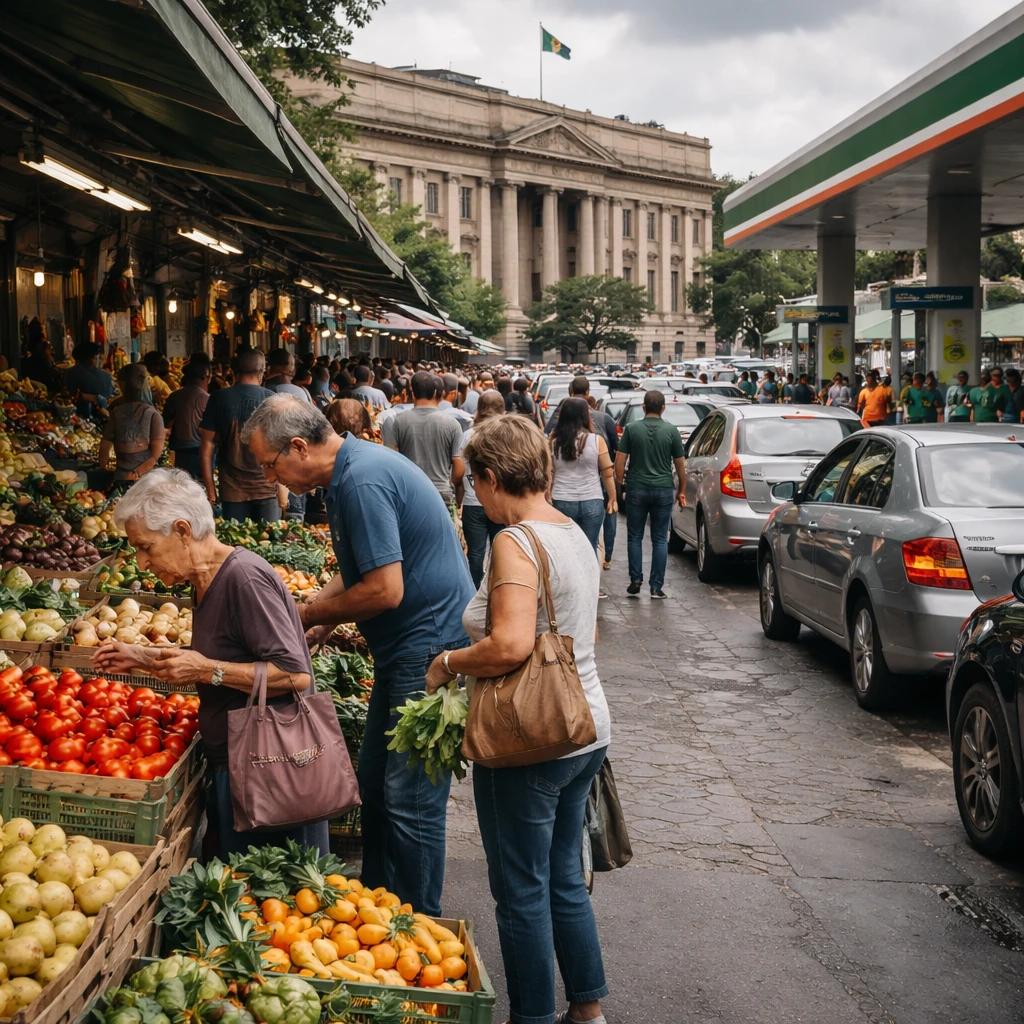
Brazil's consumer price index rose 0.89% in early April compared with the previous month, official figures released on Tuesday indicate. That monthly increase came in under the median 0.98% projection from economists surveyed by Bloomberg.
Measured on a 12-month basis, inflation stood at 4.37%. Authorities attributed the year-over-year gain in part to elevated food and fuel costs, which the data links to the war in Iran and the resulting upward pressure on oil prices.
The timing of the inflation report is notable: it arrived just before a scheduled central bank policy decision on Wednesday. Policymakers had trimmed the benchmark Selic rate by a quarter-point last month - the first reduction since 2024 - marking the start of an easing cycle.
Central bank officials have signaled they remain prepared to respond to recent price developments, and the published figures show inflation is still above the bank's 3% target. Against that backdrop, the authorities face a balance between sustaining an easing trajectory and addressing persistent inflationary pressures.
Separately, the government under President Luiz Inacio Lula da Silva has rolled out subsidies and debt relief measures aimed at consumers as the country approaches the October elections. Those fiscal actions are part of the broader economic environment in which inflation and monetary policy choices are unfolding.
Context and implications
The softer-than-expected monthly print reduces some near-term pressure on monetary authorities but does not resolve the underlying inflation gap relative to the 3% target. Food and fuel cost dynamics tied to geopolitical developments in the Middle East are cited as the primary contributors to the annual rate remaining elevated.
With the economy navigating an easing cycle that began with last month's Selic cut, officials have maintained that policy settings can be adjusted if price trends warrant further action.