
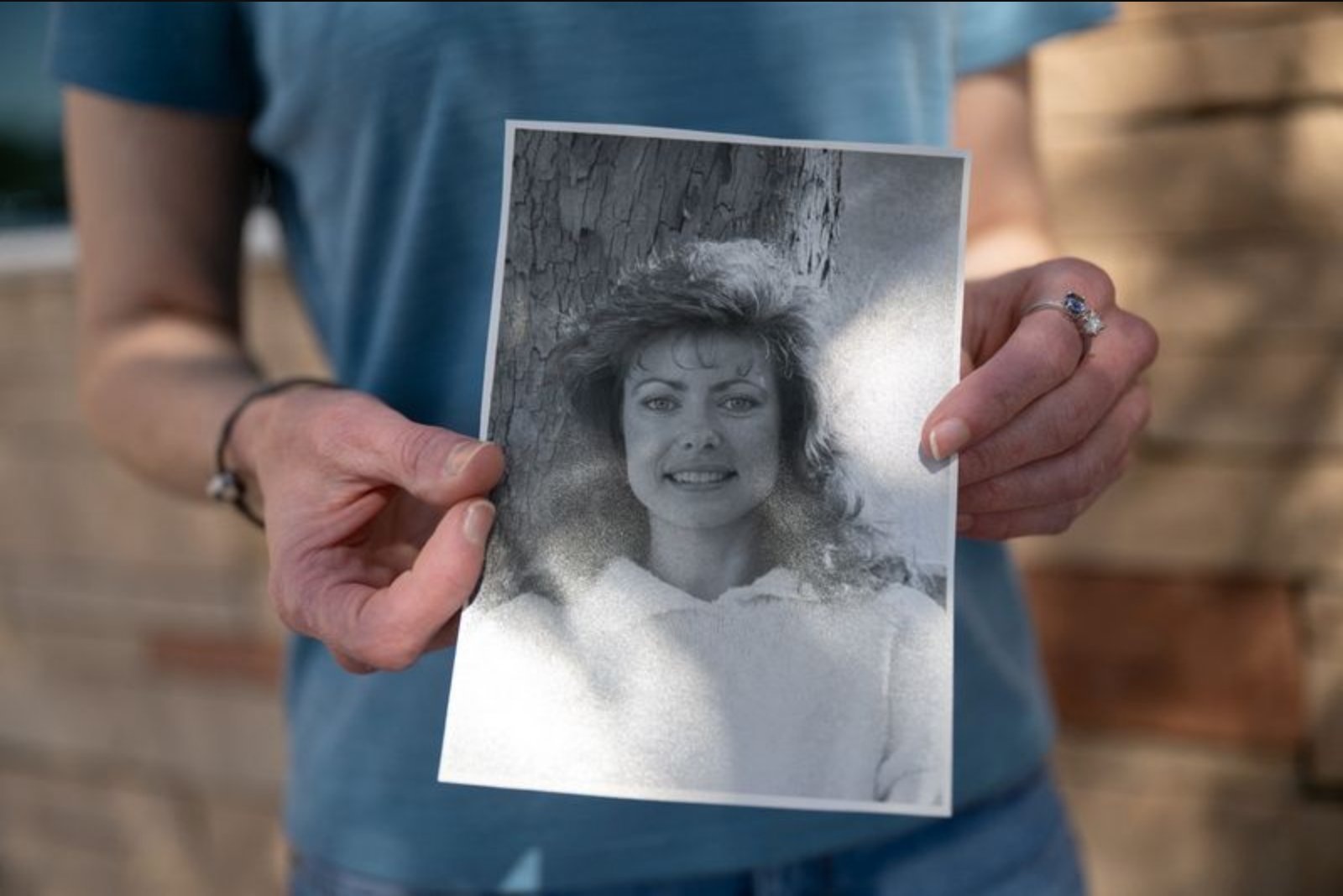
Tammy Blanton’s daughter, Mary Anne, describes a gradual unraveling in her mother’s life linked to long-term opioid use. Prescribed painkillers for migraines over decades, Tammy became increasingly isolated and disconnected from work and family, according to her daughter. During one two-year stretch, she averaged more than 200 pills a month, and a medical examiner later concluded that oxycodone and extended-release morphine, together with alcohol and anti-anxiety medications, contributed to her accidental death at age 58 in 2017.
When Purdue Pharma sought Chapter 11 protection in 2019 and negotiated a broad settlement to resolve litigation tied to its painkiller OxyContin, Blanton believed her mother’s experience would be eligible for compensation. Purdue acknowledged misconduct in connection with OxyContin’s marketing and pledged funds to address harms. Among the wider settlement landscape that has produced more than $57 billion in payments largely allocated to state and local governments, Purdue’s plan was unique in setting aside a material amount - roughly $865 million - explicitly for individuals harmed by opioids.
That individual fund was viewed by many as a last and best opportunity for victims to obtain redress. But the path to recovery has been obstructed by a series of procedural and evidentiary hurdles built into the bankruptcy settlement and its administration. An examination of the bankruptcy record spanning six years - including hundreds of filings, more than 100 letters from claimants, and interviews with victims and lawyers involved in the case - shows how delays and tightened proof requirements have left a substantial share of would-be beneficiaries facing denial or exclusion.
Documentation Rules and the Burden of Proof
At the heart of the problem is a documentation requirement incorporated into Purdue’s bankruptcy plan. The settlement negotiated with creditors reflects Purdue’s position that liability should be limited to harms directly attributable to products it manufactured. As a consequence, the fund’s rules require claimants to show that the opioid responsible for their harm was produced by Purdue rather than a generic competitor.
For many victims and their families, satisfying that requirement is difficult or impossible years after prescriptions were written and filled. Medical records commonly list the drug name prescribed - for example, oxycodone or morphine - but not the manufacturer. Insurers and pharmacy benefit managers often favor lower-cost generics, steering patients toward non‑branded alternatives. Pharmacies may change suppliers, and retention periods for records maintained by doctors, hospitals, pharmacies and insurers are frequently only a few years. As a result, the specific manufacturer of a particular prescription can be lost to time.
To me, it’s irrelevant whether Purdue manufactured her specific prescription - it ultimately came from them. Purdue told everybody that they were safe and not addictive. They created this mess.
That quote is from Mary Anne Blanton, summarizing her perspective on the causal link between Purdue’s conduct and her mother’s suffering.
How the Claims Process Unfolded
Purdue encouraged individuals to file claims after filing for bankruptcy. By the September 2021 filing deadline, nearly 140,000 people had submitted claims on a seven-page form that did not require extensive documentation. The pool of filers included many who were represented by counsel but also numerous individuals who applied without lawyers, including people struggling with addiction or unable to afford legal assistance.
The bankruptcy then extended over several years. The settlement negotiations occurred largely in confidential mediation and the case generated thousands of filings as it moved through appeals that ultimately reached the U.S. Supreme Court. The long-running process culminated in a reworked deal that materially narrowed the path for individual claimants to recover.
A trustee appointed to administer the individual compensation fund did not request claimants to provide records proving Purdue manufactured the drugs at issue until May 2025 - nearly four years after the claims deadline. The trustee set a 60-day deadline for submitting that proof. The delay in seeking documentation increased the likelihood that records would no longer be available from doctors, pharmacies or payers, because routine retention schedules often do not preserve such records for so many years.
An earlier iteration of the plan would have permitted people lacking prescription records to qualify for a $3,500 payment if they signed a sworn affidavit attesting they had used the drug. Individuals with documentation and who suffered greater harms could qualify for higher awards, up to $48,000, according to court filings. But after the appeals process, the revised settlement limited payouts to those who could produce records tying their prescriptions to Purdue-manufactured opioids. That change was not discussed openly at a court hearing - a development later reported by a news organization.
Negotiation Trade-offs and Legal Constraints
Attorneys representing large groups of claimants pushed for as flexible an evidentiary standard as possible, according to one lawyer involved in representing a cohort of roughly 30,000 victims. But those efforts collided with demands from other participants in the bankruptcy negotiations that claimants be required to present proof comparable to what would be required in ordinary litigation. The choice, as the attorney framed it, came down to accepting concessions in order to preserve the overall settlement or risking collapse of the deal.
Even with the current shortcomings in documentation rules, proponents of the settlement argued it still provides a more accessible alternative to pursuing individual lawsuits. Traditional litigation against Purdue or members of the Sackler family would have likely taken years, entailed high costs, demanded more detailed proof, and offered no certainty of success. The record shows, however, that no individual has yet succeeded in suing the Sacklers or Purdue personally for a claim rooted in addiction.
Outcomes So Far and Expected Recoveries
Judge Sean Lane in White Plains, New York, who is overseeing the Purdue bankruptcy, has already rejected more than 40% of the claims filed. In January, Purdue asked the bankruptcy court to expunge more than 57,000 claims from people who did not respond to the trustee’s May 2025 request for documentation. Hundreds of claimants sent letters to the court protesting the proposed dismissals, detailing confusion about the process and the practical difficulties of obtaining proof so long after the fact.
For those whose claims survive the documentation screening, recoveries are expected to be relatively modest on an individual basis. Purdue estimated in December that eligible claimants might receive approximately $8,000 or $16,000, depending on the duration of opioid prescriptions. Those estimates are contingent and could change - notably, if fewer claimants meet the tightened documentation threshold, the fixed pool of money earmarked for individuals could be divided among a smaller number of recipients, potentially raising individual awards.
Paper Trails That Run Cold
Purdue developed and initially marketed extended-release morphine under the brand MS Contin as well as extended-release oxycodone under the brand OxyContin - the same active drugs that Mary Anne says her mother took for years. Over time, other manufacturers obtained approval to sell generic versions of the same medicines, complicating the task of tracing which company produced pills dispensed to particular patients.
After her mother’s death, Mary Anne searched for records from doctors, hospitals and pharmacies to prove the pills Tammy had taken were manufactured by Purdue. She found gaps and dead ends. Her mother’s primary care physician legally destroyed the office records, she said, and hospital documents often failed to note the manufacturer. Arizona’s Medicaid program, which paid for most of Tammy’s prescriptions, required proof of next-of-kin status and other privacy-related documentation before releasing records - hurdles that blocked access.
Purdue has described its approach to documentation as accepting a variety of evidence, including prescription records, qualifying documents that reference Purdue opioids, and photographs of pill bottles. In a January court filing the company characterized its evidentiary requirements as flexible and less burdensome than what a plaintiff would need to establish in a lawsuit.
But for many claimants, the practical burden remains large. Michele Capozzi-Pollock of Massachusetts, whose husband died after long-term opioid use, expressed incredulity at the suggestion that pill bottles could serve as effective proof. She noted the impracticality of preserving years of containers and said her claim was denied after she failed to respond to a documentation request addressed to her late husband three years after his death.
How much time do I put towards this, and energy and money, just to get to the end and then have them say, 'No, denied'?
That question came from Capozzi-Pollock as she described the emotional and logistical costs of pursuing a claim, only to face procedural denial.
Claimants Raise Concerns and Seek Relief
When Purdue asked the court in January to expunge those claims that purportedly failed to respond to the trustee’s request, hundreds of victims wrote letters to the court decrying the move. The letters describe not only difficulty obtaining documentation, but also confusion about how the settlement and claims process worked in practice.
For example, an inmate at Huttonsville Correctional Center in West Virginia wrote on February 20 that he was at a loss about what to do because the pharmacy where he had filled prescriptions had closed years earlier. Another claimant, Michael Galipeau of Red Hook, New York, who has battled opioid addiction for almost two decades and later counseled others in recovery, received an email in January notifying him of an omnibus claims objection nearly six years after he filed. He said the notice was buried deep within a voluminous PDF attachment, and that it took several thousand pages to find the statement that his claim lacked substantiating documentation.
Galipeau attended a court hearing on February 26 in White Plains to express those concerns. During the session, he attempted to argue that the documentation requirements were overly restrictive. The presiding judge, according to observers, acknowledged widespread frustration among speakers about bureaucratic complexity and the absence of clear guidance, but ultimately agreed to Purdue’s request to dismiss nearly all of the 57,000 claims at issue. The judge declined to comment on the record.
Not Everyone Will Be Shut Out
Some claimants have been able to marshal the records needed to demonstrate that Purdue manufactured the opioids at issue. Jill Cichowicz of Richmond, Virginia, who lost her twin brother Scott to an overdose in 2017, said she expects to qualify for payment because she has records showing he was prescribed OxyContin. Cichowicz’s family also hired an investigator and preserved pill bottles listing Purdue as the manufacturer - steps that many families lack the resources to take.
Cichowicz observed that most people grappling with addiction do not maintain detailed records of prescriptions or create spreadsheets tracking what they take. Instead, many are focused on day-to-day survival, and they lack the documentation or the means to obtain it years later. Her observation underscores a central tension in the settlement: the evidentiary standard set by the deal may be congenial to those with the resources and foresight to preserve documentation, but it may exclude a substantial portion of people who were harmed and lack such records.
Where This Leaves Victims and the Fund
The Purdue settlement remains a consequential, but imperfect, vehicle for distributing funds to individual victims. It is shaped by a negotiation in which Purdue and its creditors sought constraints on liability, by the realities of litigation and bankruptcy procedure, and by the practical limits on record retention across the health care and pharmacy sectors. The combination of a long delay before documentation was requested and the requirement that only Purdue-manufactured opioids be eligible for compensation has produced a wave of denials and threatened dismissals.
For many claimants like Mary Anne Blanton and Michele Capozzi-Pollock, the result feels like a defeat after years of waiting for justice. For others such as Jill Cichowicz, the fund may provide some measure of redress. The distribution of relief will ultimately depend on how many claimants can meet the documentation standards established through the bankruptcy process, and on the court’s rulings about which claims may be dismissed.
As the court prepares to consider additional hearings scheduled for the spring and summer, the administration of the fund and the criteria for qualifying will remain central to whether the settlement fulfills its promise to individuals harmed by opioids, or whether procedural and evidentiary constraints outweigh the settlement’s stated purpose.
Summary
The Purdue Pharma bankruptcy and settlement set aside about $865 million for individuals harmed by opioids, but tightened documentation rules and long administrative delays have left many claimants unable to prove their prescriptions were manufactured by Purdue and at risk of exclusion. Nearly 140,000 people filed claims by the September 2021 deadline, but a trustee's May 2025 request for records and subsequent court actions have prompted objections and the proposed dismissal of more than 57,000 claims. Recoveries for eligible individuals are expected to be modest, with Purdue estimating potential awards around $8,000 or $16,000, while earlier plan iterations had allowed smaller payments via affidavit for claimants without records.
Key points
- Documentation requirement - The bankruptcy settlement requires individuals to show that Purdue manufactured the specific opioid they took, a standard that is difficult to meet years after prescriptions were filled due to routine record retention practices among doctors, pharmacies and insurers.
- Long delays and legal trade-offs - Nearly 140,000 people filed claims by September 2021, but a trustee did not request proof of Purdue manufacture until May 2025. Negotiations during the bankruptcy produced trade-offs that narrowed individual recovery options in order to secure the broader settlement.
- Modest individual recoveries - Purdue estimated eligible individuals could receive about $8,000 or $16,000 depending on prescription duration; earlier versions of the plan contemplated modest affidavit-based payments for those without records and higher awards for more serious harms.
Risks and uncertainties
- Record availability risk - Because many health care, pharmacy and insurance records are routinely destroyed or not retained for long periods, numerous claimants face the risk that they will be unable to produce the documentation required to qualify. This risk affects the ability of individuals to receive compensation from the fund.
- Legal adjudication uncertainty - The bankruptcy court’s rulings on claims objections and the scope of acceptable proof will determine how many claimants remain eligible, introducing uncertainty into both individual recoveries and the ultimate allocation of the fund.
- Administrative and procedural complexity - The lengthy administrative timeline and the timing of requests for documentation create practical hurdles for claimants, particularly those without legal representation or resources to obtain records years after prescriptions were dispensed.
Tags
- opioids
- bankruptcy
- pharma
- litigation
- compensation
Tickers
[]
Ticker sentiment
{}
News wire line
Thousands of claimants face denial from Purdue’s individual compensation fund after documentation rules and long delays make it difficult to prove that alleged opioid harm was caused by Purdue-manufactured pills.
Image prompt
A somber, realistic scene inside a dimly lit, cluttered bedroom that conveys loss and the long tail of opioid addiction: an aging woman’s empty chair by a small table scattered with faded medical paperwork, a few yellowed pill bottles, and a crumpled coroner-style report partially visible but unreadable; in the background a framed family photograph sits askew on a dresser; light from a single window casts soft shadows across the room; muted color palette with cool blues and grays to evoke melancholy and the passage of time; no text, no people directly visible, emphasizing objects as evidence of a life affected by prescription opioids.