
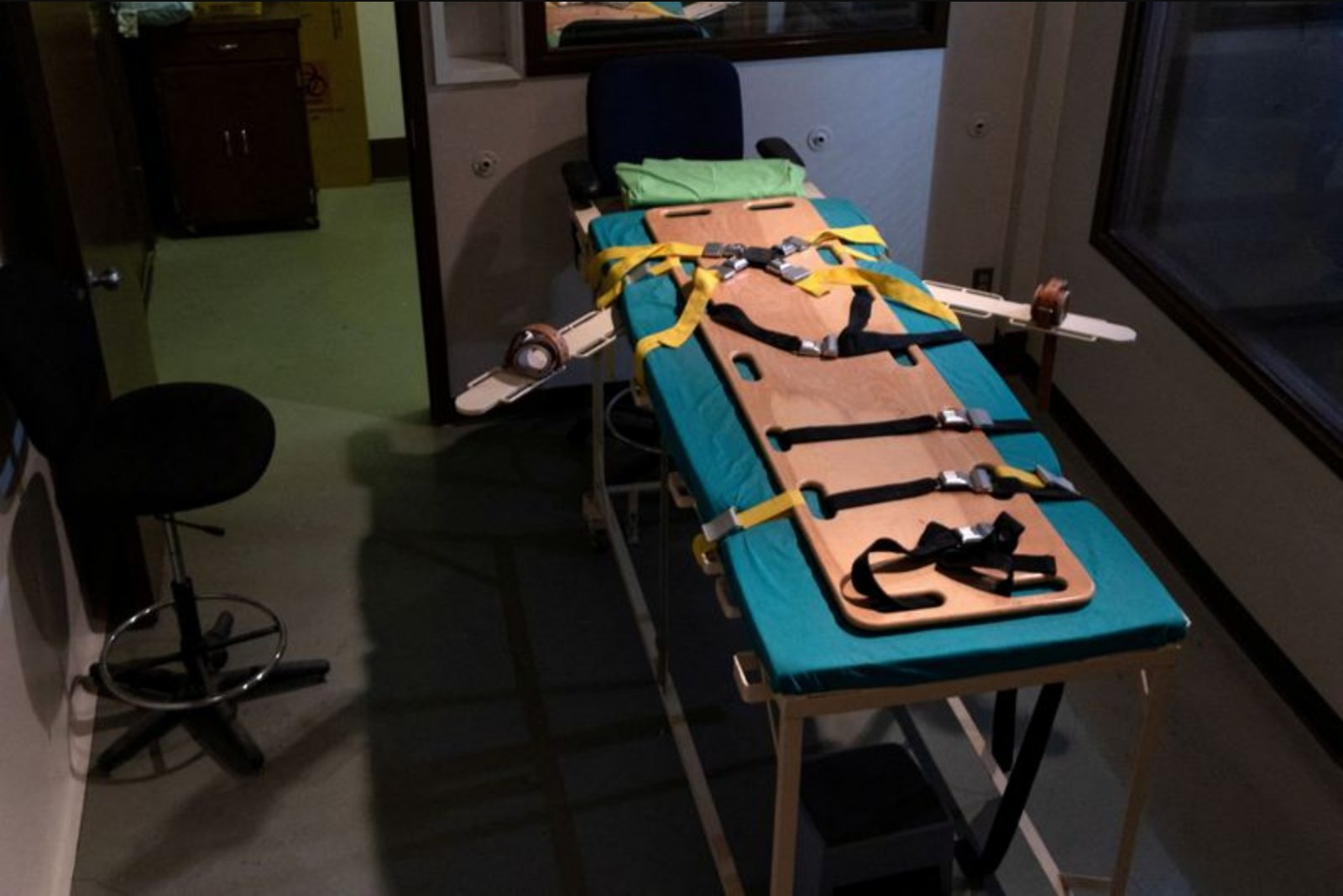
The Justice Department has instructed the federal Bureau of Prisons to broaden the roster of permitted execution techniques to include firing squads, electrocution and gas asphyxiation, citing difficulties in securing the drugs traditionally used for lethal injection. The guidance appears in a 52-page departmental report released as part of a wider effort to reinstate federal capital punishment on a longer-term basis.
Acting Attorney General Todd Blanche, in an introduction to the report, framed the shift as a response to what he described as the prior administration's moratorium, which he said had "undermined the federal death penalty and left victims, their families, their communities, and the Nation to bear the consequences." The document directs the Bureau of Prisons to modify its execution protocol "to include additional, constitutional manners of execution that are currently provided for by the law of certain states," pointing specifically to firing squads and electrocution as longstanding alternatives and to gas asphyxiation as a newer method.
The report notes that adding these alternatives will permit executions to proceed "even if a specific drug is unavailable." That rationale responds to a practical supply constraint: pharmaceutical companies increasingly refuse to sell drugs used in executions, and many U.S. prison systems that want to use barbiturates and similar agents have had to turn to smaller compounding pharmacies to produce replacements. The report references the federal government’s own single-drug protocol enacted in 2019 that uses pentobarbital, a powerful barbiturate, while acknowledging the operational challenges that have accompanied lethal injection.
Lethal injection remains the most common execution method in the United States, but authorities and critics alike have documented instances in which prison officials struggled to find a vein on a restrained prisoner, forcing abortive procedures. Opponents of lethal injection point to autopsy findings they say show the lungs of some executed people bore signs consistent with a prolonged, torturous drowning prior to death from pentobarbital.
The report arrives against the backdrop of an on-again, off-again federal death-penalty policy. Shortly before his first term ended in 2021, the president resumed federal executions after a roughly 20-year hiatus, overseeing the lethal injection of 13 federal prisoners in the final months of that term. By contrast, there had been just three federal executions in the preceding 50 years. Upon returning to the White House last year, the president rescinded a moratorium imposed by his predecessor, clearing the way for renewed federal pursuit of capital sentences.
Currently, the Justice Department is seeking the death penalty in cases involving more than 40 defendants nationwide, though none of those cases has yet reached trial and each prosecution can extend over many years. The report itself acknowledges that it may be several years before a new federal execution date could realistically be set.
Federal death row has been substantially reduced through commutations: the previous administration commuted the sentences of 37 of the 40 men then facing execution, leaving three inmates on federal death row. Those three are Dzhokhar Tsarnaev, convicted for the 2013 Boston Marathon bombing; Dylann Roof, convicted for the 2015 church murders in South Carolina; and Robert Bowers, convicted for the 2018 synagogue attack in Pittsburgh.
Legal challenges to changes in execution methods are typically arduous and prolonged. When a state or the federal government adopts a new protocol, condemned prisoners often seek to block it on Eighth Amendment grounds, arguing the method constitutes "cruel and unusual punishment." The U.S. Supreme Court has historically rejected such challenges and has never found a method adopted by a jurisdiction to be unconstitutional. That said, some methods under renewed consideration - including firing squads and electrocution - have not been evaluated by the high court since the 19th century, and the court has not yet agreed to hear litigation over gas asphyxiation.
Practical developments at the state level have already influenced the federal calculus. In 2024 Alabama executed an inmate by forcing nitrogen into the airways through a face mask, suffocating the prisoner; that method has since been adopted by Arkansas, Louisiana, Mississippi and Oklahoma. Five states list firing squads among their options, and Idaho is set to designate the firing squad as its primary execution method in July. South Carolina carried out the first U.S. execution by firing squad in 15 years last year.
Opponents of the expanded federal options criticized the Justice Department’s decision. Cassandra Stubbs, director of the American Civil Liberties Union’s Capital Punishment Project, said the department "embraces forms of execution that have been widely denounced for their cruelty and unnecessary infliction of extreme pain." Senator Dick Durbin, ranking member on the Senate Judiciary Committee, called the death penalty "barbaric" in a statement and described it as "a cruel, immoral, and often discriminatory form of punishment," adding that "state-sanctioned killing is not justice" and warning the actions "will be remembered as a stain on our nation’s history."
The report is presented as a legal and operational blueprint to allow the federal government to carry out capital sentences despite pharmaceutical bottlenecks and changing state practices. It explicitly cites state laws that provide for older methods and the recent introduction of a gas asphyxiation method pioneered in Alabama in 2024. Beyond the policy and legal dimensions, the memo recognizes the practical difficulty of scheduling federal executions in the near term, given the lengthy timelines of criminal trials and appeals and the time it takes for prisoners to exhaust legal remedies.
In sum, the Justice Department’s directive widens the federal toolbox for carrying out capital sentences, combining historically used methods with a gas-based technique that has emerged only recently at the state level. The department frames the change as a response to logistical constraints and as a restoration of tools available under certain state laws, even as the shift is likely to prompt extended litigation and fierce political debate.
Key points
- The Justice Department's 52-page report orders the Bureau of Prisons to add firing squads, electrocution and gas asphyxiation to federal execution protocols so executions can proceed if lethal-injection drugs are unavailable.
- The move follows recent state-level developments, including Alabama’s 2024 execution by forced nitrogen asphyxiation and the revival of firing-squad laws in multiple states; Idaho is set to make firing squads its primary method in July.
- Sectors most directly affected include pharmaceutical suppliers and prison systems that source execution drugs, as well as legal services and state corrections departments that handle evolving protocols and litigation.
Risks and uncertainties
- Protracted legal challenges - Changes to execution protocols typically spawn lengthy court battles invoking the constitutional ban on "cruel and unusual punishments," which can delay any federal executions for years; this affects the judiciary and corrections budgets.
- Supply-chain and procurement constraints - Ongoing refusal by pharmaceutical companies to supply execution drugs, partially tied to compliance with an EU ban, has pushed prisons toward compounding pharmacies and alternative methods, creating operational and regulatory uncertainties for correctional systems and suppliers.
- Reputational and political backlash - The adoption of methods criticized as cruel could intensify public and legislative scrutiny, influencing policy, procurement behavior, and broader political risk for administrations pursuing federal capital punishment.