
Economy April 28, 2026 12:27 PM

U.S. and Croatia Sign Protocol Modifying 2022 Income Tax Treaty

Agreement updates key tax articles and will be sent to the U.S. Senate as part of the ratification process

By Jordan Park
U.S. and Croatia Sign Protocol Modifying 2022 Income Tax Treaty

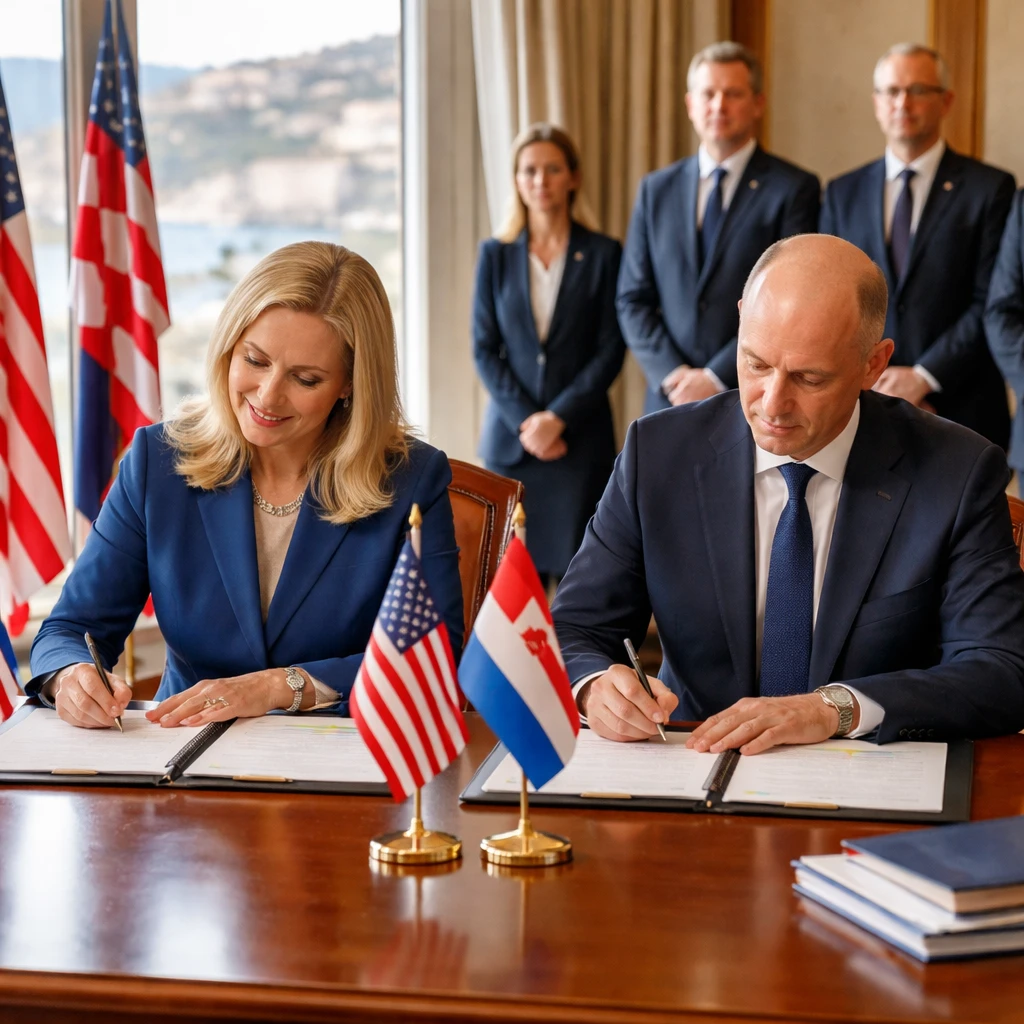
U.S. Ambassador to Croatia Nicole McGraw and Croatia's finance minister signed a protocol amending the 2022 income tax treaty between the United States and Croatia on the sidelines of the Three Seas Initiative Summit in Dubrovnik. The protocol makes three specific changes to the original treaty, will be transmitted with the treaty to the U.S. Senate for advice and consent, and will take effect after both countries complete domestic procedures and notify one another.

Key Points

  • A protocol amending the December 7, 2022 income tax treaty between the U.S. and Croatia was signed in Dubrovnik during the Three Seas Initiative Summit.
  • The protocol contains three specific changes: a treaty-based definition of "active conduct of a trade or business" for Article 22; revisions to Article 23 on relief from double taxation; and an amendment to Article 24 to align with rules in the One Big Beautiful Bill Act of 2025. These changes aim to bring the treaty into conformity with current U.S. tax treaty policies.
  • The protocol and the 2022 treaty will be transmitted to the U.S. Senate for advice and consent to ratification and will enter into force only after both countries complete domestic procedures and notify one another. Sectors likely affected include cross-border taxpayers, multinational businesses operating between the U.S. and Croatia, and government tax and finance operations.

U.S. Ambassador to Croatia Nicole McGraw and Croatia's Minister of Finance, Zdravko Ćorić, signed a protocol on Tuesday that modifies the income tax treaty concluded between the United States and Croatia on December 7, 2022. The signing took place during the Three Seas Initiative Summit in Dubrovnik.

The protocol updates the 2022 treaty - the first income tax treaty between the two countries - and was described by U.S. officials as necessary to align the agreement with current U.S. tax treaty policy.

Transmission to the U.S. Senate

Ambassador McGraw said the protocol will enable the Trump Administration to transmit the 2022 tax treaty together with the protocol to the U.S. Senate for its advice and consent to ratification. That transmission is a formal step in the U.S. domestic process for treaty approval.

U.S. Treasury assessment

Treasury Assistant Secretary of Tax Policy Kenneth J. Kies stated that the protocol brings the 2022 tax treaty into conformity with current U.S. tax treaty policies. The administration's assessment highlights the protocol's role in updating technical and policy elements of the original agreement.

Three targeted amendments

  • First, the protocol adopts a treaty-based definition of the phrase "active conduct of a trade or business" for the treaty's Article 22.
  • Second, it revises rules in Article 23 concerning U.S. obligations to provide relief from double taxation.
  • Third, it amends Article 24 to coordinate the treaty with rules enacted in the One Big Beautiful Bill Act of 2025.

The protocol will be transmitted alongside the 2022 treaty to the U.S. Senate. It will enter into force after both countries notify each other that they have completed their respective domestic procedures.


This article presents the facts of the signing and the stated next steps in the treaty process, including the planned transmission to the U.S. Senate and the requirement that both nations complete domestic procedures before the protocol becomes effective.

Risks

  • The protocol requires transmission to and advice and consent from the U.S. Senate before U.S. ratification steps proceed - the timing and outcome of that process are pending, which affects when treaty changes will take effect. This uncertainty impacts cross-border taxpayers and firms relying on the treaty provisions.
  • The protocol will only enter into force after both countries complete their domestic procedures and exchange notifications. Any delay or variation in domestic approval processes in either country could delay implementation and affect entities planning based on the amended treaty.
  • The amendments revise provisions related to relief from double taxation and definitions central to tax treatment. How those revised rules are applied in practice may create transitional uncertainty for taxpayers and advisors until implementing guidance or practice stabilizes.

More from Economy

Justice Department Brings Second Indictment Against Former FBI Director James Comey Apr 28, 2026 EPD CEO Signals Bigger Supply Shock Risk from Strait of Hormuz Disruption Apr 28, 2026 Lula to Roll Out Program to Rework Over 100 Billion Reais of Household Debt Apr 28, 2026 Shell CEO Warns Oil and LNG Shortfalls Could Persist Into Next Year Apr 28, 2026 U.S. Orders Pause on Some Shipments to Hua Hong, Citing Advanced Chip Risks Apr 28, 2026