
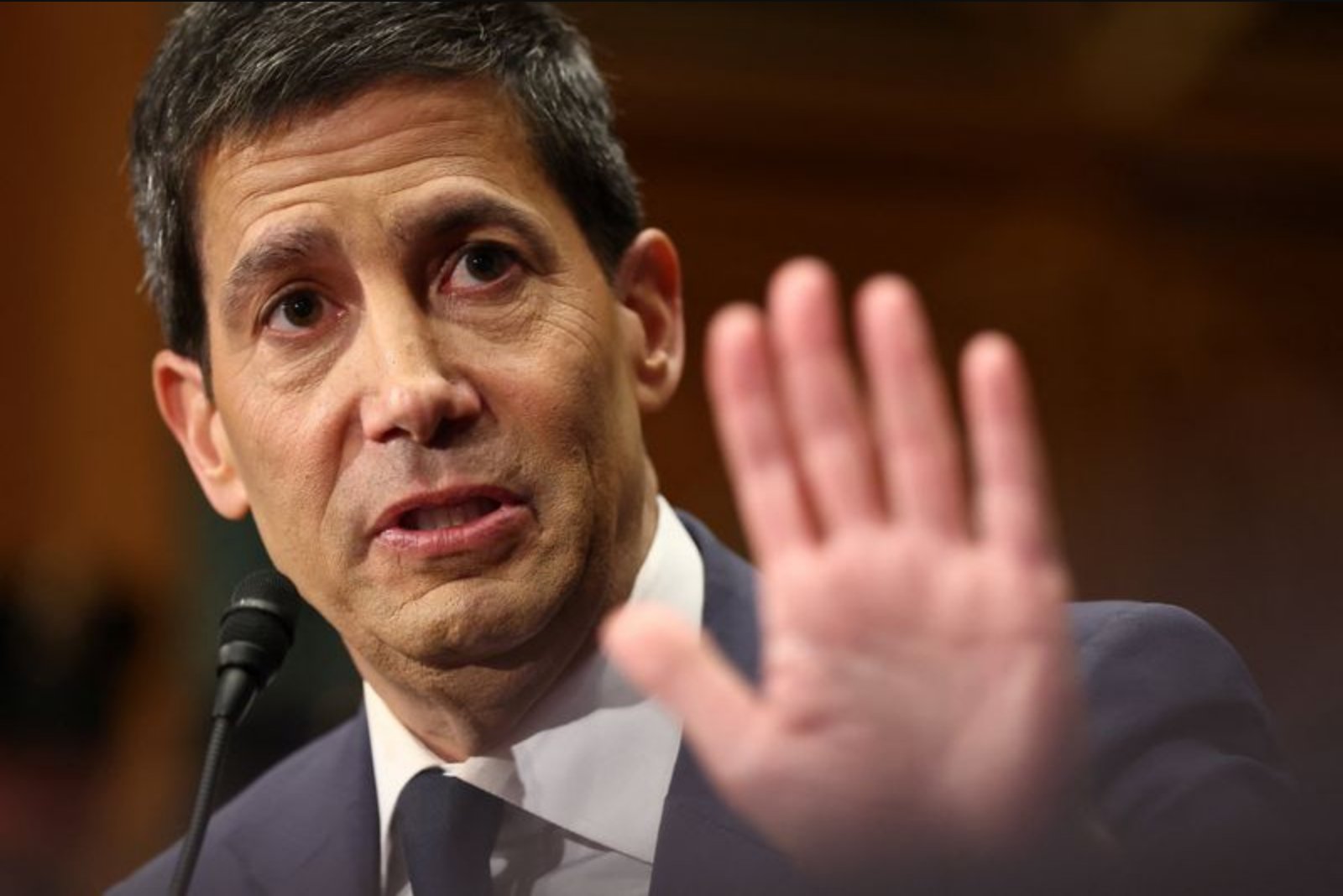
NEW YORK, April 21 - Markets were lower on Tuesday as Kevin Warsh, President Donald Trump’s candidate to lead the Federal Reserve, appeared before the U.S. Senate for a confirmation hearing. Warsh’s testimony drew close attention from investors and market analysts because he has publicly questioned the Fed’s market role and has said he would seek to shrink the central bank’s balance sheet.
During the hearing, Warsh pledged to work with the administration to support a strong U.S. dollar and urged what he termed "regime change" that would incorporate a new method for controlling inflation. His remarks on the balance sheet and the Fed’s toolkit were a focal point for market participants assessing future policy direction.
The question-and-answer session was also affected by late-morning news that Iran had not confirmed its attendance at a second round of peace talks with the United States. That development pushed oil prices higher and interrupted a modest rally in U.S. stock indexes that had been underway earlier in the session.
Market reaction and immediate context
Traders monitored both the substance of Warsh’s responses on monetary policy and the tone of lawmakers’ questions. The combination of uncertainty about how steadfastly Warsh would pursue balance-sheet reduction and the market move in oil contributed to an overall softer tone in equities and rising interest rates through the hearing.
Analyst and strategist responses
Market strategists offered varied interpretations of Warsh’s testimony and its implications for rates, equities and policy independence.
Mark Hackett, chief market strategist at Nationwide Investment Management Group in Philadelphia, said the market softness and rising rates during the hearing were driven largely by debate about quantitative easing and uncertainty over the Fed’s future direction given Warsh’s prior statements. He added that the market had run hard earlier in the month and that investors were likely pausing amid earnings-season uncertainty. He said:
“The market has been softening and rates rising through the hearing, mostly due to the discussion on quantitative easing. There has been uncertainty on which direction the Fed with head based on his previous statements. This, combined from some exhaustion from the 9% month to date rally and uncertainty around earnings season, is causing a well-earned and likely temporary pause in the equity market.”
Walter Todd, president and chief investment officer at Greenwood Capital in Greenwood, South Carolina, characterized the Senate exchanges as containing a fair amount of political positioning from senators, while crediting Warsh for steering the discussion back to monetary policy issues. Todd highlighted the potential market implications of a Fed that reduced reliance on the balance sheet as a policy instrument, noting the significance of such a framework shift since the financial crisis:
"It’s a lot of typical political positioning by the people asking the questions. And I think Warsh has done a pretty good job of trying to bring the conversation back to monetary policy.
"His discussion that’s happening right now around the balance sheet is very interesting, and on the surface, it may be taken as a net negative for markets if they believe he’s going to follow through. He’s talking about doing it deliberately and slowly and over many years and all these things.
"But the concept that the Fed under his leadership is going to move away from using the balance sheet as an instrument to implement policy would be quite a significant change from the framework we’ve seen since the financial crisis."
Noel Dixon, senior macro strategist at State Street in Boston, viewed Warsh as likely to tilt the Fed toward a dovish stance in practice, describing a potential coalition within the Board of Governors that could lean toward easing. Dixon flagged sensitivity to market reactions as a factor that could still produce rate cuts later in the year and noted Warsh’s responses to questions about low-rate scenarios as noncommittal, which Dixon interpreted as preserving flexibility for potential future cuts:
"With Warsh, you’re going to have a dovish leaning Fed. I think there would be a coalition within the Board of Governors – (Michelle) Bowman, (Christopher) Waller, (Stephen) Miran and then Kevin Warsh and that’s four out of seven Board of Governors – that will be leaning dovish.
"There is also (John) Williams, who’s very sensitive to stock market activity. So if the markets aren’t happy with the fact that we don’t get cuts, and you get an adverse reaction in tech companies, Warsh is going to react. So there is a coalition within the Fed Board that would possibly put some cuts through, maybe a cut or two by the end of the year. I think that is still on the table."
"The other thing that struck me was when a senator asked him if he would lower rates to 1% -- I guess Trump had indicated that he would like to have rates below 2% -- Warsh didn’t really say no to that. He didn’t say that it would increase prices. He kind of leaned on it and said there would be a lagged effect, and he was just very non committal to that. So it’s almost like -- just reading between the lines -- he’s giving himself space to maintain possible justification for rate cuts by the end of the year."
Eric Parnell, chief market strategist at GVA Wealth Management in Berwyn, Pennsylvania, emphasized the performative element of Washington activity, saying political actors use these hearings to articulate policy priorities. He said observers should expect a transition toward a new Fed chair in an orderly manner and that investor concerns about the Fed’s independence and balance-sheet management remain central issues to monitor into the second half of the year:
"The activity out of Washington is always worthwhile to watch because there’s a theatrical aspect to it, of course, in terms of making sure that the policy initiatives that different politicians want to express, this is their opportunity to do that.
"We’ve seen this before. We’re likely to see it again in the future. Once the positions have been established and priorities have been set in terms of congressional oversight and of the whole process and how the Fed’s going to move forward, it’s our expectations that from the middle of May that we’ll be transitioning in an orderly way to a new Fed chair.
"One of the more important things that we’ll want to watch as we go through the second half of the year is that there’s been a lot of investor questions around the independence of the Fed going forward and how the Fed’s going to handle the balance sheet as well as interest rate policy."
Takeaway
Warsh’s Senate appearance heightened investor focus on whether the Fed’s future leadership would prioritize balance-sheet reduction and how quickly any changes might be implemented. Combined with the late-morning development around Iran and the resulting uptick in oil, the hearing contributed to a softer tone in markets and higher rates as traders weighed the interplay between policy signaling and geopolitical news.