
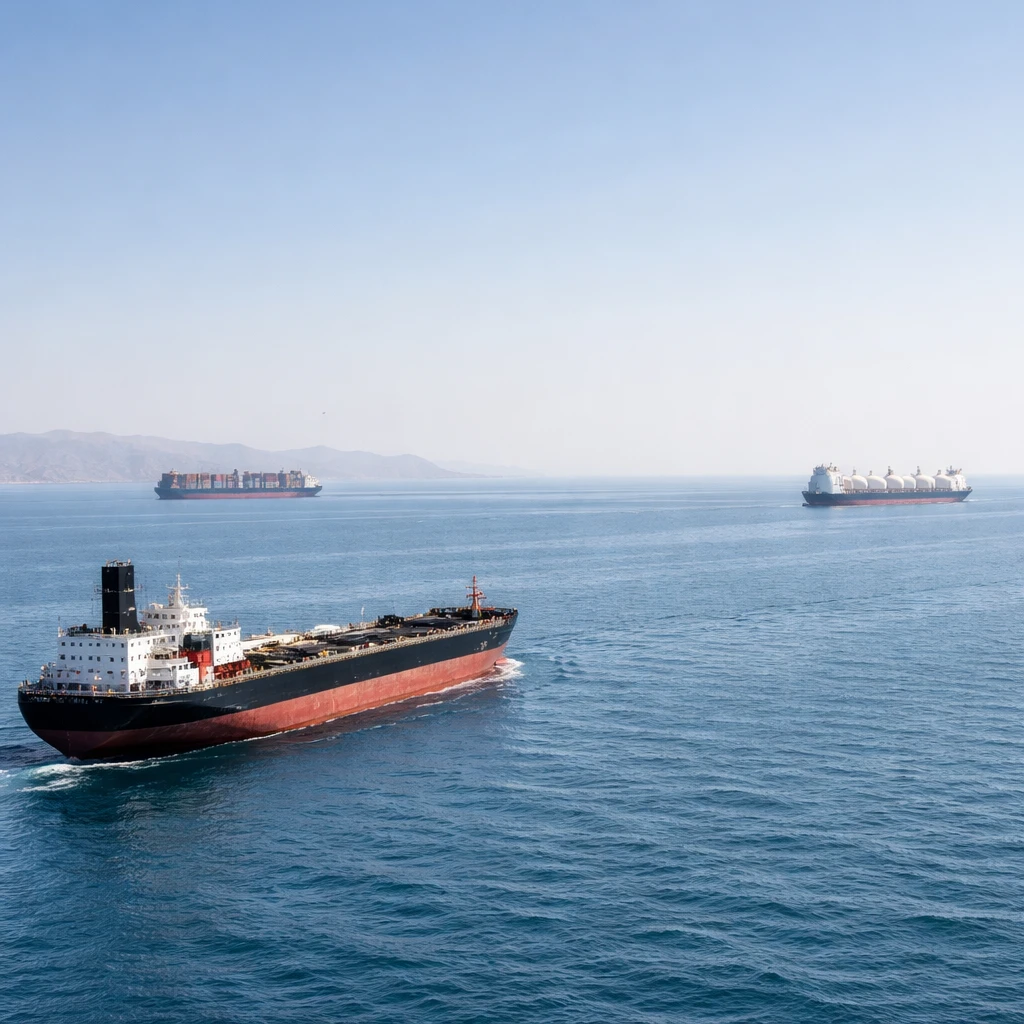
Shipping movement through the Strait of Hormuz remained severely constrained on Tuesday, with just three vessels reported to have crossed the waterway in the preceding 24 hours, according to ship-tracking data cited in reporting on Tuesday.
Ship tracking on the MarineTraffic platform showed that the Ean Spir, a products tanker, transited Hormuz on Tuesday after calling at a port in Iraq. The Lianstar, recorded as a cargo ship, also passed through the strait departing from an Iranian port, according to the same tracking records. Satellite analysis by data analytics firm SynMax indicated that the Meda, a liquefied petroleum gas tanker, managed to cross the strait on Monday on its second attempt to leave the Gulf after an earlier turnback.
Those three transits are a small share compared with normal activity. Before the U.S. and Israel's war on Iran began on February 28, roughly 140 ships used the passage each day. There was a temporary uptick in vessel movements after Iran briefly declared the strait open on Friday, with more than a dozen tankers recorded passing through in that interval, but the broader standstill has largely resumed.
The situation drifted toward renewed confrontation on Tuesday as the ceasefire between the U.S. and Iran appeared in jeopardy. Iran publicly vowed to retaliate for the U.S. seizure of one of its vessels and said it would not participate in new peace talks, raising the prospect of further maritime tension.
Complicating safe passage, Iran's army reported that an Iranian tanker entered Iranian territorial waters from the Arabian Sea on Monday with assistance from the Iranian Navy. The army statement said the move occurred despite what it described as repeated warnings and threats from the U.S. naval task force operating in the area.
Underlying the stand-off is a U.S. blockade of Iranian ports. That blockade has prompted Iranian authorities to uphold their own restrictions on traffic through the strait. The channel is a strategic artery for energy flows - it typically handles roughly one-fifth of the world\'s oil and liquefied natural gas supply - meaning the disruption carries significance for markets reliant on those flows.
Quick summary
- Only three vessels crossed the Strait of Hormuz in the past 24 hours.
- Ean Spir, Lianstar and Meda were the vessels recorded transiting.
- Activity remains far below the roughly 140 daily transits seen before Feb. 28 and follows a brief period when Iran declared the strait open.
Key points
- Maritime traffic is sharply reduced - impacting oil and LNG shipment routes and maritime logistics.
- Naval actions and port blockades by the U.S. and reciprocal Iranian measures are central to the current restrictions.
- Even short windows of openness produced limited vessel movement, illustrating fragile conditions for commercial shipping.
Risks and uncertainties
- Renewed hostilities could further limit tanker and LNG carrier transits - a direct risk to energy supply chains and related markets.
- Escalation or operational incidents between naval forces may prolong port restrictions and shipping disruptions - affecting maritime insurance and freight costs.
- Statements by Iran rejecting new peace talks and vowing retaliation add uncertainty to the durability of any ceasefire - complicating planning for energy and logistics firms.