
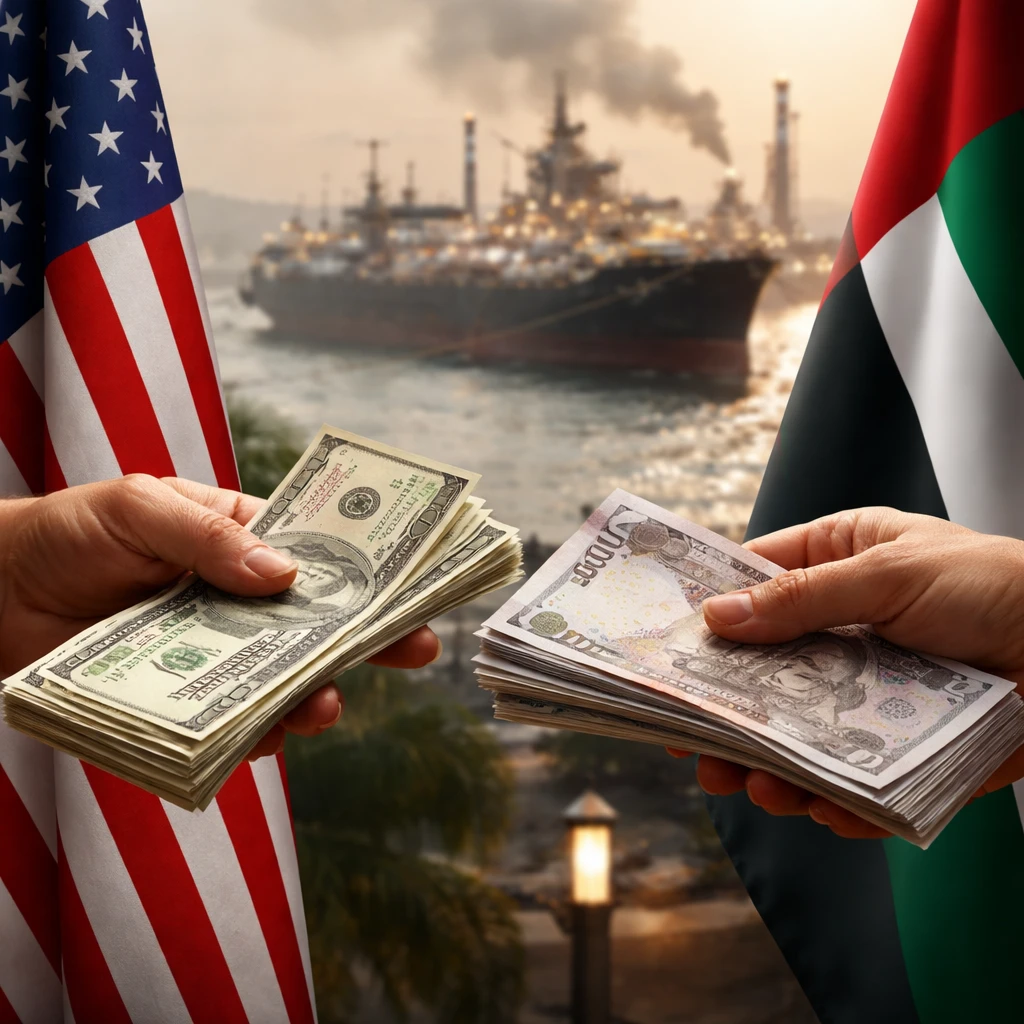
President Donald Trump said Tuesday the U.S. is deliberating a currency swap with the United Arab Emirates, acknowledging that Washington has been approached as Abu Dhabi explores options for financial assistance tied to the economic consequences of the Iran war.
Asked about the plan on CNBC, Trump replied simply: "It is." He added that the UAE "has been a good country. It's been a good ally of ours. And you know, these are unusual times."
The Wall Street Journal reported that the UAE had asked about possible lines of financial support, among them a currency-swap arrangement, if economic stress from the conflict worsened. The article said the region has seen disruptions to oil shipments after the Strait of Hormuz was closed, and that Iran has struck back for U.S. and Israeli attacks by damaging energy infrastructure in Gulf states.
On the same topic, Trump commented on the UAE's wealth and its relationship with the United States: "I'm surprised, because they are really rich," he said, later adding, "They're very good for this country, so yeah, if I could help them, I would."
National Economic Council Director Kevin Hassett told reporters Monday that the U.S. was open to providing assistance to the UAE but that he did not believe such help would ultimately be necessary.
Key takeaways
- U.S. leaders are considering a currency swap with the UAE after Abu Dhabi sought potential financial lifelines amid the Iran war.
- Regional energy flows were disrupted after the Strait of Hormuz was closed, and Iran retaliated for U.S. and Israeli strikes by damaging Gulf energy infrastructure.
- While the administration signaled openness to help, the National Economic Council chief indicated aid may not be required.
Risks and uncertainties
- Further disruption to oil shipments could deepen economic stress in Gulf countries, potentially increasing demand for financial support.
- It is uncertain whether any U.S. assistance would ultimately be necessary, according to the National Economic Council director's comments.
The administration's statements confirm that the U.S. is at least prepared to discuss financial measures with a close regional partner as the conflict affects oil movement and energy infrastructure. Beyond the public comments, officials have not outlined specific terms or timing for any swap arrangement.