
The International Monetary Fund said it welcomed the opening signs of constructive engagement between the United States and China, while underscoring that elevated oil prices tied to conflict in the Middle East are shifting the global economy toward a less favorable growth path.
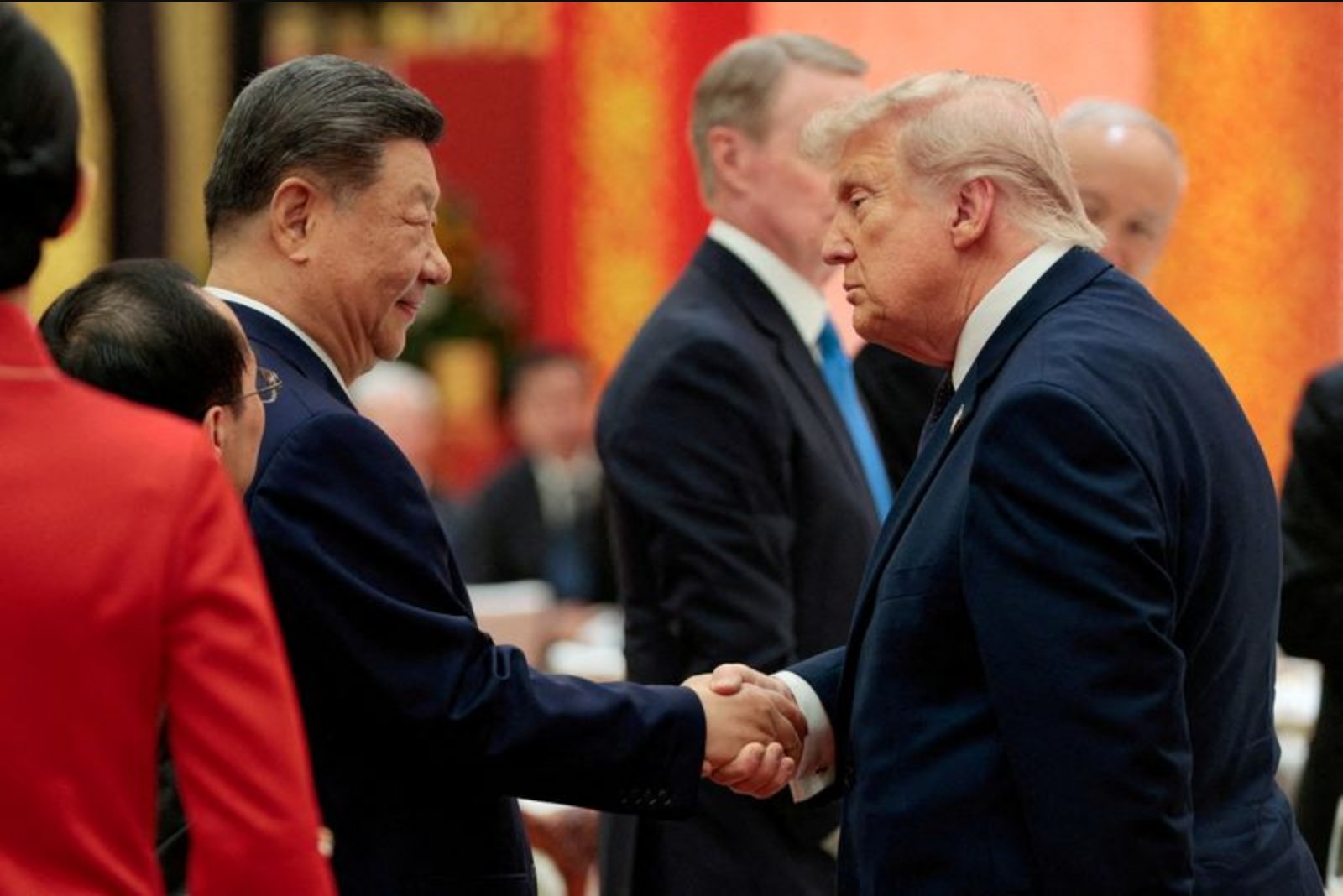
At a news briefing, IMF spokesperson Julie Kozack emphasised the significance of senior-level talks between the two largest economies. "It’s very important, of course, that the world’s two largest economies are engaging at the highest level," she said when asked about the initial outcomes of the summit between U.S. President Donald Trump and Chinese President Xi Jinping in Beijing. She added: "We certainly welcome the fact that there’s a constructive dialogue between the two countries. Anything that is going to help reduce trade tensions and reduce uncertainty is good for both of those large economies, and, of course, good for the global economy as well."
The IMF has consistently urged Washington and Beijing to resolve trade disputes through dialogue rather than unilateral measures, and Kozack reiterated that stance in the briefing. The comments came amid a diplomatic opening in Beijing: Xi warned President Trump that mishandling disagreements over Taiwan could push relations to a "very dangerous place," even as the two leaders presented a more positive tone on trade and investment following last year’s tariff exchanges that sharply escalated bilateral economic friction.
Officials framed the discussions as productive on several fronts. President Trump said in an interview with Sean Hannity on Fox News Channel that China agreed to order 200 Boeing jetliners. U.S. Treasury Secretary Scott Bessent told CNBC that the leaders discussed potential deals for U.S. energy and farm goods and the formation of bilateral trade and investment bodies focused on non-strategic sectors.
At the same time, Kozack pointed to mounting economic strains stemming from the Middle East conflict and Iran’s closure of the Strait of Hormuz. Those developments have pushed crude oil prices above $100 per barrel and, according to the IMF spokesperson, are moving the global economy into the middle of the three scenarios the Fund outlined in its April World Economic Outlook.
Under the IMF’s middle "adverse scenario," global real GDP growth would slow to 2.5% this year. That compares with a 3.1% "reference forecast" in which the conflict is assumed to end quickly, and with 3.4% growth projected for 2025. The adverse scenario rests on a number of assumptions: an average oil price of $100 per barrel for the year, a tightening of financial conditions and rising inflation expectations.
Kozack noted that while higher energy prices have raised expectations of short-term price increases, the IMF still views medium-term inflation expectations as well-anchored. She also described global financial conditions as remaining "accommodative," even as the Fund tracks the spillovers from elevated commodity prices and geopolitical risk.
On the question of assistance for countries facing higher energy and commodity costs, Kozack said the Fund continues to discuss possible financial support for member nations affected by the Middle East conflict, but she did not provide country-specific details or comment on a media report that Iraq has sought help.
IMF Managing Director Kristalina Georgieva is scheduled to meet finance ministers and central bank governors from the Group of Seven industrial democracies the following Monday and Tuesday in Paris, Kozack said. In related meetings, IMF First Deputy Managing Director Dan Katz is attending a G20 deputies' session in Miami later in the week.
Georgieva had said during the IMF and World Bank spring meetings in April that at least 12 countries were expected to need between $20 billion and $50 billion in combined assistance from the two institutions, which are consulting on the best approach. Kozack declined to update those April figures at the briefing.
Describing the nature of recent requests to the Fund, Kozack said: "Right now, what we’re seeing is that many countries are actually asking us for support in the policy area. They’re asking us for policy advice. How can they best respond to the shock given the individual country circumstances?"
Echoing guidance the IMF issued in April, Kozack reiterated that member countries should avoid broad fuel subsidies that could deplete scarce fiscal resources and increase oil demand at a time of constrained supply, thereby pushing prices higher.
In sum, the IMF framed recent diplomatic engagement between Washington and Beijing as a positive development that could reduce trade-related uncertainty, while warning that energy-driven shocks from the Middle East and disruptions at the Strait of Hormuz are weighing on the global growth outlook and prompting calls for targeted policy support and advice.