
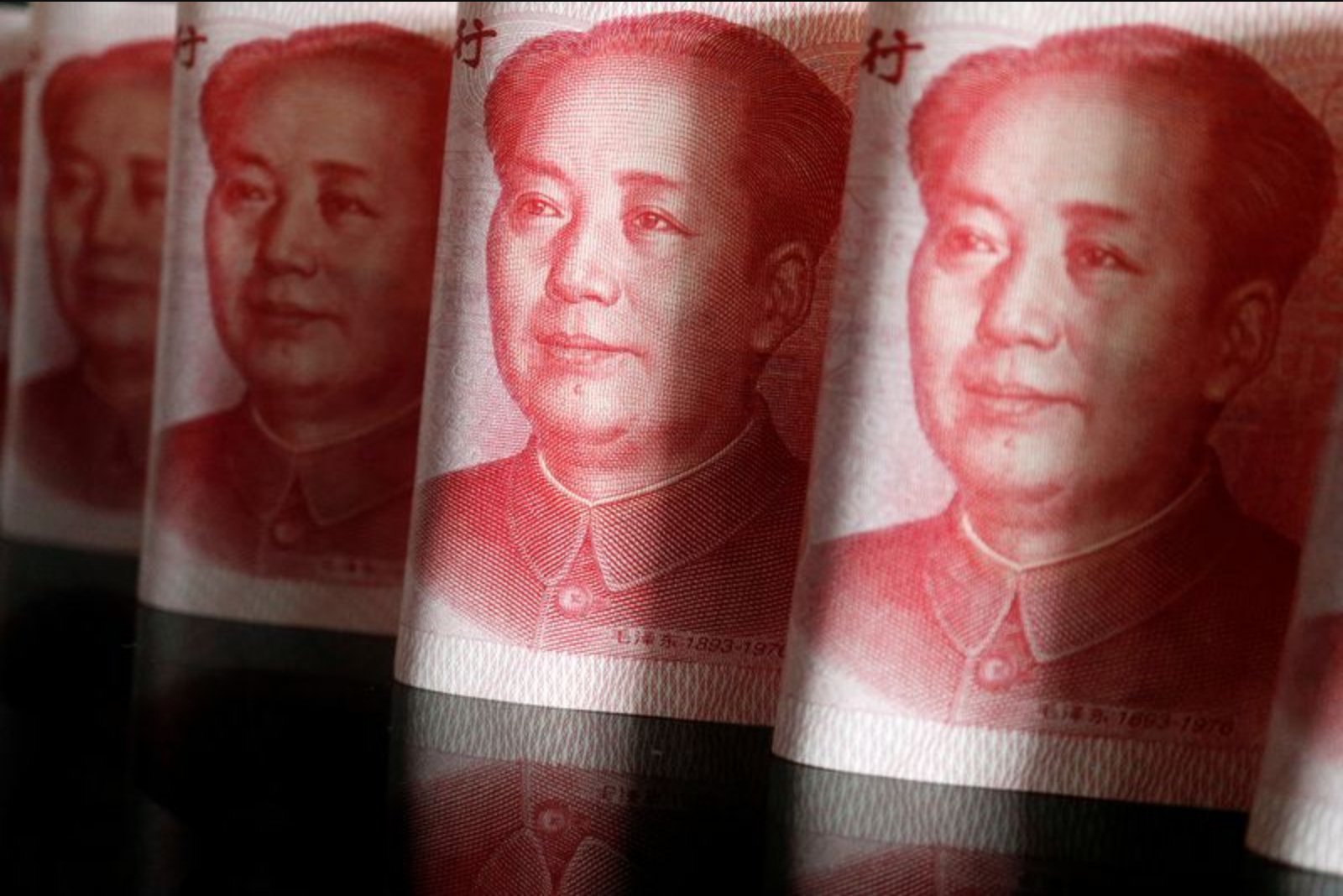
China’s banking system saw new yuan lending contract in April, recording a 10 billion yuan decline in new loans and marking the first monthly fall since July 2025. The outcome, derived from calculations using data released by the People’s Bank of China (PBOC), was far weaker than analysts had forecast and underlines ongoing softness in domestic credit demand.
Analysts had expected new yuan loans to total 300 billion yuan in April, compared with 280 billion yuan in the same month last year. Instead, the April figure was a net contraction from March, when new lending had grown by 2.99 trillion yuan. The PBOC does not publish monthly loan breakdowns; the April estimate follows calculations comparing the bank’s January-April aggregates with the January-March totals.
Outstanding yuan loans rose 5.6% in April from a year earlier, a touch slower than the 5.7% pace recorded in March and below market expectations of 5.8% growth. Cumulative lending in the first four months of 2026 reached 8.59 trillion yuan, down from 10.06 trillion yuan over the same period a year earlier.
Part of April’s weakness reflects a regular seasonal pattern in Chinese banking. Lenders typically concentrate credit at the start of the year, front-loading issuance to secure higher-quality borrowers and to broaden market share, which often leaves lending softer in April.
Nevertheless, officials at the PBOC reiterated policy support designed to underpin domestic demand. In its quarterly policy implementation report, the central bank pledged to maintain an appropriately accommodative monetary stance and to step up support for efforts to expand domestic demand and foster technological innovation.
It was reported last month that the PBOC had instructed some commercial banks to expand loan issuance in April to avoid a sharper slowdown in credit growth at a time of rising external risks. The muted outcome suggests those measures were not sufficient to offset seasonal and demand-side headwinds.
China’s broader economic picture has shown mixed signals. The economy expanded more than expected in the first quarter, driven largely by resilient exports, easing immediate pressure for large-scale stimulus. At the same time, persistent geopolitical uncertainty - including the Iran war cited in recent commentary - has elevated commodity prices and inflation expectations, clouding the outlook for production costs and factory margins and raising questions about the durability of export demand.
Domestically, consumption and credit appetite remain muted. A prolonged downturn in the property sector, fragile household confidence and weak private-sector investment sentiment are weighing on demand for bank loans and on the wider recovery.
Macquarie analysts, in a note earlier in May, warned that without forceful stimulus the process of housing market stabilization could be prolonged, and projected that China’s housing market would contract this year and next, albeit at a slower pace than in previous years. They added that a sharp drop in exports could prompt Beijing to prop up the property sector as an alternative growth driver.
Monetary aggregates showed modest strength in April despite the loan contraction. Broad M2 money supply expanded 8.6% year-on-year, slightly above the 8.5% forecast in a Reuters poll and up from 8.5% in March. The narrower M1 measure grew 5.0% in April from a year earlier, marginally lower than March’s 5.1%.
Outstanding total social financing (TSF) - a wide gauge of credit and liquidity in the economy - rose 7.8% in April from a year earlier, a touch slower than March’s 7.9% pace. The report noted that any acceleration in government bond issuance could lift such financing measures.
For now, the April lending contraction underscores an uneven recovery: external demand through exports has provided an important offset to domestic weakness, but subdued consumption, a troubled property sector and cautious corporate borrowing are keeping credit growth constrained. Policymakers face a balancing act between providing targeted support for domestic demand and avoiding broad stimulus while external risks persist.
Summary
New yuan loans in China contracted by 10 billion yuan in April, the first monthly fall since July 2025. The outcome, calculated from PBOC data, was well below expectations and driven by seasonal front-loading of credit and weak domestic demand amid a prolonged property slump. Monetary aggregates such as M2 continued to expand, while outstanding total social financing slowed slightly. Policymakers have pledged accommodative measures, and it was reported that regulators urged banks to boost lending in April, but credit growth still softened.
Key points
- New yuan loans contracted by 10 billion yuan in April, the first monthly decline since July 2025; outstanding yuan loans rose 5.6% year-on-year in April, down from 5.7% in March.
- Cumulative new lending for January-April was 8.59 trillion yuan, below 10.06 trillion yuan in the same period last year - signaling weaker credit creation early in 2026.
- Monetary aggregates showed continued expansion - M2 grew 8.6% year-on-year in April while M1 rose 5.0% - even as TSF growth eased to 7.8%.
Risks and uncertainties
- Prolonged weakness in the housing market could keep household confidence and mortgage-related lending subdued, affecting the property sector and banks that have large exposures to developers.
- Rising commodity costs and elevated inflation expectations tied to geopolitical tensions could squeeze factory margins and dampen export demand over time, impacting manufacturing and trade-related sectors.
- Soft private-sector investment and cautious corporate borrowing may restrain broader credit growth and economic momentum, weighing on bank lending volumes and investment-linked industries.