
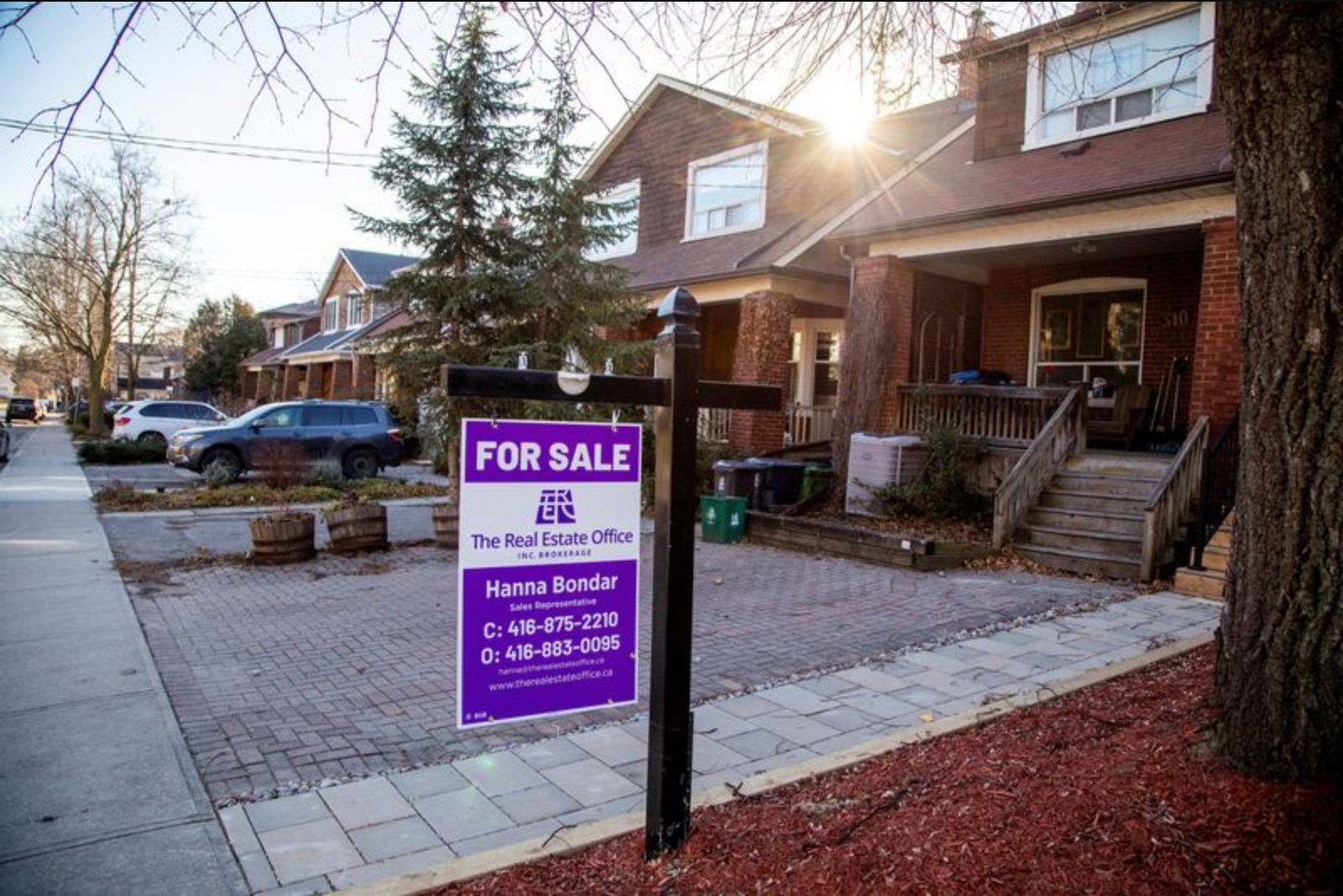
Canada is experiencing a disconnect between asset classes that is curbing consumer demand: an extended slump in home prices is eroding household confidence and borrowing capacity even as the domestic stock market has generated substantial paper gains, lifting aggregate household net worth.
House prices in Canada have fallen 20% since the frothy peak in February 2022, and the downturn - the longest in recent decades - is straining ordinary household finances at a time when many families face renewed mortgage rates well above the lows seen during the pandemic. The decline in housing values contrasts with a booming equity market tied to natural resources, which helped push Canadian household net worth up by more than C$1 trillion in 2025 to C$18.6 trillion.
That mix of asset movements has produced uneven effects across the population. Much of the gains in equities flow to a relatively small share of Canadians; almost 70% of financial assets are held by the wealthiest 20% of households, according to Statistics Canada. By contrast, roughly two-thirds of Canadian households own their homes and many carry mortgages, leaving broad swathes of the population far more exposed to housing dynamics than to stock market performance.
Wealth gains concentrated in equities
The main Canadian stock index, the TSX, posted a gain of 28.2% in 2025 and reached a record high in March. Year-to-date the index has advanced about 7% and its market capitalization stands at C$4.9 trillion. The TSX’s 2025 performance outpaced major U.S. benchmarks, with the S&P 500 up 16.4% over the same period. The surge in equity values, driven in large part by resource-linked names, lifted the ratio of financial assets to non-financial assets to 121% - the highest level in over two decades in fourth-quarter household data.
But analysts say the psychological and credit effects of housing are different and often more sustained than those from equities. "There is nothing more devastating than seeing your home price depreciate," said David Rosenberg, chief economist and strategist at Rosenberg Research. "Equity market cycles come and go and are short-lived but in housing the downturn tends to be more prolonged. When it comes to the impact on the consumer psyche, housing is more important."
Weak spending despite rising paper wealth
Even with the jump in aggregate net worth, consumption appears constrained. The household savings rate declined to 4.4% in the fourth quarter from 5.2% in the prior quarter but remains elevated by historical standards outside the pandemic period. That elevated savings rate signals that Canadians are not yet translating higher financial-asset values into greater spending.
Financial products such as home equity lines of credit, or HELOCs, have historically let households tap property equity to finance renovations, vehicles and other large purchases. When home prices fall, the scope for such borrowing narrows, removing an important channel through which housing gains translate into consumption. Recent retail sales figures show some resilience, but analysts are skeptical that this will persist in the face of weak consumer sentiment and a sharp increase in gasoline prices since the onset of conflict in the Middle East.
Benjamin Tal and Katherine Judge, economists at CIBC Capital Markets, estimate that the reduction in consumption due to the housing market correction could total more than C$5,000 per household. "The negative wealth effect, although hard to quantify, is hurting consumer sentiment, while increased stress at the margin of the mortgage market means increased delinquency rates and reduced refinancing options," the CIBC economists said.
Macro backdrop and policy implications
Slower growth in immigration and higher borrowing costs - spurred in part by an inflation shock after the Iran war and oil-price volatility - have weighed on housing demand. Canada was the only Group of Seven advanced economy to post a home price decline last year in nominal terms, according to Bank for International Settlements data and accompanying calculations.
The wider economy has cooled: gross domestic product rose by 1.7% in 2025, the slowest pace in five years. That slower expansion complicates efforts by Prime Minister Mark Carney to revive the economy while also managing fallout from a trade dispute initiated by the United States. The Bank of Canada has lowered its forecast for consumption’s contribution to GDP growth to 0.7 percentage point on average in 2026, down from 1.2 percentage points over the prior two years, and is due to update its forecasts on Wednesday.
The Canadian Real Estate Association last week downgraded its housing market outlook for 2026 and 2027, reflecting the persistence of the market correction.
Distributional effects and credit-cycle risks
Analysts caution that gains concentrated in financial assets are unlikely to offset the broader economic drag from depreciating housing values, because equity holdings are concentrated among wealthier households and are often perceived as more ephemeral. "Households tend to treat equity portfolios as ephemeral paper wealth. While the family home, by contrast, anchors financial plans and, crucially, underpins the credit cycle," said Karl Schamotta, chief market strategist at Corpay.
As housing loses value, borrowing against property becomes constrained, potentially increasing delinquency rates and limiting refinancing options for households under stress. Those credit dynamics could amplify downside risks for consumption and the broader economy if they persist.
Outlook
Canada’s combination of a record-setting equity market and a prolonged housing downturn has produced a complicated wealth picture: aggregate net worth rose markedly in 2025, yet the negative wealth effects from housing declines appear to be weighing more heavily on household behavior and the credit cycle. How quickly consumption recovers will depend on the trajectory of housing prices, mortgage-market stress and the distribution of financial gains across households.
($1 = 1.3644 Canadian dollars)