
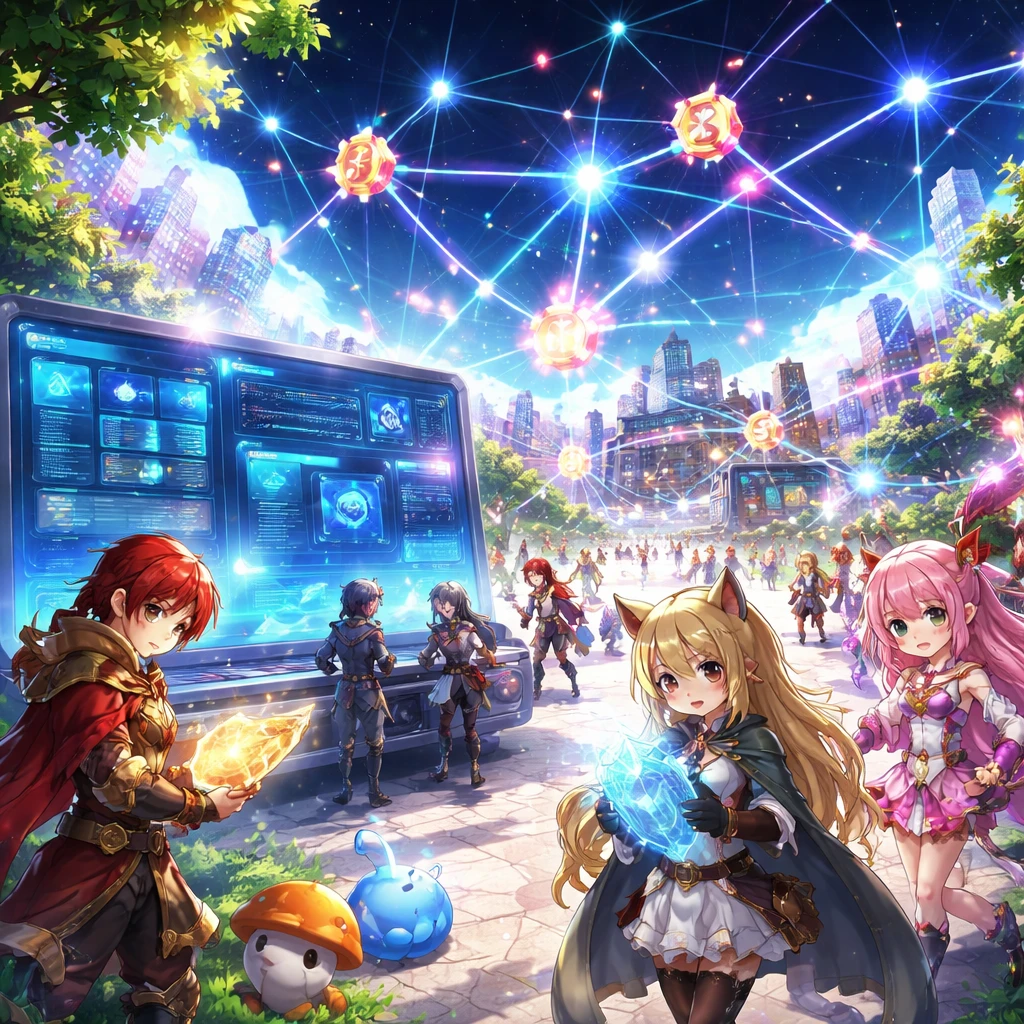
Abu Dhabi, UAE - MapleStory Universe (MSU), the blockchain-based expansion built around the MapleStory intellectual property, is entering its second year with measurable scale and a roadmap to convert IP into an on-chain, creator-driven economy. Launched alongside MapleStory N on May 15, 2025, MSU reports more than 150 million cumulative on-chain transactions and more than 3.82 million registered accounts since inception.
The platform’s leadership framed the next phase as MSU 2.0, a program that will roll out through 2026 and 2027 to introduce new development tools, on-chain infrastructure, and expanded opportunities for builders, IP holders, and players to interact in a unified digital environment. MSU 2.0 is positioned as an effort to reduce friction around IP usage while broadening participation across the ecosystem.
Early scale and marketplace activity
MSU’s first-year performance included several concrete indicators of adoption across blockchain and gaming channels. The pre-launch Scroll NFT campaign recorded approximately 1.7 million scrolls minted, a figure the company characterizes as the largest NFT mint in Avalanche network history. On the title’s launch day, weekly active addresses on the Avalanche network that interacted with MSU-related activity rose by 549 percent, a sharp increase that underscored strong initial interest.
Marketplace engagement has also been substantial. The platform says it averages more than 446,716 buyers and sellers transacting daily on its marketplace. Cumulatively, MSU has accounted for 23.3 percent of total activity on the Avalanche network, representing a material share of on-chain transactions relative to other activity on the chain. MSU’s native NXPC token debuted with listings on seven major exchanges at launch, among them Binance, Bybit, Upbit, and Bithumb.
Sunyoung Hwang, CEO, Nexpace, said: "What began as one of the largest launches in Web3 gaming has developed into a platform built for long-term participation. In the past year, we focused on building the infrastructure and discipline required to support our community over the long term. Ever since then, MSU has evolved beyond a single game into infrastructure for creation, commerce, and participation. That shift defines what it means for an IP to become an economic system and a foundation for the next generation of online worlds."
MSU 2.0 - structure and technology
MSU 2.0 aims to convert IP from a largely passive asset into a programmable, on-chain commercial resource. Central to that effort is a new technology stack named VIBE IP, which the company describes as being built on two foundational pillars.
- Pillar one - data-enabled IP access: Builders will gain access to gameplay and behavioral data from MapleStory N through dedicated APIs. The intent is to allow IP to function as a living, data-rich foundation for new creations, with the company specifying that this access will align with applicable privacy laws.
- Pillar two - on-chain builder economy: The plan sets up an on-chain economy on a designated Henesys chain, constructed on an Avalanche Layer 1. This infrastructure is described as streamlining IP licensing, revenue settlement, and payments into a single system, facilitating seamless commercial interactions among creators and rights holders.
These two pillars will be supported by blockchain-based payment and settlement mechanisms and by AI-powered creation tools. The company highlighted an AI-driven approach called "vibe coding," which it says enables creators to transform ideas into full-scale products and thereby broaden who can participate in building IP-driven content.
According to the announcement, VIBE IP is intended to enable the onboarding of additional Nexon IPs over time, establishing an AI-enabled, on-chained IP multiverse. The tech stack and related features will be introduced in phases over the coming months as part of the 2026-2027 rollout window.
Hwang added: "MSU 2.0 is the next phase of our growth journey. Our goal is to expand the role of IP from something people experience to something they can actively build with, share, and grow together, akin to an infinite IP playground. From here, our priority is to build the infrastructure that will support a larger and more connected IP ecosystem."
MapleStory N - gameplay milestones and engagement
MapleStory N, the flagship title within MSU, reported several player-facing milestones during its first year. The year-end winter update attracted more than 130,000 user inflows, approximately three-quarters of which were new to the platform. That update also coincided with the highest level of in-game spending since the period immediately following launch; the company reports that player spending exceeded rewards distributed, a dynamic it frames as a sign of a more active and sustainable in-game economy.
To lower barriers for mainstream players, the team has refined Web3 features so that casual users can play MapleStory N with the experience of a traditional MMORPG and with fewer blockchain-related hurdles. The stated aim is to preserve the value of Web3 mechanics while keeping the gameplay accessible to a broader audience.
Looking forward, the development roadmap calls for an accelerated cadence of in-game updates across the second year, with regular waves of content releases. The schedule includes a major Black Mage update and other milestone content releases. Additionally, MapleStory N will introduce a new MVP system intended to sustain player motivation by delivering ongoing benefits to committed users. The MVP program will start with initial criteria and rewards and is planned to expand over time to include more diverse qualifications and incentives.
For users seeking more detail, the company directs audiences to its official website for additional information.
About NEXPACE and ecosystem positioning
NEXPACE, based in Abu Dhabi, is described as a blockchain company focused on an IP-expansion initiative that leverages blockchain technology and NFTs to create a community-driven ecosystem. The company frames its mission as redefining interactive entertainment by enabling community members to explore, share, and engage with content and gameplay developed within the ecosystem.
Core principles cited by the organization include transparency, security, and trust, all intended to allow builders to share ideas openly and enable users to enjoy immersive experiences in a collaborative environment.
Contact
PR Manager - Bee Shin, Wachsman
[email protected]
Analysis perspective
From a product and platform viewpoint, MSU’s first-year figures point to two complementary dynamics: sizeable transactional scale on-chain and an early focus on creating lower-friction paths for mainstream player adoption. The planned VIBE IP stack and AI-enabled tooling signal a shift from singular game delivery toward a platform approach that attempts to standardize data access, monetization flows, and creator tooling. If delivered as described, those capabilities change the unit economics of IP by enabling more creators to build and commercialize content around established brands.
That said, the company has set expectations for a phased rollout through 2026 and 2027 rather than a single sweeping release. The multi-year schedule suggests a gradual maturation of the technology and commercial arrangements underpinning the on-chain builder economy.
Summary of key metrics
- More than 150 million cumulative on-chain transactions since launch.
- Over 3.82 million registered accounts.
- Approximately 1.7 million scrolls minted in the pre-launch Scroll NFT campaign.
- Average daily marketplace participants exceed 446,716 buyers and sellers.
- MSU activity represents 23.3% of total Avalanche network activity.
- NXPC token listed on seven major exchanges including Binance, Bybit, Upbit, and Bithumb.