
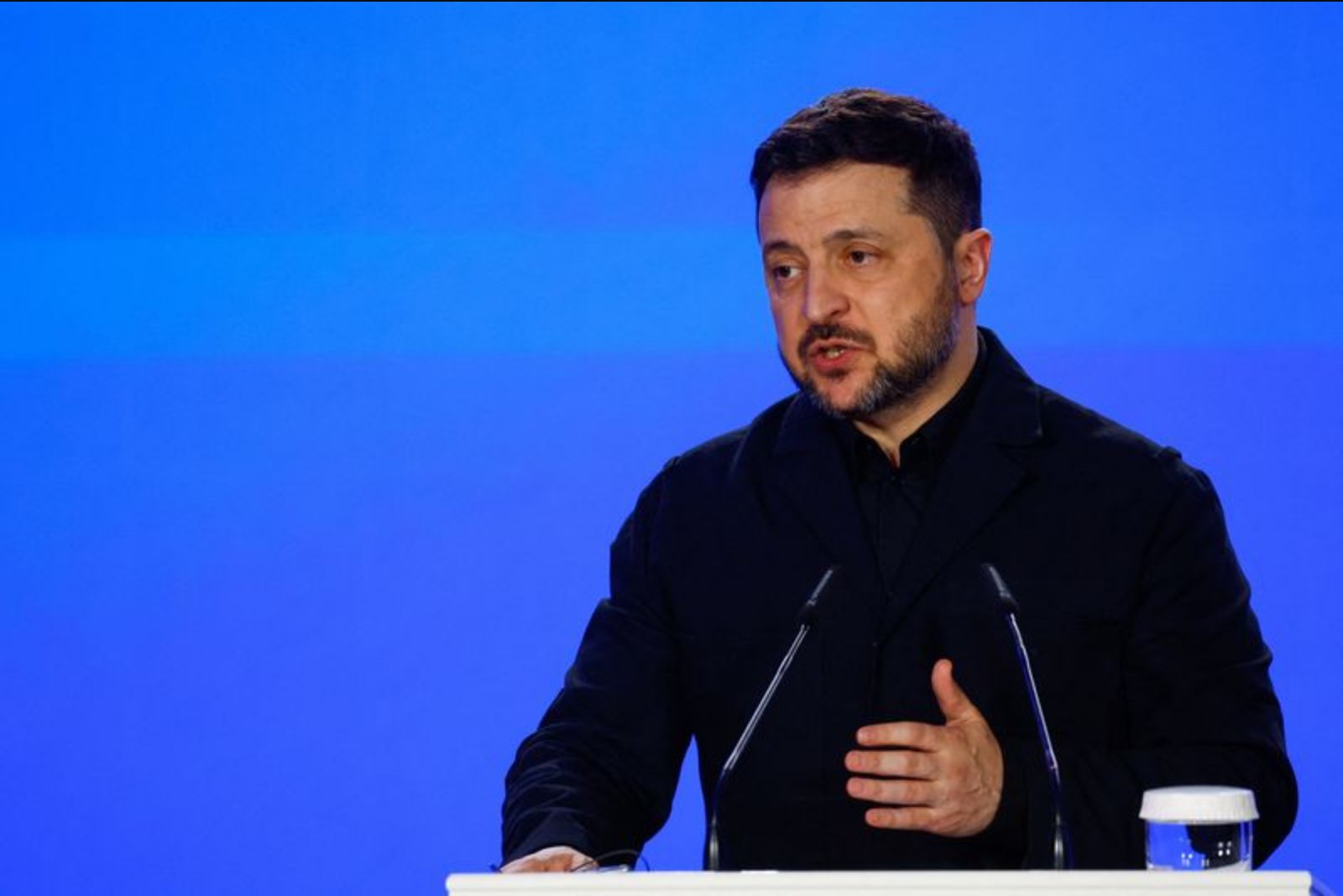
Ukrainian President Volodymyr Zelenskiy on Saturday reacted to U.S. strikes in Iran by urging firm action from Washington while emphasizing the necessity of avoiding an expansion of hostilities into a wider war.
Writing on social media, Zelenskiy said, "Whenever there is American resolve, global criminals weaken." He added that the same understanding should apply to Russia, noting the close strategic relationship between Tehran and Moscow.
The president has previously called for the Iranian government to be overthrown. In his latest post he framed decisive U.S. action as important for international security but also highlighted the need to preserve life where possible.
Zelenskiy pointed to Tehran's military support for Moscow, saying Iran had supplied Russia with thousands of long-range Shahed drones. He said the drone designs have been used in Russian factories to build additional unmanned systems, and that Moscow has fired over 57,000 Shahed-type drones at Ukraine during the war.
On the broader consequences of U.S. strikes in Iran, Zelenskiy wrote that "It is fair to give the Iranian people a chance to rid themselves of a terrorist regime and to guarantee security for all nations that have suffered from terror originating in Iran." He followed that by stressing the importance of preventing the conflict from enlarging: "It is important to prevent the war from expanding. It is important that the United States is acting decisively."
The remarks link Washington's recent military action with longer-running concerns in Kyiv about Iran's role in supporting Moscow's war effort. Zelenskiy balanced his call for strong measures with an explicit plea to limit escalation and protect civilian lives.
Context and implications
- Zelenskiy's statements reaffirm Ukraine's view of Iran as a partner of Russia in the current conflict, highlighting the transfer of Shahed drones and their domestic production in Russian factories.
- His comments underline Kyiv's support for forceful responses to states seen as sponsoring or enabling attacks, while also underlining the need to avoid broader regional escalation.
- The messaging links security dynamics in the Middle East with military and humanitarian pressures experienced by Ukraine.