
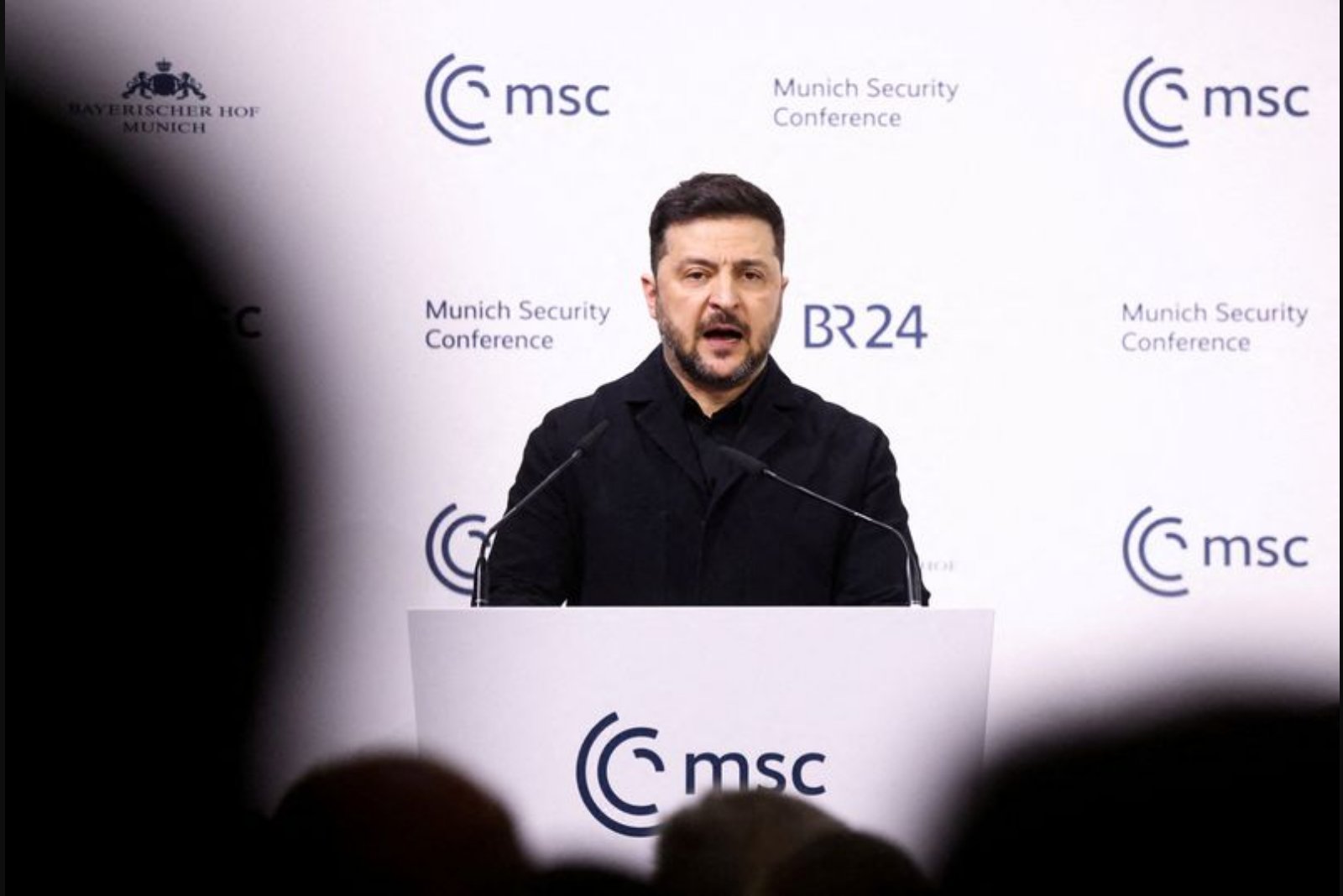
Ukrainian President Volodymyr Zelenskiy said on Saturday he hoped a U.S.-facilitated round of talks in Geneva next week would be meaningful, but warned that Ukraine is repeatedly pressed to give up concessions while Moscow faces far less scrutiny.
Speaking at the Munich Security Conference, Zelenskiy said he wanted the trilateral meetings - scheduled to take place on Tuesday and Wednesday in the Swiss lakeside city - to be "serious, substantive, helpful for all us." He added, however, that "sometimes it feels like the sides are talking about completely different things."
The Geneva meetings bring together Ukrainian, Russian and American delegations under the aegis of U.S. President Donald Trump, who is pushing for a negotiated end to the largest conflict on the continent since 1945. Ukraine and Russia have already held two rounds of U.S.-brokered discussions in Abu Dhabi; both sides described those talks as constructive but they did not yield major breakthroughs.
Zelenskiy used his Munich remarks to press Kyiv's allies for firmer measures to push Moscow toward compromise - specifically, tighter sanctions and increased deliveries of weapons. He recalled appealing to the West four years ago, at the same conference, days before what he described as tens of thousands of Russian forces entered Ukraine.
The Ukrainian president said there had been too much discussion among Western officials and not enough decisive action. He urged President Trump to use his leverage to compel Russian President Vladimir Putin to agree to a ceasefire, saying that a ceasefire would be required to hold a referendum on any peace deal, which Ukraine would organise alongside national elections.
Zelenskiy acknowledged feeling "a little bit" of pressure from Trump. The U.S. president had said the day before that Zelenskiy should not miss the "opportunity" to pursue peace soon and had urged him "to get moving."
Highlighting what he described as an imbalance in how negotiations are framed, Zelenskiy said: "The Americans often return to the topic of concessions and too often those concessions are discussed only in the context of Ukraine, not Russia." He said he wanted to hear what Moscow might be prepared to concede, noting that Ukraine had already made many compromises.
The composition of the Russian delegation to Geneva drew specific comment from the Ukrainian leader. Moscow said it would be led by Vladimir Medinsky, an adviser to Putin, replacing the delegation in Abu Dhabi that was headed by military intelligence chief Igor Kostyukov. Zelenskiy said the change was "a surprise" and signalled to him that Russia might be seeking to delay firm decisions.
Ukrainian officials have previously criticised Medinsky's handling of talks, accusing him of offering history lessons rather than engaging in pragmatic negotiation.
Deadlock over territory
Territorial arrangements remain the core obstacle to progress. Moscow insists Ukraine cede the remaining roughly 20% of the eastern Donetsk region that Russian forces have not yet captured, a demand Kyiv firmly rejects.
At a news briefing on Saturday, Zelenskiy said U.S. negotiators had told Ukraine that Russia had promised a swift end to the war if Kyiv's forces immediately withdrew from the part of Donetsk it still controls. Zelenskiy said he was instead prepared to discuss a U.S. proposal for a free trade zone in that area, paired with a freeze along the rest of the 1,200-km (745-mile) front line.
Ukraine's chief negotiator, Rustem Umerov, who joined Zelenskiy at the briefing, said the only realistic options under consideration were either maintaining the current lines of control or establishing a free economic zone.
As context for the negotiations, Russia now occupies about 20% of Ukraine's national territory, including Crimea and parts of the eastern Donbas region seized before the full-scale invasion in 2022. Analysts cited in the discussions say Moscow has increased its control by about 1.5% of Ukrainian territory since early 2024.
Recent Russian air strikes that have damaged cities and electricity infrastructure have left hundreds of thousands of Ukrainians without heating and power during a bitterly cold winter, adding humanitarian pressure to the political and military standoff.
U.S. role, European involvement and prisoner exchange
Zelenskiy stressed his hope that the United States would remain engaged in the talks and cautioned that U.S. domestic politics could complicate sustained American involvement. Ukrainian officials have voiced concern that the U.S. congressional mid-term elections in November could draw the Trump administration's attention inward after the summer, potentially diminishing Washington's hands-on role in mediation.
The Ukrainian president also said he hoped for greater European participation. "Europe is practically not present at the table. It's a big mistake to my mind," he said, arguing that European states should have a larger role in any settlement process.
As part of any deal, Zelenskiy said Russia would need to accept both a ceasefire monitoring mission and an exchange of prisoners of war. He supplied an estimate on personnel currently held, saying Russia had about 7,000 Ukrainian troops while Kyiv held more than 4,000 Russians.
Zelenskiy added that he believed Moscow opposed the possible post-war deployment of French and British troops to Ukraine - positions Paris and London have said they would be willing to assume - because Putin "wants to have the opportunity to come back."
Outlook
Zelenskiy's remarks at Munich framed next week's Geneva meetings as a test of whether U.S.-brokered diplomacy can move beyond talk to concrete agreements. He reiterated calls for tougher sanctions and expanded weapons supplies while warning against an imbalance in demands for concessions. The change in Russia's negotiating lead, he said, raises doubts about Moscow's willingness to reach rapid decisions.
With questions remaining over territorial disposition, the mechanics of a ceasefire and the political will of external powers, the Geneva talks will confront the same core dilemmas that have prevented earlier rounds from producing a major breakthrough.