
Feb 10 - Ukrainian President Volodymyr Zelenskiy brought together his senior military leadership on Tuesday to examine shortcomings in the country’s air defence and other measures designed to protect civilians, nearly four years into Russia’s war in Ukraine.
Speaking in his nightly video address, Zelenskiy also reviewed how municipal and regional authorities have been responding to the fallout from large Russian strikes, with particular focus on restoring electricity and heating in high-rise residential blocks. He again singled out officials in the capital Kyiv for criticism.
The president said he had lengthy discussions with the military’s Commander-in-Chief, Oleksandr Syrskyi, the chief of the general staff, Andrii Hnatov, and Defence Minister Mykhailo Fedorov.
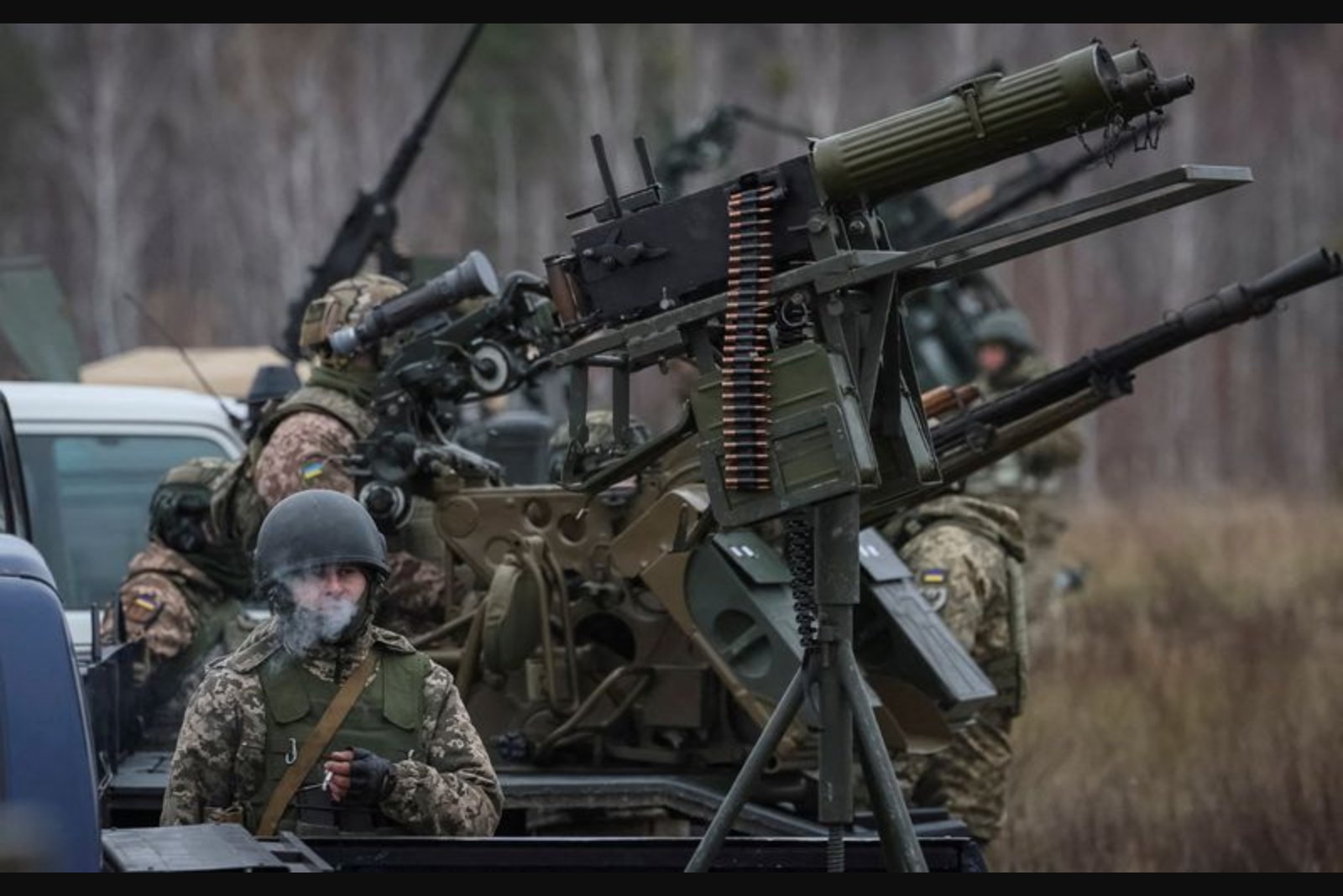
"Many changes are happening right now in the work of air defence. In some regions, the way teams operate, interceptors, mobile fire units, the entire small air defence component is being practically rebuilt completely," Zelenskiy said. "But this is only one element of defence that requires changes. Changes will happen."
Ukraine has repeatedly emphasized the need to strengthen air defences to better protect cities from aerial attacks and has urged Western allies to supply additional weaponry capable of destroying incoming missiles and drones.
Last week, with heating still not restored to hundreds of dwellings following strikes that hit energy infrastructure, the president said defence lines in certain areas were proving inefficient.
Energy Minister Denys Shmyhal, posting on Telegram after the daily meeting of officials responsible for energy, said teams were working around the clock to restore heating in Kyiv, where night-time temperatures were expected to fall to -19 Celsius (-2 Fahrenheit).
After his session with the top brass, Zelenskiy reported that Kharkiv and Poltava regions in central and northeastern Ukraine were experiencing electricity difficulties, along with parts of Odesa region on the Black Sea.
He renewed his criticism of decision-makers in Kyiv, where he has clashed with Mayor Vitali Klitschko, and extended similar rebukes to officials in his hometown of Kryvyi Rih and in Okhtyrka near the Russian border.
"Every community leader and responsible service must pay real attention to what is happening with buildings, with networks," Zelenskiy said. "We are monitoring at all levels and people will be held personally responsible."
Context and implications
The meeting highlighted two interlinked challenges for Ukraine: the operational effectiveness of air defence formations and the capacity of local authorities and emergency services to restore essential utilities after attacks. Zelenskiy signalled that structural and operational changes are under way in small air defence elements while also pressing for further international military assistance. At the same time, persistent outages and the need to restore heating in freezing temperatures underscore the strain on energy and municipal services.