
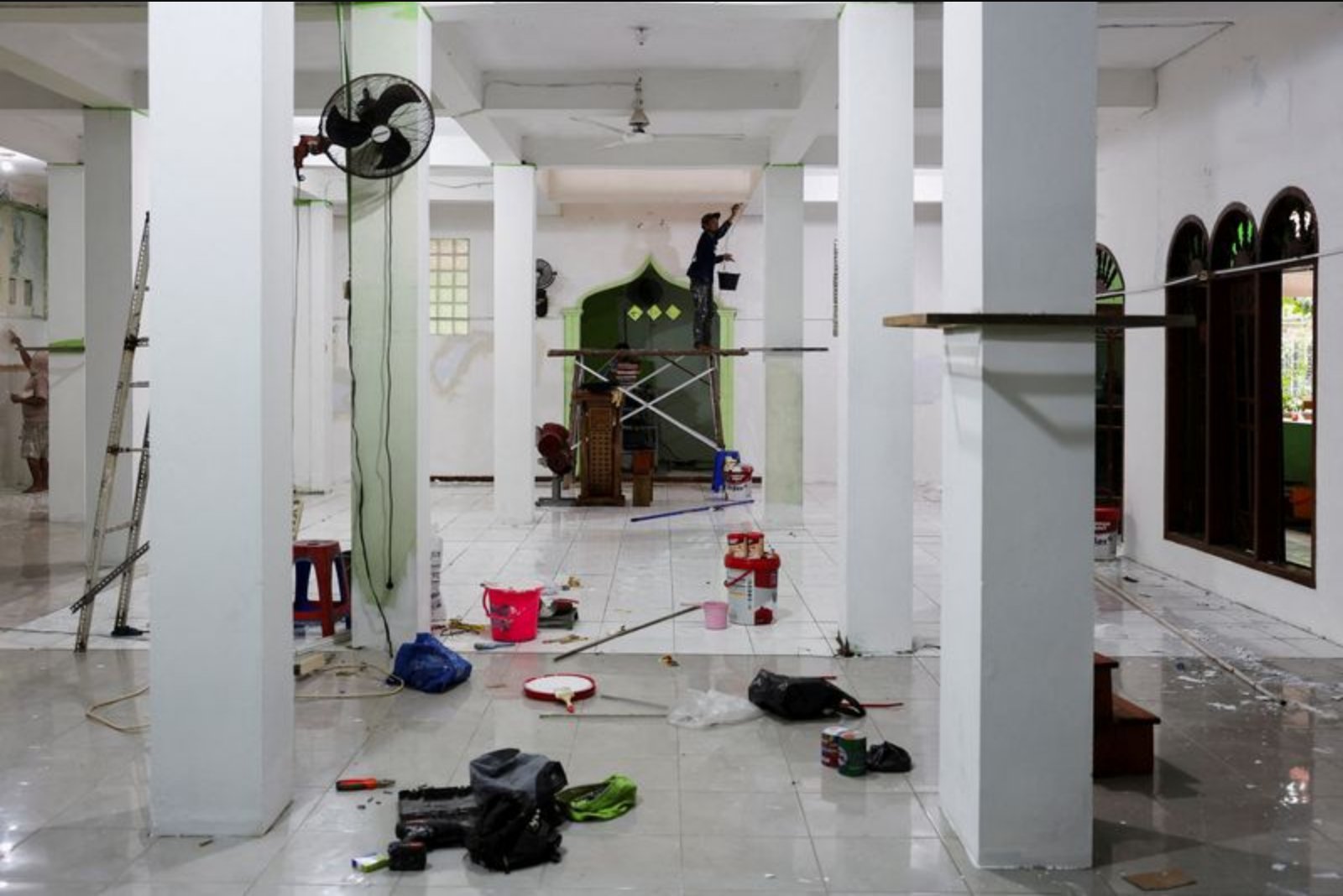
When Indonesian police arrested a high-school student suspected of detonating an explosive on his Jakarta campus on November 7, investigators found a life-size toy rifle on which the suspect had inscribed messages including "welcome to hell" and the names of perpetrators associated with white supremacist mass killings. The blast injured 96 people. Authorities described the incident as potentially the country's first attack inspired by white supremacist ideology and said they feared similar acts could follow.
Indonesian police told investigators they were monitoring at least 97 young people - the youngest aged 11 - who had been exposed to material glorifying mass violence and white supremacist actors. Much of that content, they said, circulated on the messaging app Telegram. At least two of the monitored youths were reportedly plotting further violent acts in the wake of the Jakarta bombing.
Officials in multiple Southeast Asian states - including Singapore, Malaysia, Thailand and the Philippines - described a pattern in which teenagers were being drawn toward extremist material linked to figures such as the Christchurch mosque attacker Brenton Tarrant. Interviews with security officials in Singapore and Indonesia indicated authorities are grappling with a marked increase in adolescents plotting violence after consuming such content.
Singapore's domestic intelligence service said it had detained four youths since December 2020 on the basis that they adhered to "violent far-right extremism ideologies" and were planning attacks. The city-state's Internal Security Department (ISD) has listed far-right extremism among the top threats it tracks. Singaporean authorities emphasized that none of the youths in Singapore or the Indonesian cohort are white; some were reportedly motivated by a belief they were defending the existing racial or religious balance in their countries, while others were driven by an attraction to the violent imagery and tactics used by far-right attackers, according to ISD statements and Indonesian security officials.
In every case reviewed by investigators in Singapore and Indonesia, authorities said social media posts and online communities were the vectors for radicalization. Indonesian and Singaporean officials described young people who appeared socially isolated or disaffected, who then encountered extremist messaging and adopted a nihilistic worldview, according to Pravin Prakash, a researcher at the Center for the Study of Organised Hate.
The Jakarta suspect, Indonesian authorities reported, had uploaded footage of his campus alongside Nazi symbols and text that echoed the refrain of a famous rock song: "Don’t need no reason, ain’t nothing I’d rather do. I am on the highway to hell and all my friends are going to be there." Police said the suspect's online postings combined violent symbolism and references to extremist perpetrators.
Platforms and communities
Investigators identified Telegram as a particularly significant platform in several of the cases under review. Indonesian police said Telegram groups gave vulnerable youths a sense of belonging and that the platform often did not act when authorities reported extremist material. Mayndra Eka Wardhana, a police commissioner and spokesperson for the counter-terrorism squad, said the platform frequently failed to take action on extremist content authorities flagged. Telegram told investigators it maintains channels of communication with Indonesian authorities, removes content that violates its terms when reported, and forbids calls to violence while supporting peaceful free speech.
Investigators and researchers who reviewed channels linked to a popular "true crime community" described how members traded memes that glorified killers such as Tarrant, alongside bomb-making instructions and encouragement for violence. Police shared screenshots with investigators showing such exchanges and linking the Jakarta suspect's toy rifle to names of far-right attackers. Screenshots of conversations indicated some users urged others toward violent measures.
Authorities said white supremacist content has migrated across platforms and been adapted to local contexts. Some posts fused regional iconography with Nazi imagery; others used coded phrases that serve as euphemisms for violent goals. Investigators reviewed hundreds of videos on one mainstream platform showing racist caricatures of Chinese people and other minorities, including Rohingya Muslims, accompanied by acronyms which investigators said appeared to encode calls for mass violence.
Saddiq Basha of the S. Rajaratnam School of International Studies in Singapore, who has tracked such content since 2024, identified the use of acronyms like "TCD" and "TRD" in posts he reviewed. He said those phrases appeared to be code for "Total Chinese Death" and "Total Rohingya Death". Reuters viewed hundreds of such videos from Southeast Asian users on a mainstream video platform, including a widely viewed Indonesian post bearing the hashtag #TCD that had been seen more than half a million times. The creator did not respond to requests for comment. The platform removed the post and similar content after investigators raised questions about moderation practices.
Two people working in online-safety teams at that platform said they were not aware of specific policies for moderating localized variants of white supremacist coded language. They were interviewed on condition of anonymity because they were not authorized to speak publicly. The platform stated it blocks certain keywords from search suggestions and consults regional advisors on online safety.
Local adaptation and the role of algorithms
Experts and officials told investigators that while neo-Nazi and white supremacist ideology originates in assertions of white racial superiority, the symbols and rhetoric can be adapted into different cultural and regional frames. Munira Mustaffa, director of Chasseur Group, said the adaptability of neo-Nazism allows these ideas to be grafted onto local grievances and identity politics. She noted that platforms and governments have historically concentrated moderation resources on Islamist content in Southeast Asia, potentially leaving other extremist currents less scrutinized.
Authorities also raised concerns about algorithmic recommendations that may have exposed young users to far-right content. Singapore’s ISD said an 18-year-old detained last year, identified as Nick Lee Xing Qiu, had been recommended far-right extremist material by unspecified platform algorithms. The agency said Lee and another unnamed detained teen had self-identified as "East Asian supremacists" and had referenced the neo-Nazi "great replacement theory" in online posts while professing a desire to "fight back," according to ISD statements. Lee is being held under a law that permits detention without trial; investigators were unable to reach him and declined to identify a legal representative for comment.
Regional coordination and law enforcement response
Officials in Southeast Asia said police and security agencies are coordinating on cases of far-right-inspired radicalization, marking a nascent regional response to a trend they see as spreading across borders. Singaporean and Indonesian officials described their cooperation as the first regional effort expressly focused on this form of online radicalization.
Indonesian counter-terrorism officials expressed concern that adolescents radicalized by the spectacle of extremist violence could become targets for recruitment by organized terror groups. Mayndra told investigators authorities fear the youths being monitored could be approached by such groups.
Across the region many of the young people who have been detained or placed under monitoring are below the age of majority, and most have not carried out violent acts. The Jakarta bombing suspect, authorities said, is in the custody of child protective services while investigators build their case. Police spokesperson Budi Hermanto noted the suspect had not been charged or entered a plea at the time officials spoke with investigators. A family member who goes by one name, Rudianti, told investigators she hoped the suspect would receive counseling rather than punishment.
Rehabilitation efforts and education
Authorities in the region are experimenting with rehabilitation and counselling programs drawn from existing counternarrative efforts. Indonesia announced plans this month to restrict social-media access for users under the age of 16, a step officials said would help curb youth radicalization although it would not be a complete solution.
In Singapore, authorities have worked with the Religious Rehabilitation Group (RRG), a volunteer network of Muslim educators set up in 2003 initially to rehabilitate suspected Islamist militants, to counsel some teenagers detained for plotting far-right attacks. Ahmad Helmi Bin Mohamad Hasbi, an RRG counsellor and expert on radicalism at RSIS, said RRG volunteers help detainees prepare for national exams and provide counselling. RRG also worked with Singapore’s first known far-right extremist detainee, held in 2020 at age 16 for allegedly planning machete attacks on two mosques; that individual was released from rehabilitation in 2024, RRG said.
Authorities acknowledge rehabilitation faces new challenges given the speed with which extremist content and communities can gain influence online and how quickly violent acts can be valorized by sympathizers abroad. Officials noted a worrying example of cross-border inspiration: one month after the Jakarta bombing, investigators said a 15-year-old in Russia was accused of fatally stabbing a Tajik migrant child; that suspect's manifesto published on Telegram reportedly praised the Indonesian attacker and argued that non-white youths' actions showed white supremacists could carry out similar attacks.
Implications for platforms, education and security
Security and academic experts told investigators that content moderation and platform policies remain central to stemming the spread of violent ideologies. Platforms face scrutiny for perceived inconsistencies in how they moderate different forms of extremist content. Investigators cited instances where platforms removed material after being directly questioned. Some platform employees interviewed said they were not aware of localized or coded slogans that functioned as calls for violence.
Law enforcement and rehabilitation programs are bearing the burden of addressing adolescents drawn to extremist online communities. Officials said that many of the youths under monitoring are still children and that interventions aim to balance safeguarding and accountability. Regional cooperation among security agencies represents an attempt to share intelligence and best practices, although investigators emphasized the complexity of addressing extremist messaging that adapts to local contexts.
Authorities and researchers described a portrait of young recruits who identify with violent online imagery, seek status in extremist communities, and sometimes receive both praise and tactical encouragement from peers. Screenshots and posts reviewed by investigators suggested some community members traded practical instructions and encouraged each other to escalate toward real-world violence.
Conclusion
Southeast Asian security officials and researchers say they are confronting an emergent challenge: a transnational spread of far-right extremist content that is finding purchase among adolescents in widely different communities. Authorities are balancing law enforcement, child protection, rehabilitation and platform oversight as they seek to limit the influence of violent ideologies. The cases under investigation highlight how a combination of social isolation, online communities, algorithmic recommendation and localized adaptations of extremist propaganda can conspire to produce real-world harm among underage populations.
Officials interviewed by investigators emphasized the need for continued cross-border cooperation and a multifaceted response that includes platform moderation, community counselling and preventive measures for young social-media users. At the same time, they pointed to the limits of current approaches and the ongoing risk that similarly inspired attacks could occur if underlying trends remain unchecked.