
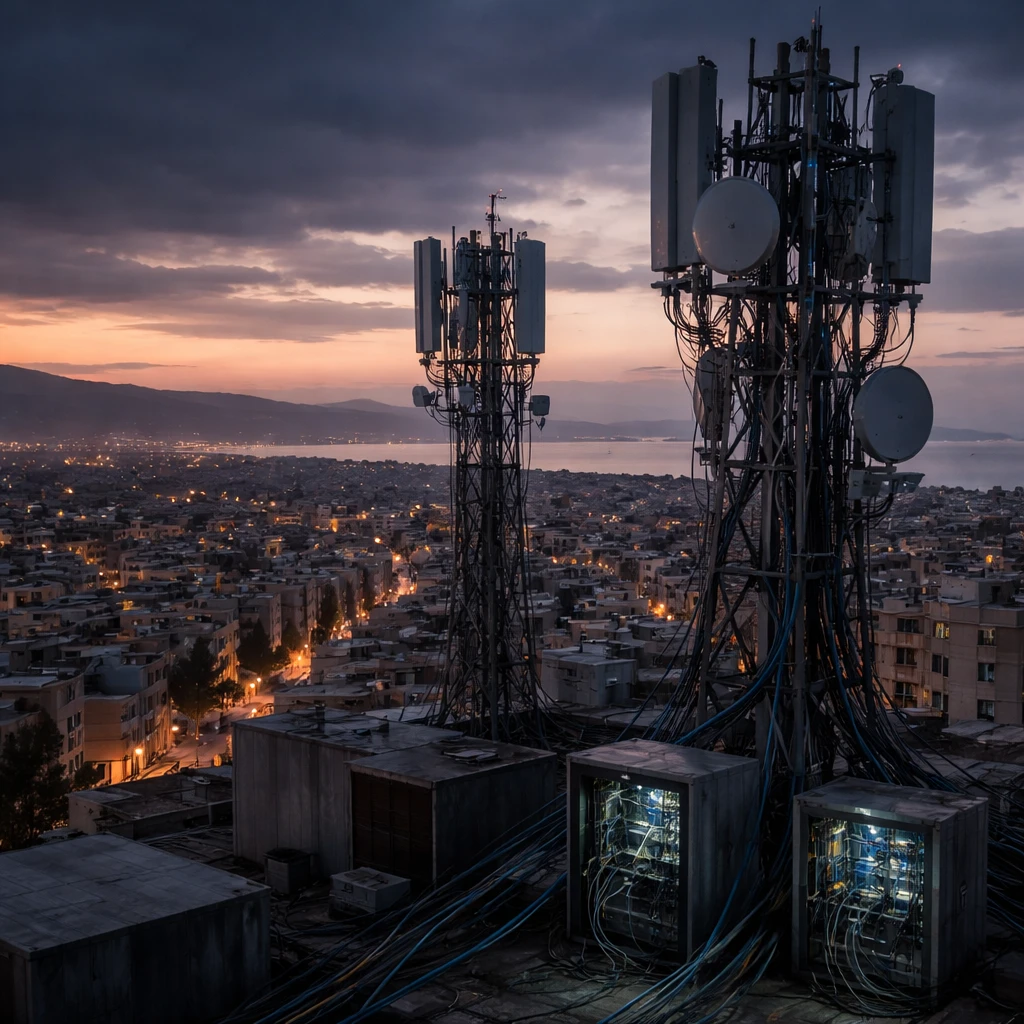
The United States has cautioned Syrian officials against deploying Chinese-sourced telecommunications technology, saying such choices run counter to U.S. interests and pose risks to national security, according to three people familiar with the discussions. The warning was given in a previously unreported meeting held in San Francisco on Tuesday between a U.S. State Department delegation and Syrian Communications Minister Abdulsalam Haykal.
Washington and Damascus have been in closer contact since 2024, the year Ahmed al-Sharaa rose to the presidency and replaced Bashar al-Assad, who had maintained a strategic relationship with China. Syrian authorities are weighing procurement of Chinese equipment to serve telecom towers and support the operational backbone of local internet service providers, a Syrian businessman engaged in those procurement talks said.
One source briefed on the discussions said the U.S. side sought clarity on the ministry's intentions regarding Chinese telecom gear. A diplomat representing the U.S. State Department who was familiar with the meeting told Reuters that U.S. officials explicitly urged Syria to favor American-made technology or solutions from allied countries for its telecommunications sector. It was not made clear during the talks whether Washington offered specific financial or logistical assistance to facilitate such a shift.
In response to queries from Reuters, a State Department spokesperson framed the U.S. position more broadly, urging countries to ‘‘prioritize national security and privacy over lower-priced equipment and services in all critical infrastructure procurement. If it seems too good to be true, it probably is.’’ The spokesperson also stated that Chinese intelligence and security services have legal mechanisms enabling them to compel Chinese citizens and companies to share sensitive data or to grant access to customer systems, and argued that assurances from Chinese firms about protecting customer privacy are inconsistent with Chinese law and established practices.
China has repeatedly rejected accusations that it uses technology for spying, a position that was reiterated by Chinese officials, the sources said. Meanwhile, Syria's Ministry of Telecommunications told Reuters that procurement and infrastructure decisions are taken in alignment with national technical and security standards to ensure data protection and continuity of service. The ministry added that diversifying partners and sources of technology remains a priority to serve national interests.
Syria's reliance on Chinese technology for its telecom networks is the product of years of U.S. sanctions imposed on successive Assad administrations since the onset of the civil war in 2011. Documents reviewed by Reuters and a senior source at one of Syria's two telecom operators indicate that Huawei technology constitutes more than half of the telecommunications infrastructure used by Syriatel and MTN, the country's only telecom operators.
Huawei did not provide an immediate response to a request for comment. The Syrian government is attempting to rebuild and expand its private telecommunications sector after 14 years of conflict left networks degraded. In early February, STC, Saudi Arabia's largest telecom operator, announced an $800 million investment aimed at bolstering Syria's telecommunications infrastructure and linking the country to regional and international networks through a fibre-optic line spanning 4,500 kilometres.
Syrian officials have pointed to U.S. export controls and what they describe as over-compliance by suppliers as barriers to cooperation with American firms. A person familiar with the San Francisco meeting said Syria is open to partnerships with U.S. companies but that restrictive export controls remain an urgent obstacle to acquiring American technologies and services.
On the ground, Syria continues to face serious gaps in telecommunications. Network coverage is limited outside of major city centres and connection speeds in many locations are reported to be no more than a few kilobits per second. The ministry of telecommunications emphasized that U.S. restrictions ‘‘hinder the availability of many American technologies and services in the Syrian market,’’ and reiterated that Damascus would welcome increased cooperation with U.S. companies once those restrictions are eased.
Context and next steps
For now, the public record from the San Francisco meeting is limited to statements from sources and official comments relayed to Reuters. The U.S. appeal to pivot toward American or allied telecom technology was firm, but concrete offers of support from Washington remain unspecified. Syria's stated intention to diversify its technology partners sits alongside its practical reliance on Chinese equipment today and constraints that U.S. export controls place on procurement options.
The outcome of these diplomatic exchanges could influence which vendors and technologies dominate Syria's next phase of telecom investment, but the specifics of financing, timelines, and implementation were not detailed in the available reporting.