
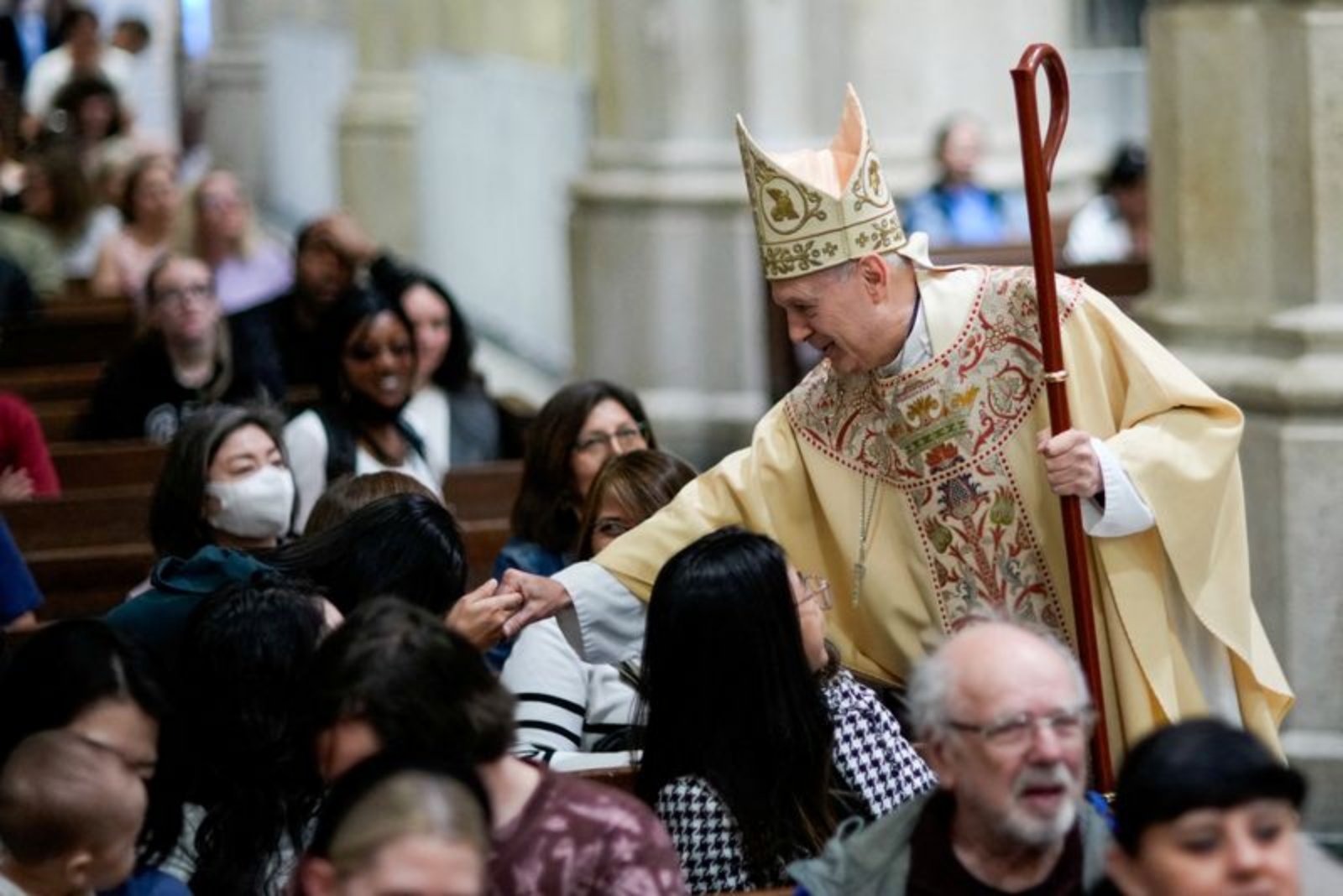
VATICAN CITY, March 7 - Pope Leo on Saturday named a senior Vatican diplomat, Archbishop Gabriele Caccia, as the Holy See’s ambassador to the United States and its envoy to the Trump administration.
Caccia, 68 and originally from Milan, served in Manila for two years during the period when former Philippine President Rodrigo Duterte pursued his widely publicized war on drugs. He moved from that posting to serve as the Vatican’s ambassador to the United Nations in 2020.
The appointment follows recent public statements from the Vatican criticizing U.S.-Israeli strikes on Iran. Cardinal Pietro Parolin, the Vatican’s top diplomat, said on Wednesday that the military campaign had undermined international law. The pope, identified in this announcement as the first U.S. pope, has also openly criticized some policies associated with former President Trump, describing Trump’s immigration crackdown as "inhuman."
Observers inside the Vatican regard Caccia as one of the more seasoned officials in the Holy See’s diplomatic ranks. He will assume the Washington posting at a moment when several U.S. bishops have amplified their criticism of Trump and when three senior American cardinals earlier in January voiced alarm about the direction of U.S. foreign policy, saying the country’s "moral role in confronting evil around the world" was in question.
Caccia will replace Cardinal Christophe Pierre, 80, who has held the Vatican’s ambassadorial role in Washington since 2016 and is retiring. The U.S. post is one of the Vatican’s most consequential diplomatic assignments: the ambassador is charged with representing the Church’s priorities to the White House and historically has taken positions at odds with policies from various U.S. administrations.
Beyond relations with the U.S. government, the ambassador to Washington occupies a broad influence inside the American Catholic Church. The officeholder recommends U.S. priests for episcopal appointments to the pope and thereby helps shape the leadership of a Catholic population of about 72 million in the United States.
During his time in Manila, Caccia was noted for calming tensions between local Catholic bishops and President Duterte, who had frequently attacked Church officials in public remarks. Duterte, who left office in 2022, is currently being held in The Hague on allegations related to killings during his anti-drug campaign.
Caccia’s diplomatic resume also includes service as the Vatican’s ambassador to Lebanon and a seven-year stint as the number-three official in the Secretariat of State, a central organ in the Holy See’s governance. The Vatican maintains roughly 110 embassies worldwide and regards the Washington mission as among its most important.
Diplomatic relations between the Vatican and the United States were formally established in 1984. Notably, none of the previous six Vatican ambassadors to Washington had been posted first to the United Nations.
Key points
- Archbishop Gabriele Caccia, 68, appointed as Vatican ambassador to the U.S.; he previously served in the Philippines and as U.N. ambassador.
- The appointment follows Vatican criticism of U.S.-Israeli strikes on Iran and comes amid increased criticism of U.S. foreign policy by some American church leaders.
- The ambassadorial role includes representing Church priorities to the White House and recommending candidates for U.S. bishoprics, influencing the 72 million Catholics in the United States.
Risks and uncertainties
- Heightened diplomatic tensions - Vatican criticism of recent military strikes and differing views among U.S. church leaders could complicate relations between the Holy See and Washington, affecting diplomatic engagement.
- Internal Church dynamics - Increased criticism from U.S. bishops and a transition in the ambassador’s office may lead to short-term uncertainty in Church appointments and internal policy advocacy in the United States.
- Regional legacies - Caccia’s role in managing tensions in the Philippines highlights unresolved questions tied to past conflicts there, including legal proceedings related to Duterte’s drug-war era, which may remain sensitive topics in diplomatic dialogues.