
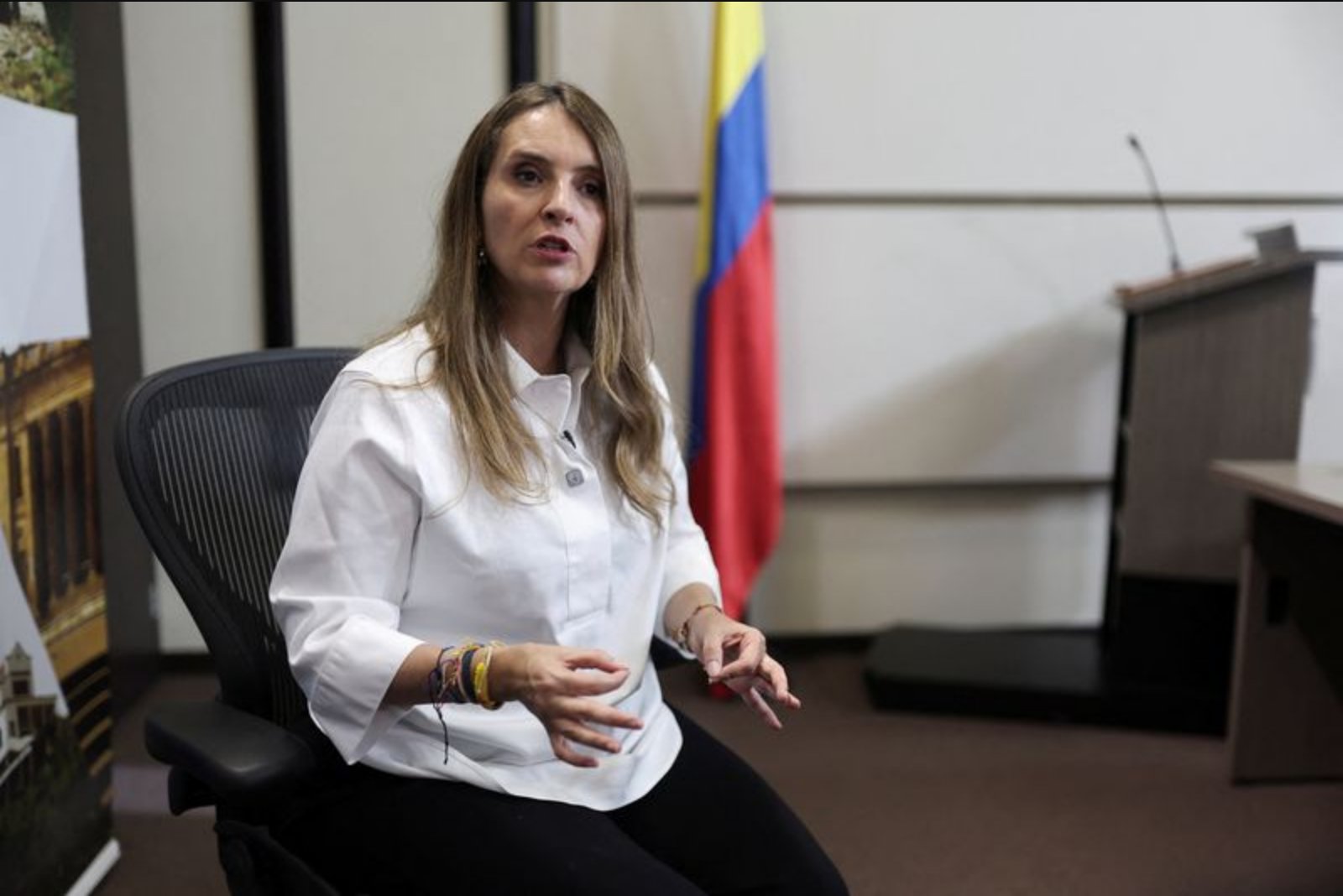
Paloma Valencia, the right-wing candidate of the Democratic Center party, pledged to end Colombia's current "total peace" policy and adopt a more forceful security strategy if she wins the presidency. "The policy of total peace ends with me. Total security will begin," Valencia, 48, said in an interview, saying she would reactivate arrest warrants and bolster security forces in cooperation with the United States.
Backed by former president Alvaro Uribe, Valencia opposes continued negotiations with dissident factions of the former FARC rebels, the National Liberation Army (ELN), and criminal organizations such as the Gulf Clan. Her stance marks a clear departure from the approach of incumbent President Gustavo Petro, whose administration has sought talks with armed groups in a bid to end a conflict that has stretched for decades but so far produced limited tangible results with less than three months remaining in his term.
Security agenda and force expansion
Valencia has made security the backbone of her platform. She proposes increasing police and military personnel by 60,000, reactivating outstanding arrest warrants and resuming aerial spraying of coca crops using non-glyphosate herbicides - a tactic that was restricted in 2015 due to health concerns. She has also signaled support for the U.S.-led "Americas Shield" regional security initiative.
Her objections to further negotiations with armed actors extend across dissident FARC groups, the ELN and organized crime networks, which she views as requiring a more robust law enforcement and military response rather than additional talks.
Economic priorities linked to resource sectors
On economic policy, Valencia advocates expanding production in oil, gas and mining, including allowing fracking under environmental safeguards. She specified that fracking would be excluded from the Amazon and the high-altitude paramo ecosystems. Valencia said she would "promote exploration and production of oil, gas, coal, minerals and rare earths, while also ensuring environmental protection," and indicated that a 5% growth in mining, energy and construction could generate 30 trillion pesos ($7.9 billion) for social spending.
Her fiscal proposals include cutting income taxes and eliminating both wealth and financial transaction taxes, measures aimed at reshaping revenue collection and economic incentives while tying resource-sector growth to funding priorities.
Campaign context and electoral dynamics
A three-term senator, Valencia faces a crowded field including leftist Ivan Cepeda and independent right-wing businessman Abelardo De La Espriella. Valencia has emphasized mobilizing female voters, saying, "We would elect a female president for the first time. And that is a historic event that we must achieve." Polls suggest a tight contest for second place, which would determine who faces Cepeda, the candidate of the Historic Pact coalition, in a possible runoff.
More than 41 million Colombians are eligible to vote in the presidential election on May 31.