
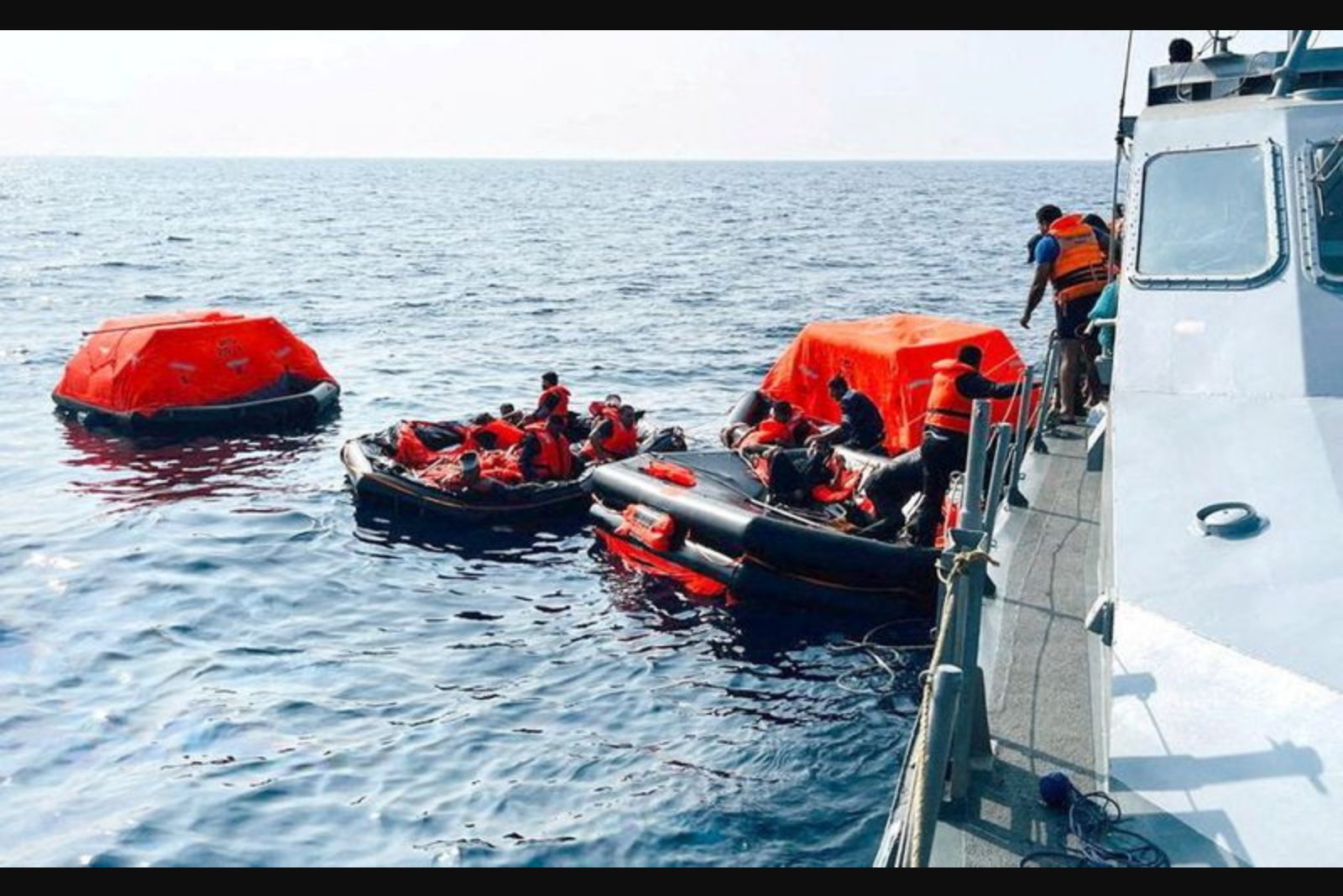
An internal State Department cable dated March 6 instructs U.S. diplomats to press Sri Lankan officials not to repatriate either the 32 survivors from the IRIS Dena or the 208 crew members offloaded from the naval auxiliary IRIS Booshehr.
The Dena was sunk by a United States submarine in the Indian Ocean about 19 nautical miles off the southern Sri Lankan port city of Galle, an action that killed dozens of sailors and widened the geographic scope of U.S. operations against the Iranian navy. U.S. Defense Secretary Pete Hegseth characterized the strike as a "quiet death."
The cable, described as internal and not previously reported, said Jayne Howell, charge d'affaires at the U.S. embassy in Colombo, directly told Sri Lanka's government that neither the Booshehr crew nor the Dena survivors should be returned to Iran. Howell also advised Sri Lankan authorities to reduce opportunities for Iran to exploit detained personnel for propaganda purposes.
According to the document, Howell communicated the same position to Israel's ambassador accredited to India and Sri Lanka, stating there was no plan to repatriate the crews to Iran. The cable records that the Israeli envoy asked whether any engagement with the detained personnel was underway to encourage "defection."
Sri Lanka has already begun processing the Booshehr crew. Authorities offloaded 208 personnel from that vessel after it became stranded in Sri Lanka's exclusive economic zone, outside the country's maritime boundary. Government officials said they were escorting the Booshehr to a harbor on the eastern coast and relocating most of its crew to a navy camp near Colombo.
President Anura Kumara Dissanayake framed Colombo's actions in humanitarian terms, saying the island nation had a "humanitarian responsibility" to take in the crew. Sri Lanka's deputy minister for health and mass media, Hansaka Wijemuni, additionally said Tehran had asked Colombo to assist in repatriating the bodies of those killed aboard the Dena, but that no timeframe had been set for any such transfer.
The cable also indicated that the Booshehr will remain in Sri Lankan custody for the duration of the conflict. Sri Lankan authorities confirmed moves to secure the vessel and to house most of its personnel at a naval facility near the capital.
U.S. officials described operational details surrounding the attack on the Dena in limited terms. One U.S. official, speaking on condition of anonymity, said the Dena was armed when it was struck and that the United States did not provide a warning before carrying out the torpedo attack. The Dena had recently participated in naval exercises organized by India in the Bay of Bengal and was returning to Iran when it was hit.
The diplomatic instructions reflected in the March 6 cable place Colombo at the center of sensitive regional decisions - from how to treat detainees and survivors to how to respond to requests from Tehran. Sri Lankan officials have been balancing a declared humanitarian impulse to assist the sailors with directives from foreign partners seeking to limit returns to Iran amid broader hostilities.
At this stage, Sri Lanka is implementing immediate measures to secure the Booshehr and to manage the movement of personnel onshore while officials consider requests regarding the deceased from Tehran. The State Department did not provide a public comment on the cable, and Sri Lankan government offices did not offer immediate comment on the U.S. guidance.