
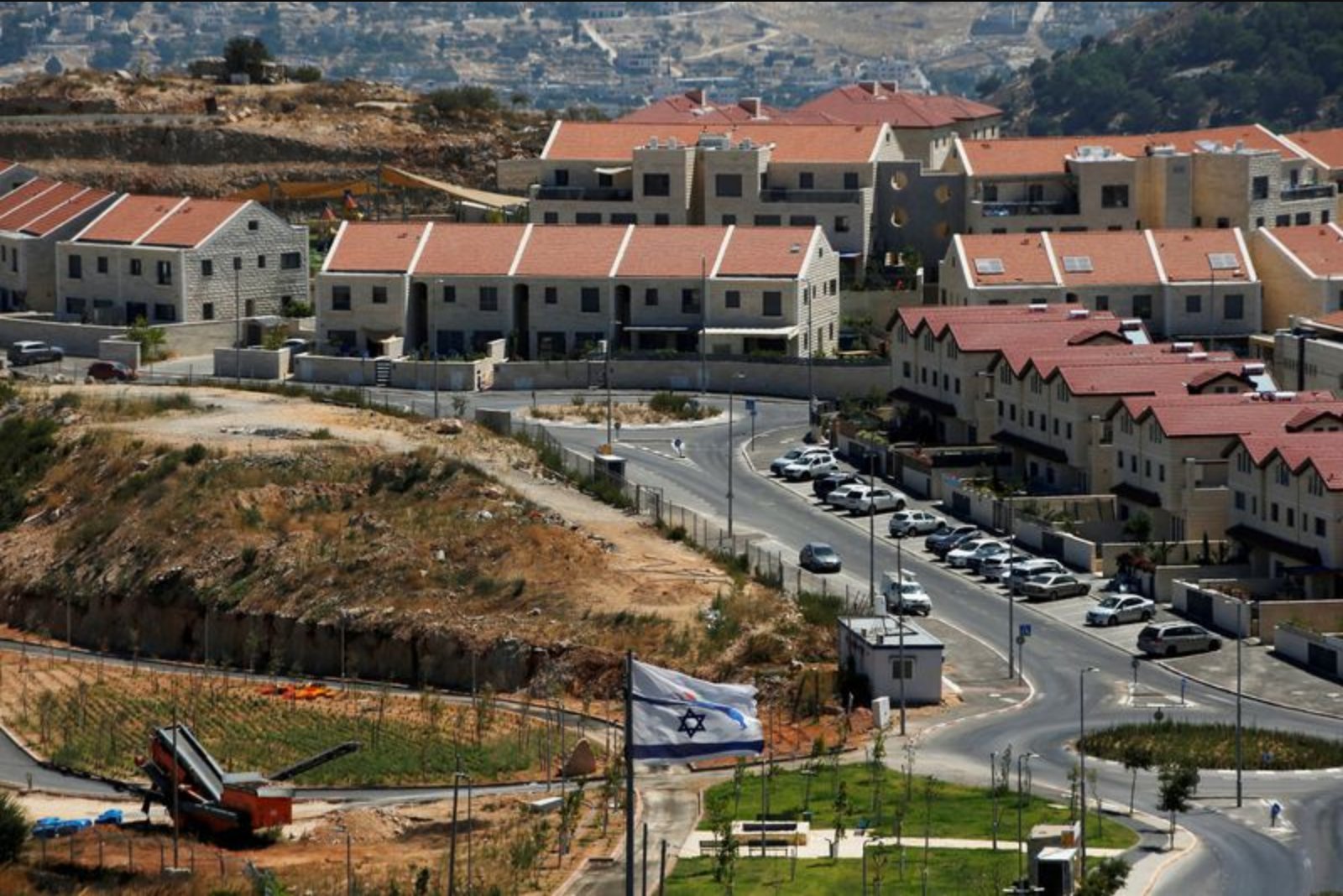
U.S. consular officers will deliver passport services this week inside a West Bank settlement for the first time, the U.S. Embassy in Jerusalem said, an unprecedented step that delivers routine consular support directly to American citizens living in occupied territory.
In a post on X, the embassy said consular officers would be "providing routine passport services in Efrat on Friday, February 27," referring to the Jewish settlement located south of the Palestinian city of Bethlehem. The embassy added it plans to hold similar on-site services in the Palestinian West Bank city of Ramallah, the settlement of Beitar Illit near Bethlehem, and in Israeli cities such as Haifa.
An embassy spokesperson confirmed this is the first time American consular officials have carried out passport services inside a settlement in the West Bank. The spokesperson also said that similar services are being offered to American-Palestinian dual nationals living in the West Bank. The U.S. already provides passport and consular services at its embassy in Jerusalem and at a branch office in Tel Aviv.
The announcement arrives against the backdrop of competing claims about the legal status and future of the West Bank. Most of the international community regards Israeli settlements in the territory as illegal under international law governing military occupations; Israel disputes that characterization. Many on Israel's right advocate formally annexing the West Bank, while Palestinians have long sought control of the territory as part of a future independent state alongside Gaza and East Jerusalem.
This month, Prime Minister Benjamin Netanyahu's right-wing cabinet approved measures intended to tighten Israeli control over the West Bank and to make it easier for settlers to acquire Palestinian land. Palestinian officials and other critics described the measures as a "de facto annexation." The cabinet move follows wider debate within Israel about the status of land captured in the 1967 Middle East war, to which Israeli leaders cite biblical and historical ties.
President Donald Trump has said he opposes formal annexation of the West Bank. Yet, rights groups and observers cite an increase in settlement activity since he took office last year and note that the administration has not implemented steps to stop settlement expansion.
The West Bank is home to roughly 3 million Palestinians and more than 500,000 Israeli settlers. Most settlements are small towns that are surrounded by fences and guarded by Israeli soldiers. The number of dual American-Israeli nationals living in the West Bank is estimated to be in the tens of thousands. Efrat, where the consular visit is scheduled, is noted as a settlement with many American immigrants, though the U.S. Embassy said it does not have precise data on the number of Americans residing there.
Much of the West Bank remains under Israeli military control, with limited Palestinian self-rule in some areas administered by the Western-backed Palestinian Authority. Netanyahu's ruling coalition includes many members who support annexation, a stance that aligns with a strong voter base in the settlements.
What this step means
- Administrative reach: By providing passport services on-site in Efrat, U.S. officials are extending routine consular access to Americans inside a settlement for the first time.
- Diplomatic sensitivity: The move comes amid contested international views on the legality of settlements and recent Israeli cabinet actions aimed at expanding settlers' control over land.
- Population considerations: The West Bank hosts a significant population of Israeli settlers and a sizeable community of dual American-Israeli nationals, though precise counts in specific settlements such as Efrat are not available from the embassy.
Context on governance and control
Much of the West Bank remains under Israeli military authority, with the Palestinian Authority exercising limited self-rule in certain areas. The recent cabinet measures approved by Netanyahu's government are designed to increase Israeli control and to facilitate settlers' purchase of Palestinian land, actions that Palestinians and others describe as steps toward annexation.
Against this backdrop, the U.S. decision to conduct a consular visit to a settlement is likely to draw attention from a range of stakeholders, including U.S. citizens living in the territory, Israeli officials, Palestinian authorities, and international observers monitoring developments on the ground.