
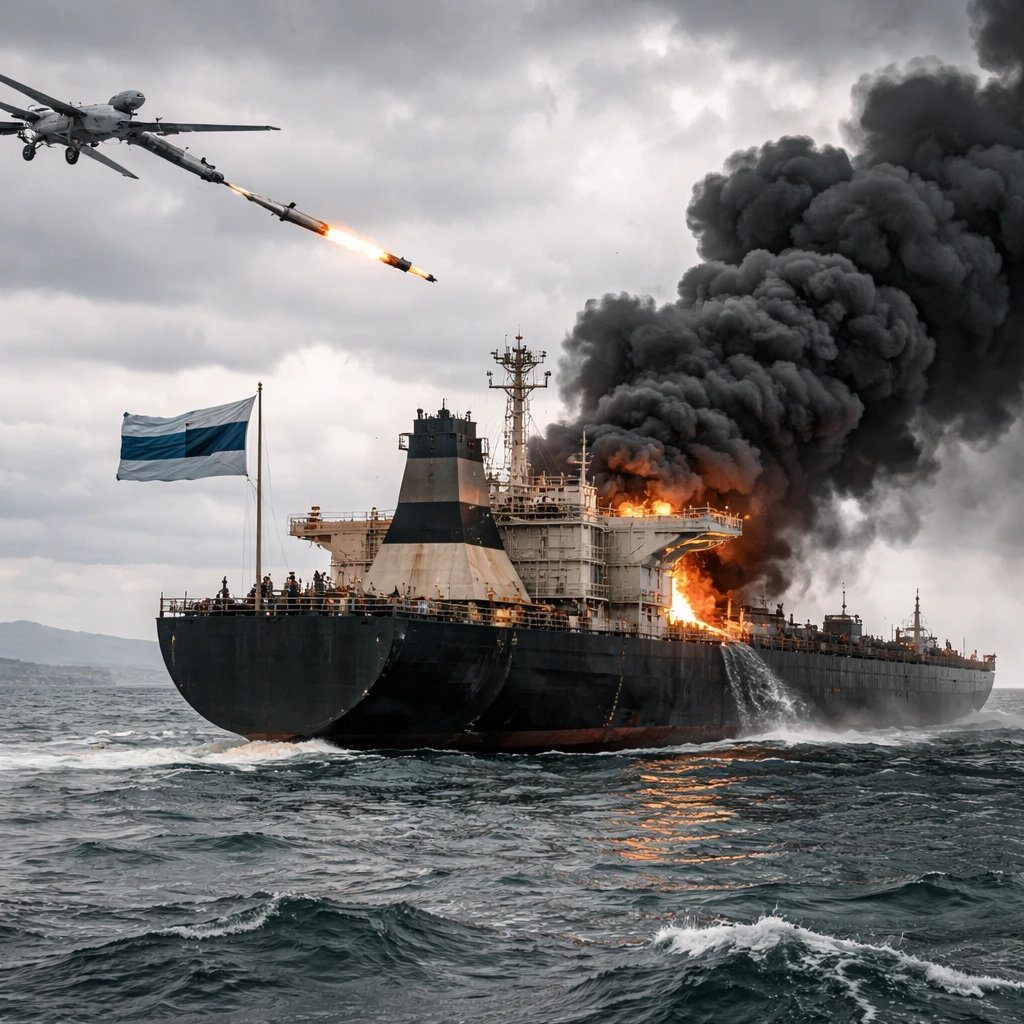
The U.S. military on June 2 fired a Hellfire missile at a tanker that was reported to be heading toward Iran, disabling the vessel by striking its engine room, Central Command said.
Central Command released video footage of the strike and described the target as the Botswana-flagged M/T Lexie. According to the command’s statement, the ship’s crew ignored repeated warnings and failed to follow directions issued by U.S. forces multiple times during a 24-hour period.
Central Command statement: "The ship’s crew ignored repeated warnings, failing to comply with directions from U.S. forces multiple times over a 24-hour period."
The statement added: "A U.S. aircraft ultimately disabled the vessel by firing a Hellfire missile into the ship’s engine room, preventing the tanker from reaching Iran."
This strike is being reported as part of a broader maritime campaign that the U.S. describes as a blockade imposed to compel Iran to negotiate a peace agreement on terms advocated by President Donald Trump. The blockade was initiated on April 13, and the Lexie represents the sixth ship the U.S. military says it has disabled since that date.
In addition to disabling six vessels, U.S. military authorities state they have redirected 122 vessels that were attempting to enter or leave Iranian ports so far. Beyond the operational details provided by Central Command, the publicly available information about the incident is limited to the footage and the command’s explanatory remarks.
Context and implications
The military account centers on compliance and repeated warnings issued over a 24-hour period, culminating in a kinetic strike by a U.S. aircraft using a Hellfire missile aimed at the engine room of the Lexie. Officials describe the action as intended to stop the tanker from reaching Iran.
The available statements do not elaborate on casualties, damage beyond the engine-room disabling, or subsequent actions taken with the vessel and its crew. Nor do they provide further operational specifics beyond the number of disabled and redirected ships cited since the blockade began.
What to watch next
- Any additional statements from U.S. military authorities or other parties directly involved.
- Updates on the status of the Lexie, including the condition of its crew and whether the vessel is being escorted or salvaged.
- Further counts of vessels disabled or redirected under the blockade, which began on April 13.