
WASHINGTON, March 19 - The senior U.S. military officer responsible for forces in Latin America told members of the Senate on Thursday that American troops are not engaged in rehearsals to invade Cuba or to take control of the island. General Francis Donovan, commander of U.S. Southern Command, said clearly that Southern Command is not conducting operations that involve seizing, occupying, or otherwise asserting control over Cuba.
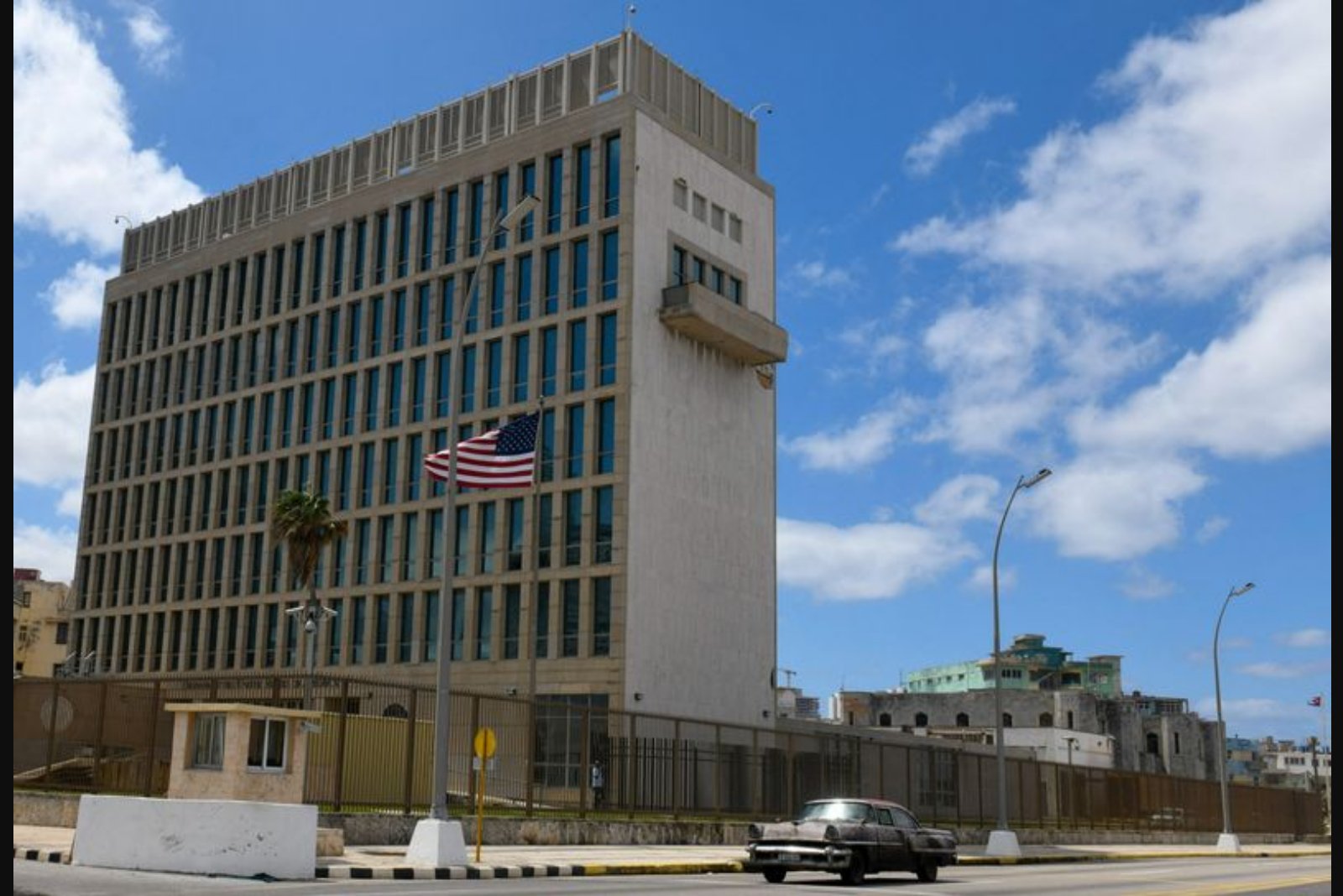
Donovan affirmed that while invasion rehearsals are not taking place, U.S. forces stand ready to protect American personnel and facilities and to support U.S. government responses to potential migration flows originating from Cuba. "If it developed into a physical security threat to the U.S. embassy or the base at Gitmo, we would put U.S. troops to defend American lives," he told senators.
The exchange occurred during a Senate hearing that examined the Trump administration's increasingly assertive military posture in Latin America. Lawmakers questioned the scope of U.S. military activity in the region as the administration has reasserted a view of Latin America as falling within Washington's zone of influence.
Testimony and exchange with senators referenced a series of recent U.S. actions and statements in the region. Officials discussed U.S. strikes on suspected drug-smuggling vessels, an expansion of counter-narcotics cooperation with governments aligned with Washington, and joint ground operations with Ecuador conducted earlier this month. Members of the hearing also noted a January operation in which U.S. special forces captured Venezuela's then-President Nicolas Maduro at his Caracas compound and transported him to New York on drug-trafficking charges.
Donovan, who previously served as the No. 2 official at U.S. Special Operations Command at the time of the Maduro seizure, made a surprise trip to Venezuela for security discussions last month shortly after assuming command of Southern Command. Senators raised that visit in the context of recent U.S. regional activity.
The hearing also highlighted public comments by President Donald Trump about Cuba. The president said on Monday that he expected to take Cuba "in some form" and asserted, "I can do anything I want" with the neighboring country, which lies about 90 miles (180 km) south of Florida's Key West. Donovan reiterated that, despite such remarks, Southern Command is not rehearsing for an invasion.
U.S. policy toward Cuba has included measures aimed at creating economic pressure on the island. Those measures include an end to Venezuelan oil shipments to Cuba, a move U.S. officials have used to increase leverage. The lack of Venezuelan deliveries has been cited as a factor in severe energy rationing on the island and broad economic disruption. In recent days Cuba experienced a nationwide electrical grid collapse that left its population of roughly 10 million without power.
Senators used the hearing to probe readiness at U.S. facilities in the Caribbean. Donovan acknowledged that installations such as Guantanamo Bay have suffered from storm damage and years of under-investment. "I won't pull any punches, it's in rough shape," he said, noting that hurricane damage had reduced the base to one working pier and one refueling pier. He described Guantanamo as "a pivotal point for any operations in the Caribbean."
On the specific issue of mass migration from Cuba, Donovan said the Department of Homeland Security, which has oversight of the U.S. Coast Guard, would lead any U.S. response. He left open the operational possibility of establishing a temporary camp at Guantanamo Bay for overflow migrants if required to support government efforts.
When senators asked whether Donovan was aware of any U.S. command conducting rehearsals to seize or occupy Cuba, he responded plainly: "U.S. Southern Command is not." When asked whether he knew of any other U.S. military command doing so, Donovan answered: "No."
The testimony underscored a line between declaratory political rhetoric and the military's stated posture. While the administration has used strikes and partnerships to press counter-narcotics objectives and has sought to increase pressure on Cuba through economic measures, the military's senior commander in the region affirmed that a seizure or occupation of Cuba is not being rehearsed by U.S. forces today.
Key Points
- General Francis Donovan told a Senate hearing Southern Command is not rehearsing an invasion or seizure of Cuba; U.S. forces would, however, defend the embassy and Guantanamo Bay if a physical threat to Americans emerged - sectors impacted: defense, maritime logistics.
- The U.S. has intensified operations in Latin America, including strikes on suspected drug boats, expanded counter-narcotics partnerships, and joint ground operations with Ecuador; these activities relate to security and energy risk considerations - sectors impacted: defense, energy, trade.
- U.S. economic measures such as halting Venezuelan oil shipments to Cuba have contributed to energy rationing and economic disruption on the island, with a recent nationwide grid collapse affecting about 10 million people - sectors impacted: energy, utilities.
Risks and Uncertainties
- Potential for mass migration from Cuba in the event of further political or economic collapse; DHS would lead the response and military facilities such as Guantanamo Bay could be used for overflow - sectors impacted: immigration services, defense, humanitarian logistics.
- Degraded infrastructure at key U.S. Caribbean facilities, with Guantanamo Bay down to one working pier and one refueling pier, could constrain operational flexibility for maritime and logistics support in the region - sectors impacted: defense logistics, naval operations.
- Heightened U.S. military and law enforcement activity in Latin America, including targeted strikes and joint operations, raises uncertainty around regional security dynamics and could influence counter-narcotics and energy supply considerations - sectors impacted: security, energy markets.