
U.S. law enforcement agencies have entered a heightened posture as the conflict involving Iran moves into its third week, yet the limits of that vigilance were exposed when two apparently lone-wolf attacks occurred more than 500 miles apart on Thursday.
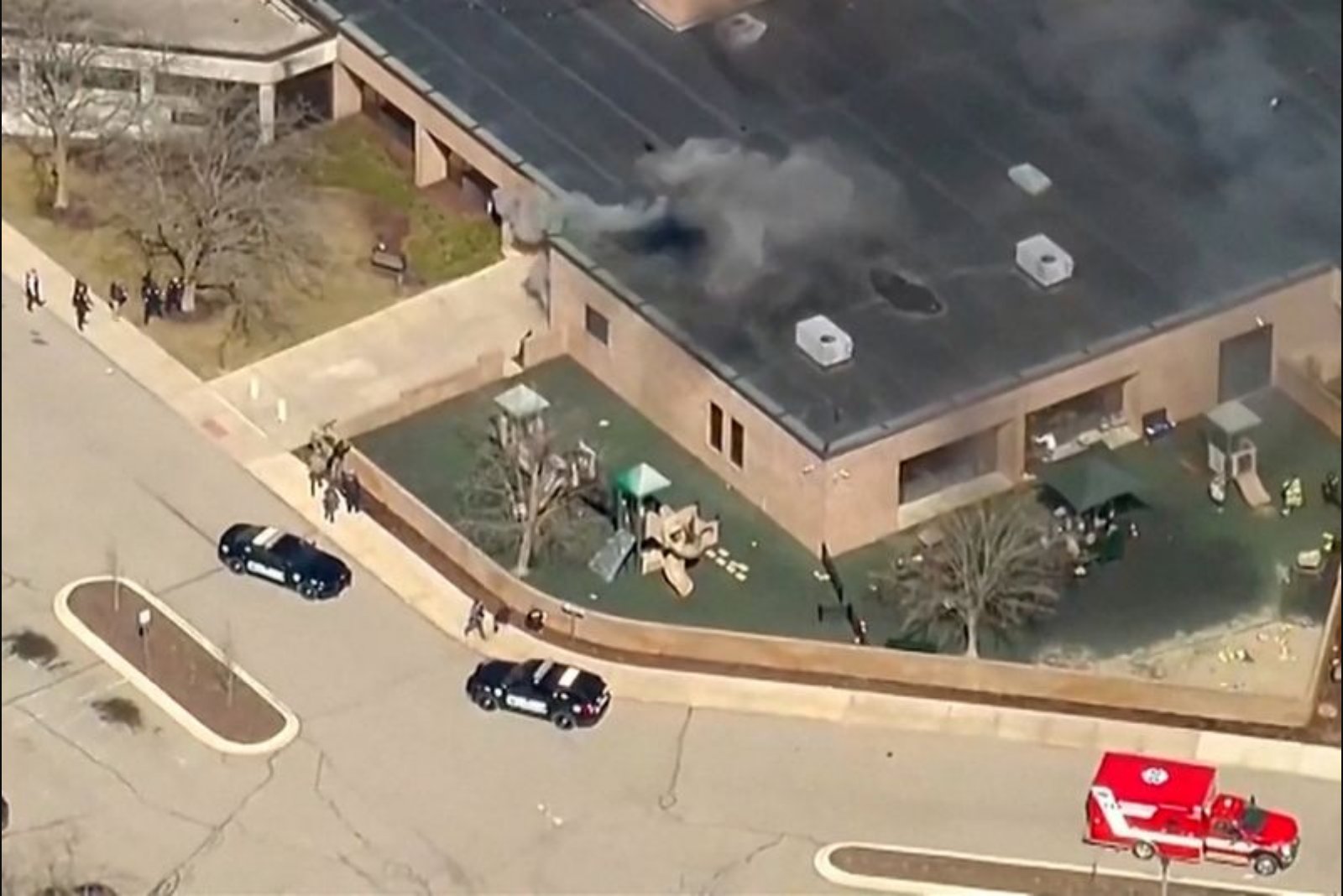
In Michigan, a Lebanon-born man drove an explosives-laden truck into the entrance of Temple Israel synagogue. Authorities identified the attacker as Ayman Ghazali. Officials have not announced a motive, but reports indicate the assault occurred roughly a week after an Israeli strike on Ghazali's family's town in Lebanon on March 5, an attack that news reports say killed two of his brothers and a niece and nephew. Except for a security guard who was knocked down when the vehicle breached the synagogue entrance, those inside - including children attending the congregation's preschool - escaped without physical harm, though dozens of law enforcement officers were treated for smoke inhalation.
Temple Israel's security staff killed Ghazali at the scene. The assailant became a naturalized U.S. citizen in 2016 and lived in nearby Dearborn Heights.
At approximately the same time, authorities in Virginia responded to a shooting at Old Dominion University in Norfolk. The shooter, who had previously been convicted of supporting a designated terrorist group, killed one person and wounded two others, both of whom were U.S. Army personnel. The attacker was killed during the incident. Old Dominion University has close institutional ties to the U.S. military.
Counterterrorism specialists emphasize that these sorts of self-directed attacks are the most difficult to anticipate and prevent. "Someone who is self-radicalized, a lone wolf, is the hardest to track," said Kenneth Gray, a former FBI counter-terrorism agent who now teaches at the University of New Haven. "Normally there would be opportunities to track weapon transfers, foreign training, or transfers of funds. We apparently have none of that."
Shawn Brokos, who served as an FBI official in Pittsburgh during the 2018 Tree of Life synagogue shooting and now directs community security for the Jewish Federation of Greater Pittsburgh, praised Temple Israel's response as a "textbook reaction" that protected people inside the building. Brokos said the attack also reinforced the importance of vigilance to spot individuals embracing what she described as "a grievance narrative." "They're upset about current events," she said. "They're starting to access weapons. They're starting to make plans. These are all the things that are helpful for us to know so we can do these checks and share it with law enforcement."
Dearborn Heights Mayor Mo Baydoun condemned the attack and noted that Ghazali had been affected by the Iran war, "in which more than 2,000 people have been killed, mostly in Iran and Lebanon." "The tensions we see across the world too often find their way into our own neighborhoods, reminding us how deeply connected our shared safety is," Baydoun said in a statement.
The recent incidents come amid a broader pattern of security scares that have touched multiple parts of the country since the war began. Authorities have responded to threats and disruptions at airports in Kansas City and in suburbs of Washington, D.C.; two men were charged with terrorism-related offenses after throwing home-made bombs at an anti-Muslim rally in New York City; and a man who expressed pro-Iran views online opened fire at a bar in Austin, Texas, killing four people.
Federal public advisories concerning terrorism are issued through the Department of Homeland Security's National Terrorism Advisory System (NTAS). DHS issued an NTAS alert in June 2025 saying that brief hostilities between the U.S., Israel and Iran had created a "heightened threat environment" at home; that alert expired in September 2025. There are no current NTAS advisories.
Last week, the White House halted a bulletin from DHS, the FBI and the National Counterterrorism Center that was intended to warn state and local law enforcement agencies of an elevated threat tied to the Iran war.
Questions about domestic intelligence capacity have accompanied the increase in security incidents. Since President Donald Trump's return to the White House last year and his stated plans to reduce the size of the federal workforce, the DHS Intelligence and Analysis unit has been reduced from roughly 1,000 employees to about 500-600, three former agency officials said. DHS did not respond to a request for comment.
Travis Nelson, director of Maryland's homeland security office, criticized DHS's public communications focus, saying the department has emphasized the administration's mass deportation enforcement efforts rather than drawing attention to potential homeland risks stemming from the Iran conflict. "It's all about immigration enforcement," Nelson said. "We haven't seen anything from Homeland Security about the potential risk to the homeland as a result of what's going on in the Middle East."
For officials and analysts, the recent attacks underline a difficult tension in contemporary domestic security: while agencies can monitor organized plots and track transfers of materiel and funding, individuals who radicalize on their own and act independently create a threat vector that is inherently harder to detect. The Michigan and Virginia attacks illustrate how that gap in detection can manifest quickly and lethally within U.S. communities, even as federal agencies maintain an elevated posture in response to events overseas.
The incidents have prompted renewed calls for community vigilance, stronger information sharing between local organizations and law enforcement, and focused attention on how reductions to analytical capacity might affect the ability to identify self-radicalizing actors before they strike. Officials have emphasized the role of local security measures - as in the synagogue case - while also flagging the challenges of national-level threat communication and resource allocation amid competing policy priorities.