
UG Solutions, a security company headquartered in North Carolina that supplied armed military veterans to guard aid operations in Gaza last year, is advertising new roles for Arabic-speaking contractors with combat experience, according to job postings visible on the firm’s website.
The firm provided security personnel to the Gaza Humanitarian Foundation (GHF), a distribution operation backed by the United States and Israel that ceased operations after a ceasefire in October. The GHF faced international scrutiny following the deaths of hundreds of Palestinians who tried to reach its aid sites during its months of operation.
UG Solutions did not immediately answer requests for comment about the recent job listings, or to clarify whether the newly advertised roles are intended for work in Gaza or elsewhere in the region. The GHF also did not respond to an emailed request for comment. During its period of activity, the GHF repeatedly defended its distribution methods.
Reactions within Palestinian civil society indicate apprehension about any return by UG Solutions to Gaza. Amjad al-Shawa, head of the Palestinian NGOs Network, which liaises with the U.N. and international humanitarian agencies, said: "The GHF and those who stand behind it have Palestinian blood on their hands; they are not welcome to return to Gaza." This comment reflects ongoing distrust stemming from the violence that accompanied some GHF distributions last year.
The GHF had bypassed the United Nations and established aid agencies to distribute food at sites that were largely located away from denser population centers and in proximity to Israeli forces, according to criticism reported during its operation. Gaza health officials and the United Nations said Israeli forces killed hundreds of Palestinians who were trying to reach GHF aid locations. The Israeli military has acknowledged that some Palestinians were hurt but did not provide a precise number; it has said its troops fired to control crowds and address immediate threats, and that it altered procedures after those incidents.
When the GHF was shut down, UG Solutions described itself in a statement as remaining "the go-to security firm to help those focused on rebuilding and delivering aid" as outlined in U.S. President Donald Trump’s plan to end the war. That plan calls for a surge of humanitarian assistance, an Israeli withdrawal after Hamas lays down arms, and reconstruction of the territory under the oversight of a "Board of Peace" to be led by the U.S. President.
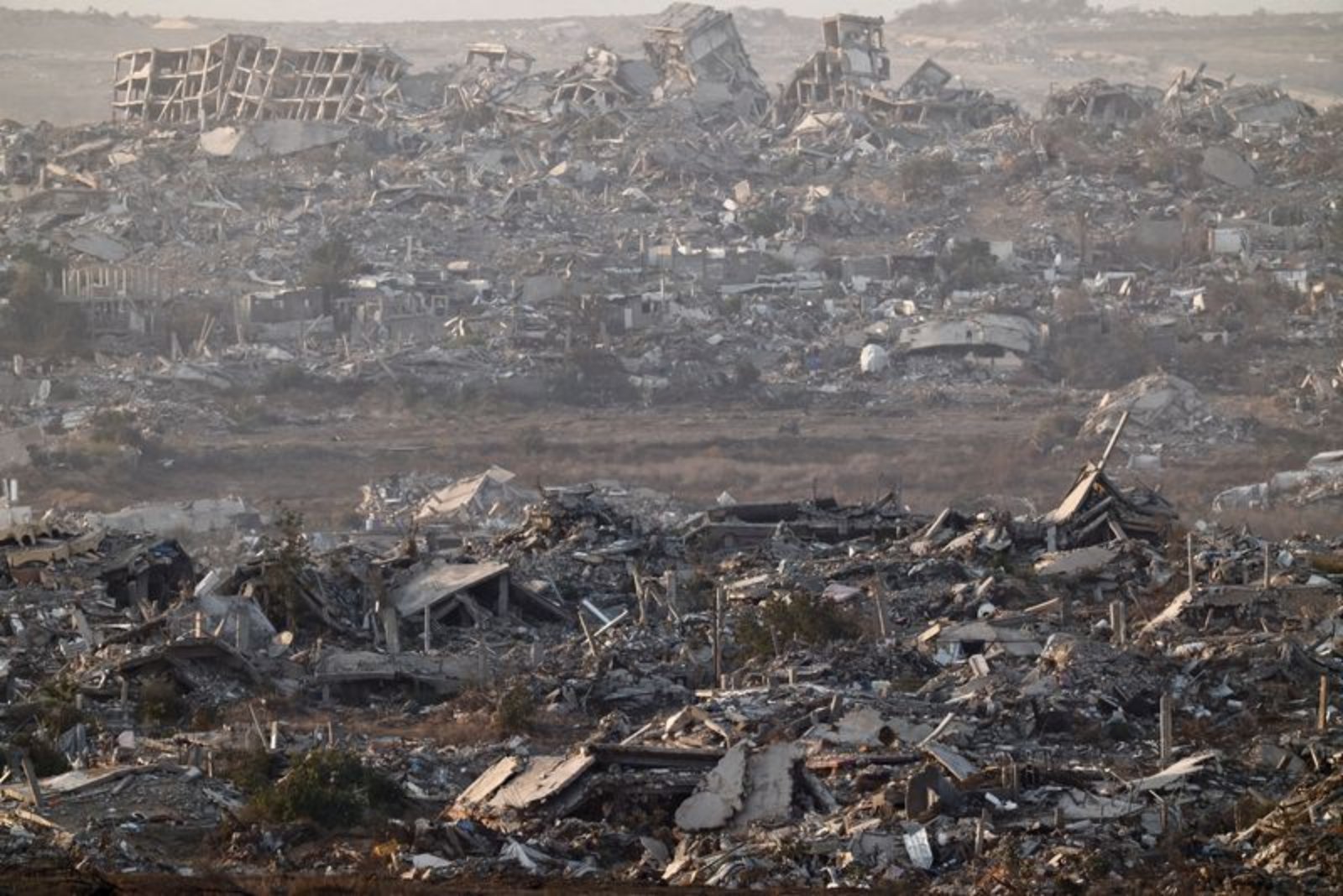
The Board of Peace is due to convene a meeting in Washington next week that is expected to serve in part as a fundraiser. The funds are intended to support a reconstruction approach associated with Jared Kushner, envisioned to rebuild Gaza in stages beginning in Rafah, a southern area then under Israeli military control. Rafah is where the GHF established three out of its four aid locations; the routes to those sites drew Palestinians desperate for food.
Two of the job advertisements on UG Solutions’ website are framed around humanitarian security and cultural liaison work. One opening, titled International Humanitarian Security Officer, describes responsibilities including "securing key infrastructure, facilitating humanitarian efforts, and ensuring stability in a dynamic environment." The posting lists preferred credentials such as proficiency with "small arms weapons" and four or more years of active duty deployment.
A second role is advertised exclusively to female candidates as a Cultural Support Officer tasked with ensuring "safe, effective, and culturally appropriate aid distribution." Both listings state UG Solutions is seeking to hire multiple officers, though they do not specify a precise number of hires. Both also indicate Arabic proficiency as a preferred qualification.
Neither posting specifies a particular country or give Gaza as a stated work location. Instead, the two roles are presented with work locations marked as "Worldwide." Separate listings show that UG Solutions is recruiting for at least 15 positions within its defence division. Aside from the two worldwide positions, 13 other roles are listed as remote within the United States with travel required.
Publicly, UG Solutions has not been linked to operations in additional Arabic-speaking locations beyond Gaza. The absence of explicit geographic assignment in the job listings leaves open where the firm intends to deploy newly hired officers, and UG Solutions has not clarified whether these positions reflect renewed activity in Gaza or planned work in other parts of the region.
The context for these hires includes the contested humanitarian strategy promoted under President Trump’s Gaza plan. That strategy pairs a large infusion of aid with political steps that would see Israeli forces withdraw after a disarmament condition and rebuild the territory under a U.S.-led reconstruction board. The plan’s initial reconstruction phase is described as starting in Rafah.
For stakeholders in security contracting, humanitarian logistics, and regional reconstruction efforts, the combination of past fatalities at distribution sites, the sensitivity of operating near military forces, and the lack of clarity about future deployments are material factors to monitor as the firm fills the newly advertised roles.