
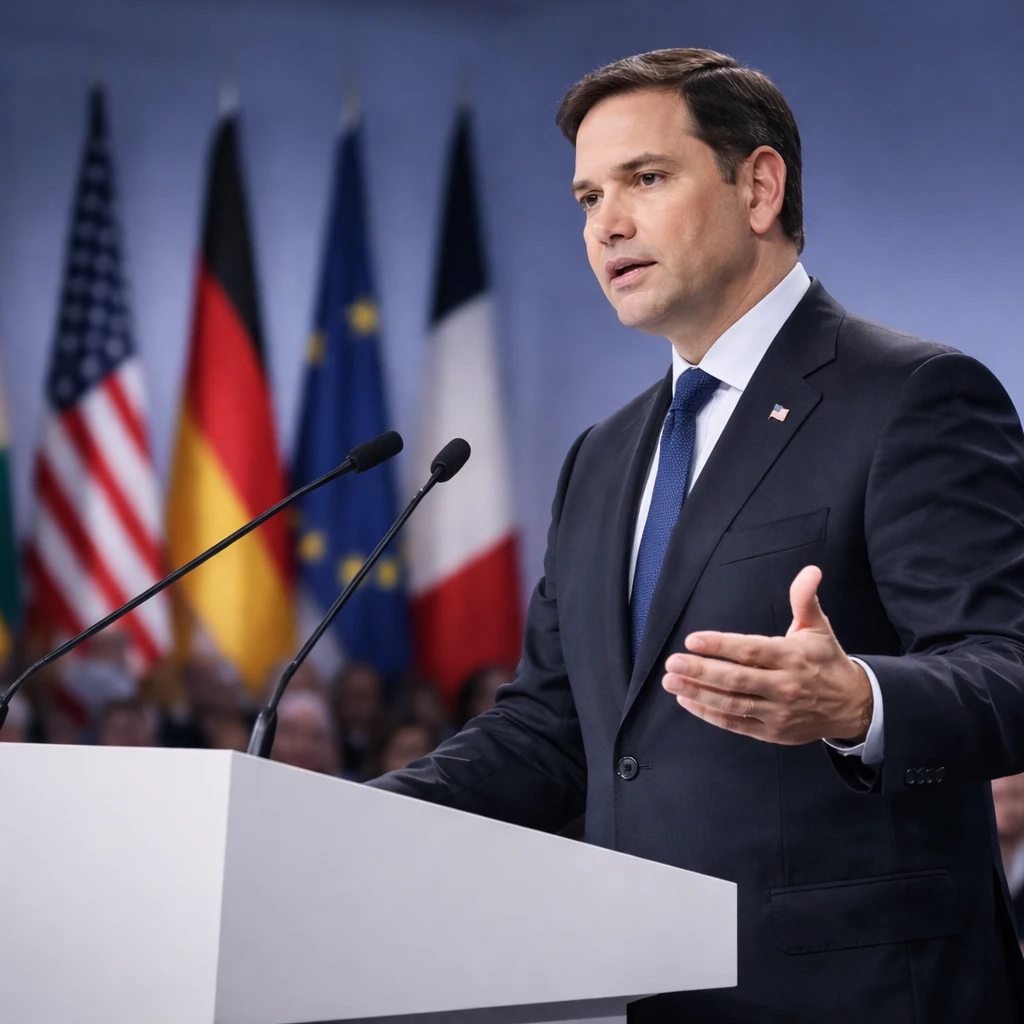
U.S. Secretary of State Marco Rubio used his Saturday remarks at the Munich Security Conference to restate the United States' ongoing commitment to its European allies, telling attendees that Washington values the future of Europe as closely tied to its own.
Addressing the conference, Rubio said plainly:
and emphasized that the United States does not plan to walk away from the long-standing alliance with European partners."We care deeply about your future and ours,"
Rubio further framed European wellbeing as important from an American standpoint, saying:
language that highlighted historical lessons as part of his rationale for maintaining close ties."We want Europe to be strong. We believe that Europe must survive, because the two great wars of the last century serve, for us, as history's great reminder, that ultimately, our destiny is, and will always be, intertwined with yours,"
His comments were delivered as part of continuing diplomatic engagement between the United States and European nations at the annual security gathering in Munich. The speech reinforces a theme of continuity in transatlantic relations that the conference has provided a forum for this year.
Context and emphasis
The address reiterated two clear points from the Secretary of State: that the United States cares about Europe's future and that it intends to maintain the transatlantic alliance. Rubio framed the relationship as one of mutual destiny, invoking the memory of two world wars as a reminder of the stakes both sides share.
Conference role
The Munich Security Conference served as the venue for these remarks, with Rubio's statements described in the context of ongoing U.S.-European diplomatic engagement at the event. The article does not provide further detail on any follow-up measures or policy steps linked to the remarks.
Reporting limitations
The piece is limited to Rubio's public remarks at the conference and does not offer additional specifics about policy actions, timelines, or reactions from European leaders. It focuses on the content of his speech and situates those remarks within the broader framework of diplomatic engagement taking place at the Munich event.