
Lead account and fieldwork
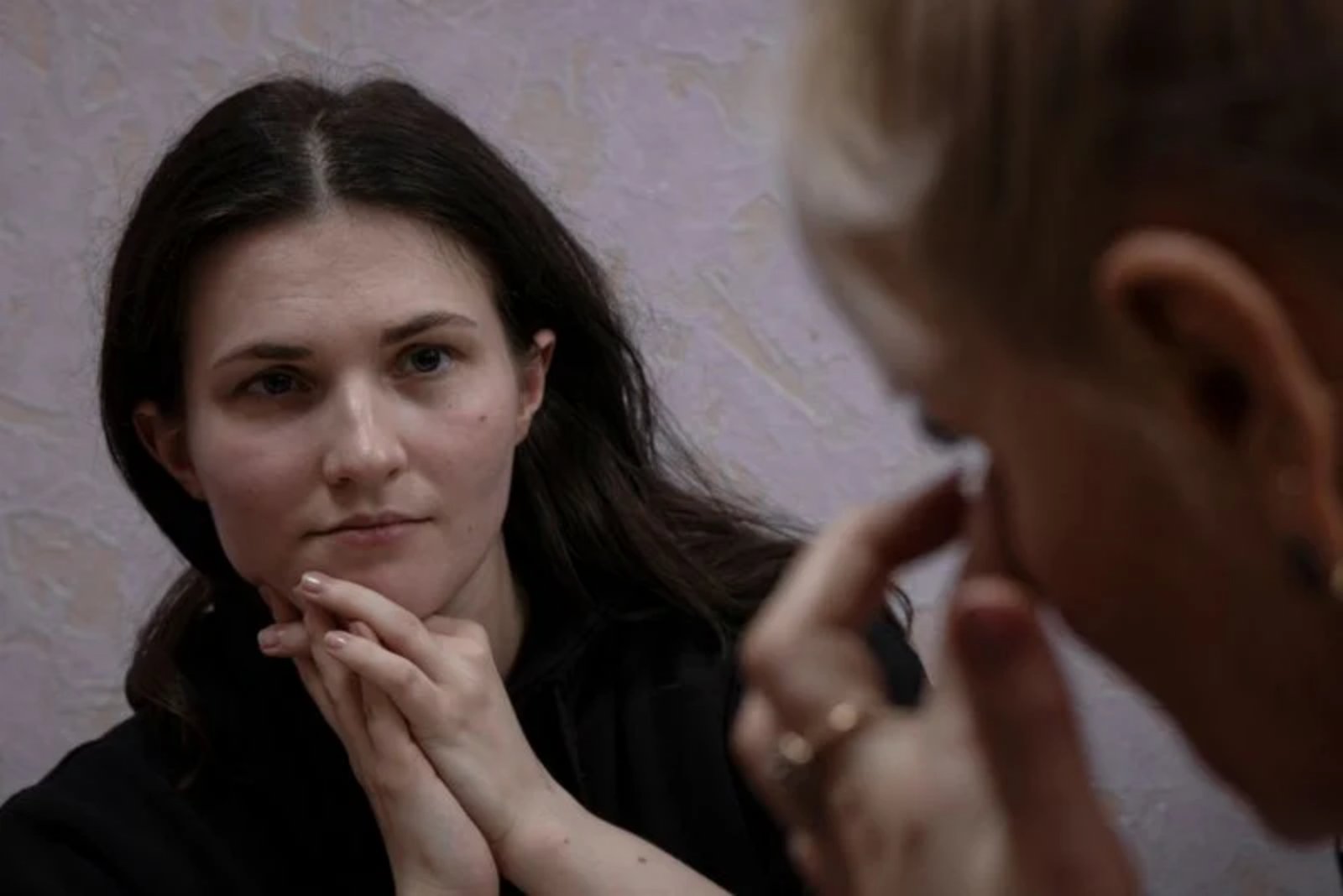
Roksolana Makar, an investigator with a Ukrainian non-governmental group focused on war-crimes documentation, traveled on hazardous winter roads to Izium to meet a survivor who described alleged abuse by Russian forces during the town’s 2022 occupation. Izium, set amid woods and agricultural land, still shows visible damage from the months of fighting and occupation - bridges remain broken and numerous buildings lie in ruins.
The survivor - a 55-year-old woman who asked to be identified only as Alla - told Makar that she was detained for 10 days at a battery plant in 2022. She said she endured severe physical abuse, including beatings, electrical shocks, suffocation with a gas mask and sexual assault. "I asked them to kill me because I couldn’t take it anymore," she said. Independent verification of Alla’s account was not possible. The Kremlin and Russia’s defense ministry did not respond to requests for comment about her case or other specific incidents mentioned by investigators. Russia has repeatedly denied committing war crimes and has described such accusations as Western propaganda.
Why documentation matters - and who is doing it
Investigators like Makar aim to collect testimony, photographs, physical traces and other records before that evidence is destroyed or witnesses’ memories fade. Their efforts form part of a network of domestic and international organizations supporting prosecutions and victim assistance in what has become Europe’s deadliest conflict since World War Two.
The Ukrainian Prosecutor General’s Office reports that it has opened over 230,000 war-crimes cases since Russia launched its full-scale invasion in 2022. Allegations reported to prosecutors across the country range from attacks on civilians and civilian infrastructure to abductions and deportations of children, as well as torture and sexual violence.
Even when U.S. support for accountability initiatives was at higher levels, the scale of the work outstripped available capacity. At the peak period under the previous U.S. administration, Ukrainian prosecutors had secured 252 war-crimes convictions as of April 1, and their office had identified 1,175 suspects and indicted 842 people. High-profile suspects could be referred to international venues such as the International Criminal Court in The Hague, while others can be pursued in U.S. and European courts.
U.S. funding changes and the effects on accountability programs
Sources involved in funding reviews and in program delivery say that last year the U.S. administration cut tens of millions of dollars from overseas development aid directed at investigations, tribunals and victim support. A review of government data combined with interviews with current and former American officials indicates that Ukraine was the single largest recipient among the programs affected.
Investigators, legal professionals and human-rights organizations across the network that had been supported by U.S. funds report that their activities have been curtailed. Examples provided by members of this community include staff layoffs at NGOs, suspension of archival projects intended to preserve evidence for future prosecutions, deferred training programs for judges and prosecutors in international law, and a reduction in foreign expert deployments who help collect and analyse battlefield evidence.
One organization, Truth Hounds, which has been active since 2014 and had tracked thousands of allegations across Ukraine, said it had to reduce staff, shelve an archiving initiative and postpone training for legal professionals when U.S. funding that covered roughly a third of its budget was withdrawn. The group’s co-executive director, Dmytro Koval, said that some important lines of inquiry will not be opened at all without restored support.
Several sources familiar with the situation said dozens of foreign specialists who had travelled to Ukraine to help gather and analyse battlefield and forensic evidence are no longer able to make those trips after reductions in U.S. support for the prosecutors burdened by the volume of cases.
Plans to rebuild a courthouse that had been destroyed during the conflict were halted when the U.S. Agency for International Development was dismantled and a $62 million program intended to strengthen Ukraine’s justice system was terminated. A person familiar with USAID operations confirmed that the program ended as part of the wider dismantling.
Scale of U.S. support and tracked reductions
Careful tracking by program managers, officials and watchdogs identifies more than $283 million in U.S. funding that was at least substantially earmarked for initiatives connected to accountability for war crimes in Ukraine since 2022. Determining exactly how much of those funds had been disbursed at the time a pause in foreign-development assistance was ordered in January 2025 - pending a review - is difficult because grants often span multiple years, are multi-partner, or include funding for broader priorities beyond accountability.
What the review found was that programs accounting for at least 40 percent of that identified U.S. spending were either terminated or allowed to expire. Those tallying the funding warn that their totals may be undercounts, but that their work represents the most comprehensive assessment to date of the U.S. defunding of war-crimes accountability efforts in Ukraine.
The complexity of U.S. aid makes it hard to reach a precise figure: multiple agencies and recipients are involved, grants frequently include overlapping objectives and funding streams, and the U.S. also contributes expertise and intelligence in addition to direct financial assistance. A senior source in Ukraine said that the administration’s cuts affected roughly half of the country’s U.S.-funded projects that promoted war-crimes accountability and the rule of law.
Specific program impacts and remaining initiatives
While several programs were reduced or ended, the U.S. government did announce a new program in March to support the return of missing Ukrainian children, making up to $25 million available for that purpose. The initiative was described as a priority championed by the U.S. first lady. As of the announcement, recipients of that grant had not been publicly named. That new program followed cuts to other efforts with similar aims, including a Yale University initiative that had been tracking thousands of missing Ukrainian children to locations inside Russia and in territory Russia occupied.
The Yale School of Public Health’s Humanitarian Research Lab, which had been conducting digital investigations using satellite imagery, social media and other open-source material, faces running out of funds by August after about $8 million in State Department funding was not released, according to the lab’s executive director, Nathaniel Raymond.
Advocates argue that Yale’s analytical work has been crucial because many alleged crime scenes are situated in areas Ukrainian investigators cannot access, including territory now inside Russia. The lab has identified more than 200 sites it believes are part of a broad network involved in re-education and other programs. Yale researchers estimate as many as 35,000 children may have been taken; Ukrainian authorities report more than 20,500 child deportations or forced transfers and say just over 2,000 children have been returned. The Kremlin has denied abductions, saying children were evacuated for their safety.
International and institutional response
U.S. officials said the administration is shifting the financial burden of the war to European partners and other willing contributors but maintained that Washington still provides substantial assistance to Ukraine, including programs related to war crimes, justice and accountability for atrocities. The Justice Department has also stated it remains committed to supporting accountability for war crimes.
Other major donors, including the European Union and Britain, have said they remain committed to supporting justice for Ukrainian victims. Britain announced additional contributions and the EU said member states have allocated funds to create a special tribunal aimed at trying senior Russian leaders for aggression against Ukraine and to help set up an international commission to pursue compensation for Kyiv. The EU also announced funding to bolster child protection and efforts to pursue justice for abducted children.
Officials involved in joint initiatives say the loss of U.S. funding will be difficult to replace. Wayne Jordash, deputy lead of an Atrocity Crimes Advisory Group created by the U.S., EU and Britain to support the Ukrainian prosecutor’s office, said the cuts removed core resources that had been central to identifying, analysing and pursuing cases. Last year, the State Department discontinued funding for two out of three core organizations in the initiative, including Jordash’s foundation, Global Rights Compliance, a recent audit by the department’s Office of Inspector General found.
The State Department said it continues to support the Ukrainian prosecutor’s office, the national police and the Atrocity Crimes Advisory initiative, but did not provide detailed figures. The British foreign office declined to comment on specific programs. Since February, Britain announced an additional 5 million pounds to support justice for Ukrainian war-crimes victims and 1.2 million pounds to help verify and trace illegally deported children. The EU likewise reported recent funding decisions, including 50 million euros for Ukraine’s child protection system and to pursue justice for abducted children.
Human stories of loss and ongoing search
For many families of the missing and the abused, the technicalities of funding shifts translate to prolonged uncertainty and diminished capacity to find answers. Yuliia Usenko, Ukraine’s lead prosecutor for crimes against children, described Yale’s digital investigations as "invaluable" because they use satellite imagery, social media material and other open sources to trace the fate of children relocated to scores of sites identified by researchers.
Humanitarian organizations working in frontline villages have used Yale’s findings to help reunite children with their families. Mariam Lambert, co-founder of a Netherlands-based foundation that operates in frontline areas, warned that without that research there would be years of setbacks in tracing and returning children.
The case of Anton Volkovych illustrates the heavy human toll. Anton was 19 and in care at a boarding school for children with special needs in Oleshky when Russian forces occupied the town in February 2022. His mother, Hanna Zamyshliaieva, last saw him on January 14, 2022. Photograph evidence shown to investigators depicted him in a wheelchair holding a stuffed owl. After occupation, many students and staff were relocated to sites deeper inside occupied territory, and contact with the school became impossible. Of the original 87 pupils at the Oleshky school, only 13 have returned, according to volunteers. The mother received a tip about Anton’s whereabouts in March, but there has been no confirmation from Russian authorities, leaving her in an agonizing state of uncertainty about whether he survived without the continuous care he needed.
Other families continue to press for answers and punishment for those responsible. Tetiana Popovych, a mother who spent years searching for her son Vladyslav after his disappearance during Russian occupation of Bucha, has pieced together witness accounts and information from returned prisoners to trace his possible movements and detention. She believes he may be held in the Russian town of Vyazma. For Popovych, accountability means ensuring everyone involved is found and punished regardless of how much time passes.
Broader trends and U.S. institutional changes
Advocates and officials say the reductions in aid reflect a wider U.S. shift away from certain global justice initiatives. Among the institutional changes cited by observers are the closure of a State Department office that had coordinated responses to mass atrocities since 1997, disbanding a Justice Department team that had assisted Ukraine in prosecuting war crimes, and withdrawing U.S. participation from a multinational group building cases against Russian leaders for the invasion.
The administration has also imposed sanctions on International Criminal Court officials in relation to investigations into alleged crimes in other conflicts; the U.S. is not a member of the ICC and has long rejected the court’s authority to investigate Americans. These broader policy moves have coincided with the fiscal decisions that affected specific programmes supporting Ukrainian accountability efforts.
Consequences for prosecutions and evidence preservation
Prosecutors and legal advisers said the curtailment of funding and support will likely slow the progress of investigations and prosecutions, reduce opportunities for co-ordinated international case-building and limit the ability to preserve evidence that could be critical in future trials. Hundreds of thousands of alleged incidents and tens of thousands of alleged child transfers generate a demand for forensic work, witness protection, international legal coordination and long-term archiving that exceeds current capacity in Ukraine and among international partners.
Those who continue to work on accountability stress that while other donors have made commitments, replacing the depth of technical assistance, training, forensic capacity and judicial rebuilding previously underpinned by U.S. programs will be difficult and time-consuming.
Voices calling for sustained support
People involved in the investigation and prosecution of war crimes are emphatic about the stakes. Beth Van Schaack, who served as ambassador-at-large for global criminal justice in the previous U.S. administration, warned that deep cuts to funding could deny many victims their day in court. Prosecutors and NGO leaders argue that the integrity of future trials and the possibility of holding senior actors to account depend on sustained, coordinated support from international partners.
At the same time, international organizations and individual donor nations report continuing efforts to provide targeted support. The EU’s foreign affairs representatives and member states have publicly affirmed commitments to tribunal development and compensation mechanisms, while Britain has announced incremental funding to help verify and trace deported children and to bolster justice for victims.
Conclusion
Investigators who risk hazardous travel and who record traumatising testimony say they now face a more uncertain future for their work. With staff reductions, suspended projects and limits on foreign expert deployments, many fear that fewer perpetrators will confront accountability. Victims like Alla and families searching for missing loved ones such as Anton and Vladyslav remain at the centre of these efforts, and those providing technical, legal and humanitarian assistance say the scale of the task requires sustained international investment if prosecutions and restoration of justice are to proceed.
Until funding and institutional backing stabilize, the backlog of cases, the preservation of fragile evidence and the painstaking work of tracing and returning abducted children face extended delays. Those on the front lines of gathering evidence and supporting victims say the result may be that some crimes go unaddressed and some families never receive closure.