
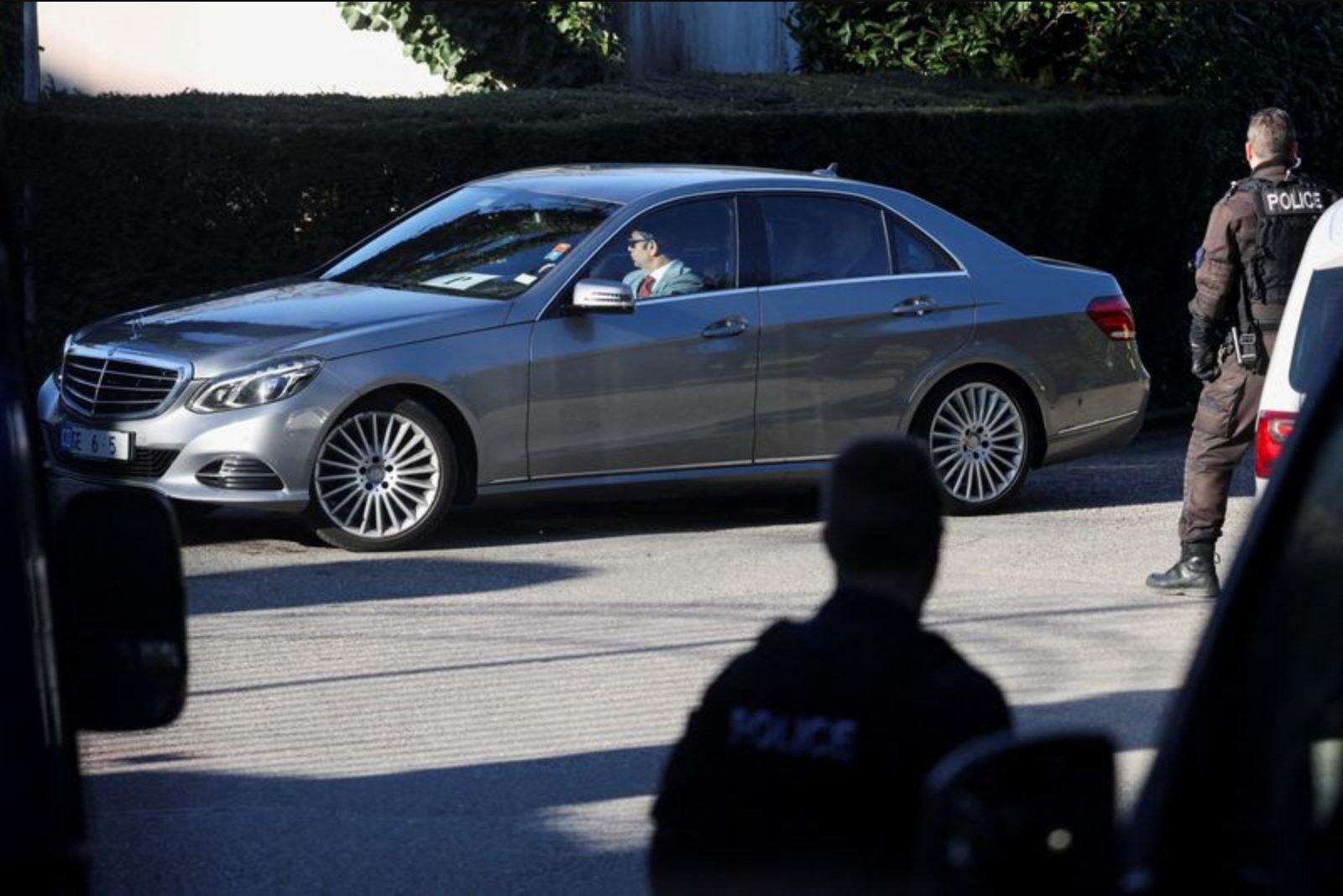
The United States is seeking an agreement in Geneva designed to stop Iran from obtaining a nuclear weapons capability, while President Donald Trump has positioned additional forces in the Middle East to heighten pressure on Tehran to reach a deal.
What is at stake
Over a period of decades Iran built an advanced and sizeable programme to enrich uranium. Uranium enriched to varying levels can serve as reactor fuel, but at high purities it becomes suitable for use in nuclear weapons. Prior to attacks on its nuclear facilities last June, Iran had been enriching uranium to as much as 60% purity - a level relatively close to weapons-grade, which is about 90% purity.
Using a benchmark employed by the International Atomic Energy Agency, Iran possessed, at those higher enrichment levels, sufficient material that if further enriched could have yielded the fissile core for roughly 10 nuclear weapons, and it retained additional quantities at lower levels of enrichment. The IAEA has not been able to confirm how much of that previously enriched material remains.
Iran has not declared the fate of that material nor has it allowed IAEA inspectors to examine the nuclear sites that were struck. The facilities used for enrichment were either destroyed or significantly damaged in the attacks, but their exact condition, like the current status of the uranium stockpile, has not yet been verified by the agency.
Positions of the parties
Following the June bombings, Washington and Tehran issued positions that at times appeared irreconcilable: the United States demanded Iran relinquish its enrichment capabilities, while Iran stated it would never abandon enrichment.
As a signatory to the Nuclear Non-Proliferation Treaty, Iran contends it retains the right to enrich uranium so long as the activity is not diverted to manufacture weapons - a position Tehran has reiterated by saying it would not pursue nuclear arms. Negotiations could, at the outset, include a temporary suspension of enrichment activities, but the range of acceptable outcomes for Iran's enrichment programme is narrow.
Possible arrangements for enrichment
- Enrich outside Iran - In prior negotiating rounds the concept was proposed of a regional enrichment consortium. That approach would involve establishing an enrichment joint venture located outside Iranian territory with participation from one or more Middle Eastern countries. Tehran has consistently rejected this as a substitute for maintaining enrichment on its own soil.
- Enrich for non-weapons purposes - Centrifuges used to increase uranium purity can also produce stable isotopes for medical and research use. The 2015 accord between Iran and world powers allowed centrifuges at Iran’s underground Fordow facility to be dedicated solely to stable isotope production. After the United States withdrew from that 2015 agreement in 2018, Iran took retaliatory measures that included resuming enrichment at Fordow; the site was later struck in June.
- Limit enrichment to low levels - The technical effort required to reach weapons-grade uranium falls sharply the higher the starting enrichment level. Once uranium has been enriched to 5% purity it is, by many measures, more than halfway to weapons-grade. Preventing Iran from having the capacity to quickly race to a weapon would therefore require restricting both the maximum purity Iran is permitted to produce and the total quantity of enriched uranium it may accumulate. The 2015 agreement capped enrichment at 3.67% purity. Diplomats have observed, at times with wry commentary, that President Trump’s rejection of the 2015 deal makes that 3.67% threshold politically unacceptable to his administration.
Verification and unresolved issues
Any prospective agreement will need to resolve questions about the whereabouts and volume of Iran’s enriched uranium inventory. Uncertainties over that stockpile have the potential to trigger renewed confrontation if left unclarified.
Similar to the provisions of the 2015 deal, a future pact would likely require either the dilution or removal of enriched uranium and impose limits on the number and location of centrifuges. But Iran retains knowledge of enrichment techniques using advanced centrifuges, and it reportedly maintains an unknown number of such machines in undisclosed locations. That reality raises the risk that enrichment could be carried out clandestinely, a prospect that would shadow any negotiated outcome.
Because of these concerns, verification - most plausibly through the IAEA - is expected to be a central and potentially contentious element of any agreement. The ability of the agency to account for Iranian facilities and material will be critical to ensuring that the terms agreed in Geneva are durable and to reducing the risk of future escalation.
Note: This article focuses on the negotiation dynamics, technical constraints around enrichment, and verification questions as outlined by official positions and statements. It does not introduce additional facts beyond those described above.