
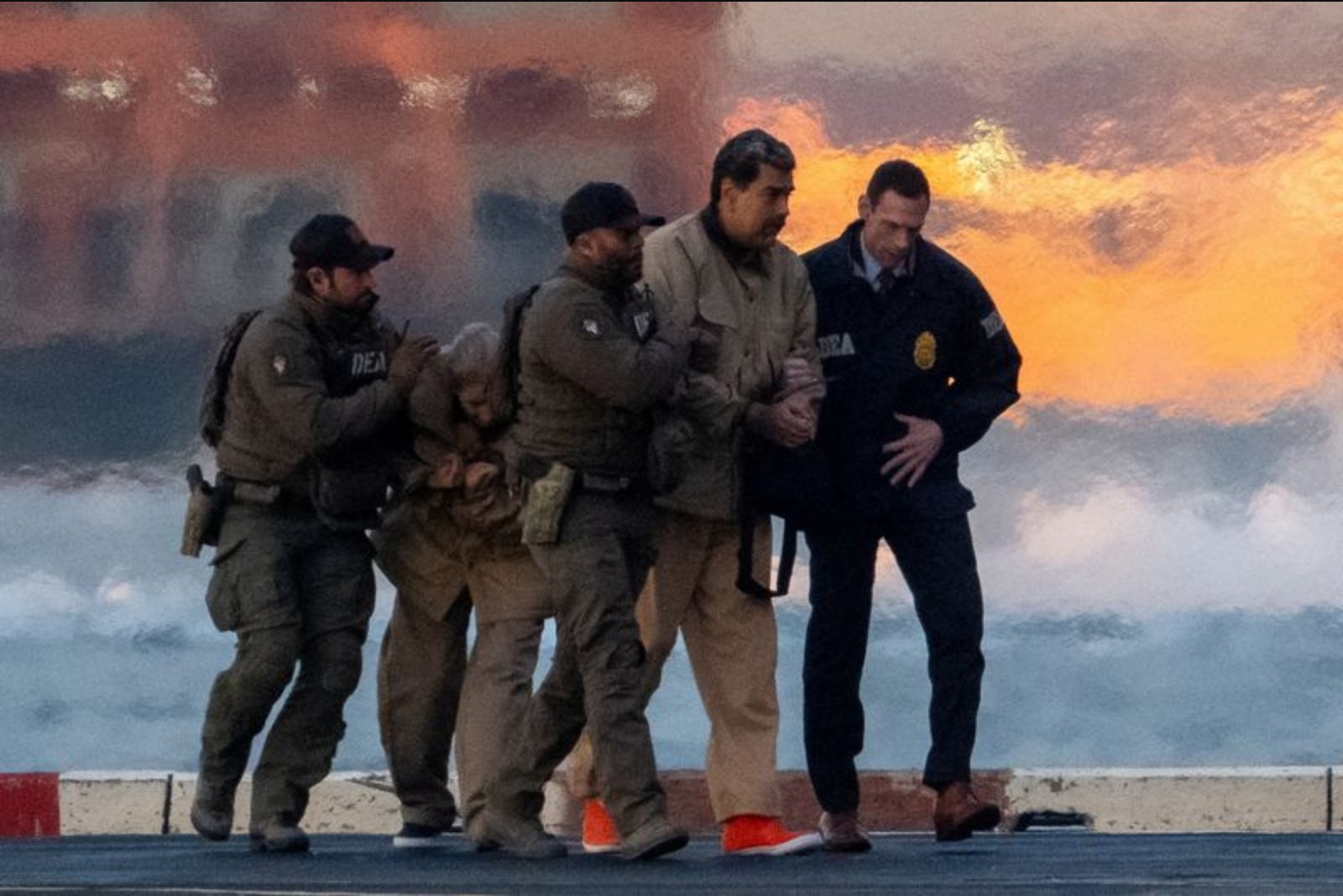
U.S. prosecutors in Manhattan told a federal judge on Friday that ousted Venezuelan President Nicolas Maduro should not be allowed to draw on Venezuelan government funds to pay for his defense against U.S. drug trafficking charges. They emphasized that the United States has not regarded Maduro as the legitimate head of state for years, and that an exemption to U.S. financial sanctions that briefly allowed government funds to be used for his legal costs was revoked.
The dispute stems from a motion last month by Maduro's lawyer, Barry Pollack, who asked U.S. District Judge Alvin Hellerstein to dismiss the indictment against Maduro. Pollack asserted that the Treasury Department had, without explanation, revoked an exemption to U.S. sanctions on Venezuela which had permitted the Venezuelan government to fund legal expenses for the president. He argued the revocation interfered with Maduro's Sixth Amendment right to counsel, and noted that "Venezuelan law and custom" dictate the government cover expenses for the president and his wife.
An official in Venezuela's attorney general's office filed a notice in court last month saying the government was prepared to pay for the legal costs. Flores' lawyer, Mark Donnelly, separately sought dismissal of charges against her related to funding of her defense. In their filing on Friday, prosecutors said both defendants could continue to use personal funds for legal representation.
Prosecutors with the U.S. Attorney's Office in Manhattan characterized the initial Treasury exemption as an "administrative error." They also noted that both Maduro and Flores were aware the U.S. Government did not consider them to hold legitimate positions, adding that a stated objective of U.S. sanctions was to encourage Maduro and Flores to leave power.
The Venezuelan communications ministry, which handles press queries for the government, did not immediately reply to a request for comment. Lawyers for Maduro and Flores did not immediately respond to requests for comment filed by U.S. media.
Maduro and his wife were taken into U.S. custody on January 3 in what prosecutors described as a U.S. military raid on their Caracas residence. Both have pleaded not guilty to the charges and are detained in Brooklyn while awaiting trial. Judge Hellerstein is expected to address the dispute over legal fee funding at a court hearing scheduled for March 26 in Manhattan.
In separate filings, U.S. authorities have said that Maduro, a socialist who assumed office in 2013, faces accusations of rigging re-election votes in both 2018 and 2024, allegations he denies. Since Maduro's capture, his former vice president Delcy Rodriguez has been running Venezuela. A State Department official stated in a March 11 court filing in a different case that the United States recognizes Rodriguez as Venezuela's sole head of state.
Legal and diplomatic stakes
The case raises contested questions about the interaction of U.S. sanctions policy, recognition of foreign governments, and the ability of detained defendants to access funds for legal representation. Prosecutors maintain that the revocation of the exemption was appropriate given Washington's longstanding position on Maduro's legitimacy, while defense counsel argue the lack of access to government-funded legal support infringes constitutional rights.
The court's forthcoming decision on March 26 will determine whether the defendants can seek Venezuelan government support for their defense or must rely solely on personal funds and other sources not barred by sanctions.