
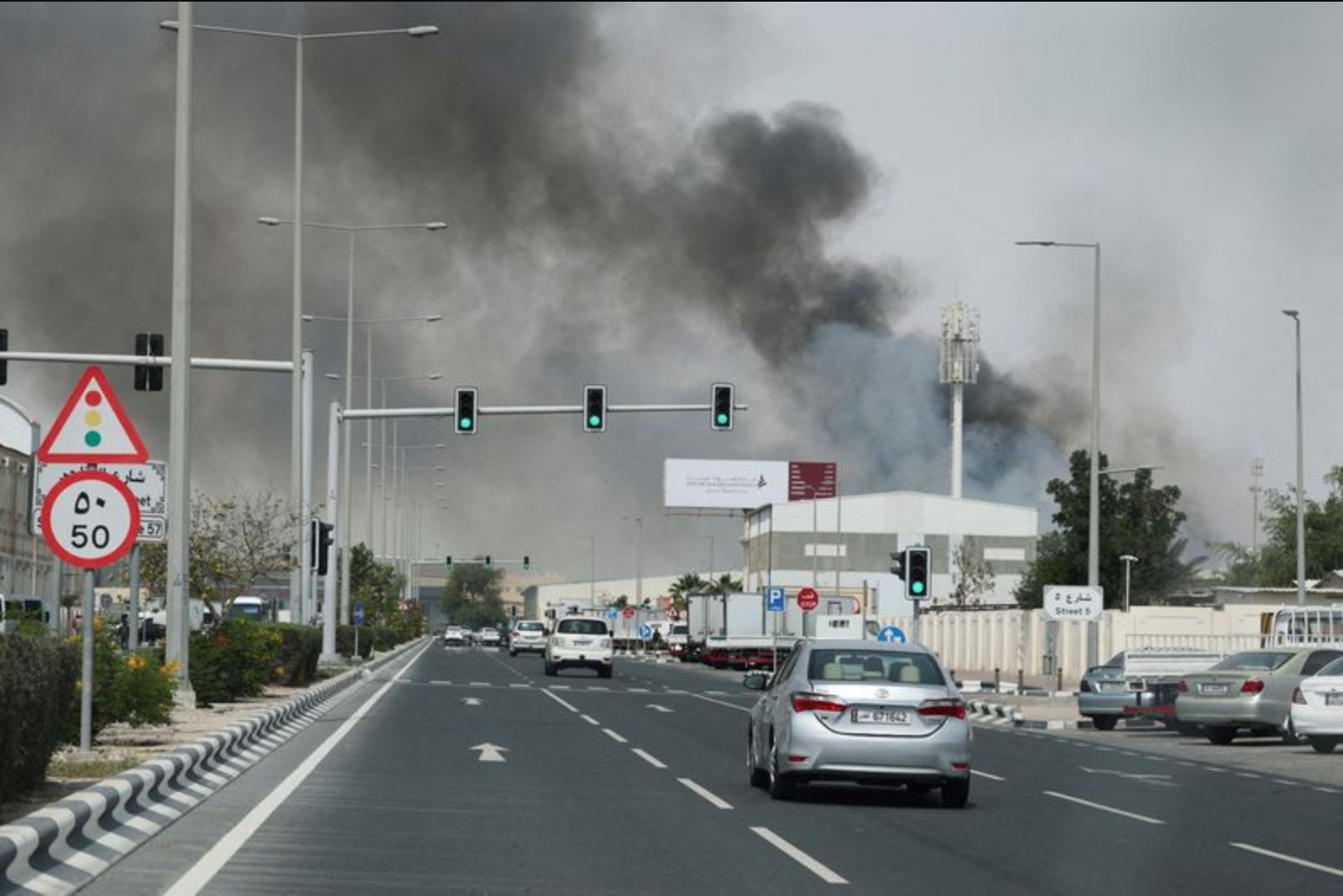
On March 3, the United States directed non-essential personnel and their families to leave a number of U.S. diplomatic missions in the Middle East and advised American citizens across the region to depart now by available commercial transportation. The State Department said it had ordered the exit of non-emergency U.S. government staff and family members from embassies in Bahrain, Qatar, the United Arab Emirates, Kuwait and Jordan. Similar departure instructions had already been implemented for U.S. missions in Lebanon and Israel.
The advisory to Americans to leave the Middle East comes as air travel across the region is severely disrupted amid a broadening U.S.-Israeli military operation on Iran that began on Saturday. The conflict has disrupted energy flows and created widespread chaos for global air transport.
Major Gulf aviation hubs have been particularly affected. Dubai, normally the world’s busiest international airport handling in excess of 1,000 flights per day, remained closed for a fourth consecutive day, according to U.S. statements, leaving tens of thousands of passengers stranded and driving ticket prices sharply higher.
In Jerusalem, the U.S. embassy said it was not able to provide assistance to Americans seeking to leave Israel. The embassy posted that it was unable to evacuate or directly assist Americans in departing Israel and advised that citizens may sign up for shuttles being operated by the Israeli Ministry of Tourism to the Taba border crossing with Egypt. It reiterated that the U.S. government cannot ensure the safety of that route and that it "cannot make any recommendation (for or against) the Ministry of Tourism’s shuttle. If you choose to avail yourself of this option to depart, the U.S. government cannot guarantee your safety."
The State Department on Monday had urged U.S. citizens across 16 countries in the Middle East to leave immediately using "available commercial transportation." That guidance has prompted criticism from some lawmakers who point to the reality that many airports and airspaces are closed.
Representative Ted Lieu publicly criticized the advisory in an X post, writing: "You told Americans to depart now via commercial means when you know many airports/airspace are closed." He added: "Maybe you should have thought of a frickin’ plan first."
Complicating on-the-ground assistance, the department said an inter-agency task force has been activated to manage the situation and that a dedicated WhatsApp channel established to communicate with Americans in the region has gathered about 15,000 followers. U.S. officials did not, however, indicate that the government had arranged any evacuation flights for stranded citizens, and the State Department did not immediately respond to questions about how Americans should depart in the absence of available commercial flights.
Security incidents have also continued. Overnight, Iranian drones struck the U.S. embassy in Saudi Arabia, according to U.S. statements. The U.S.-Israeli air campaign against Iran has been characterized by officials as one of the most consequential military actions in recent history, and it has reverberated across markets and transport networks.
Energy markets reacted quickly. Crude oil benchmarks rose about 7% on Tuesday, marking a third consecutive session of sharp gains as the conflict widened, according to market reports cited by U.S. sources.
Diplomatic capacity in the region is constrained at a time of heightened tensions. Washington currently lacks Senate-confirmed ambassadors in several countries across the Middle East, including Saudi Arabia, Qatar, Iraq, Egypt, Kuwait, Algeria and the UAE, a dynamic that officials have noted as they manage the evolving crisis.
With commercial flights reduced or grounded and key airports closed, tens of thousands of travelers remain stranded across the Gulf and wider region. U.S. officials have acknowledged the limits of consular assistance under current conditions while urging citizens to leave where possible, leaving many to seek alternate routes and face uncertainty about safety and logistics as the situation evolves.