
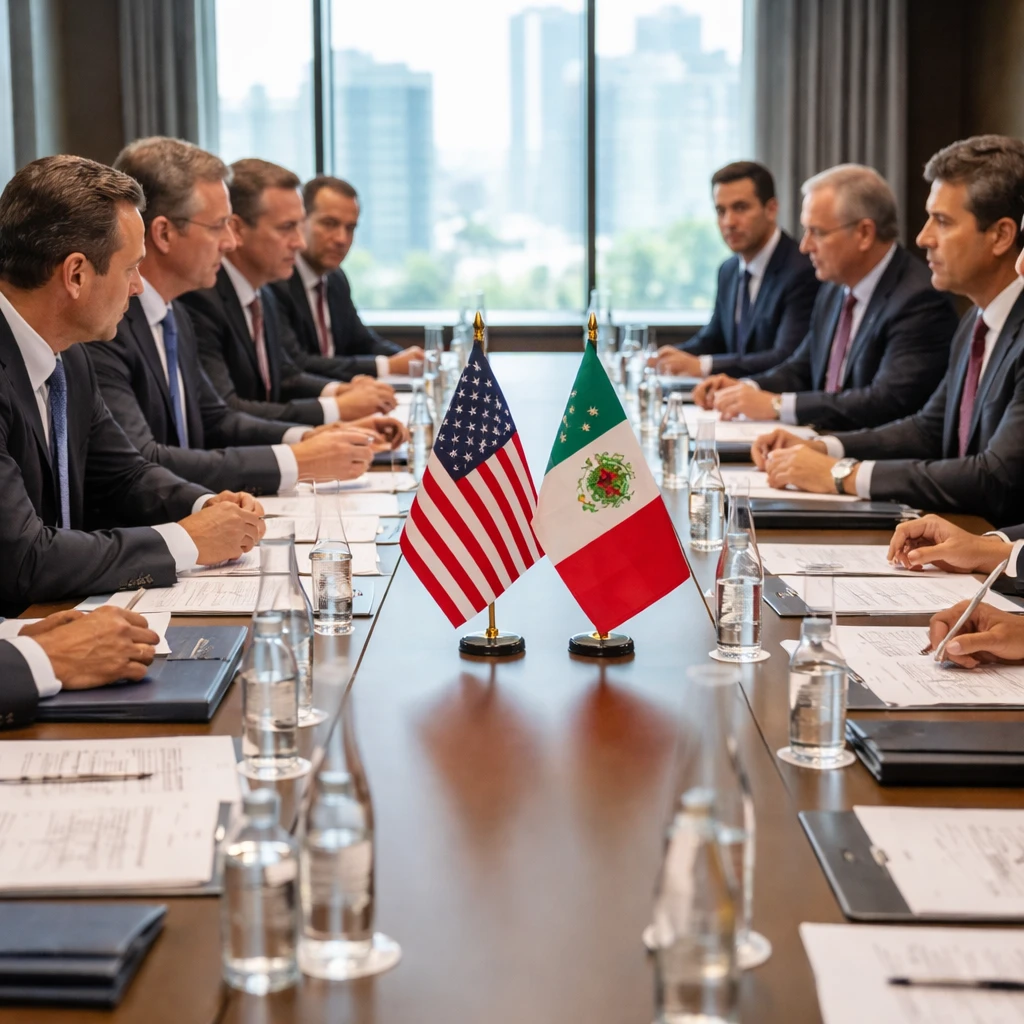
The U.S. Trade Representative's office announced on Wednesday that the Trump administration will begin the first of three negotiating rounds with Mexico this week to update the North American trade framework, with no bilateral talks scheduled with Canada.
Deputy U.S. Trade Representative Jeffrey Goettman will head the opening two-day session in Mexico City on Thursday and Friday. According to the USTR statement, that first round will concentrate on economic security and on rules of origin for key industrial goods.
A second round is planned for Washington on June 16-17, with negotiators set to address agriculture and efforts to secure a level playing field. A third set of talks is slated for the week of July 20 in Mexico City. USTR said the negotiations will concentrate on ensuring that the USMCA benefits a range of U.S. economic actors - including manufacturers, farmers, ranchers, workers, service suppliers, and businesses of all sizes such as small and medium-sized enterprises.
USTR's statement made no reference to parallel bilateral negotiations with Canada. The announcement noted that there have been few discussions between U.S. Trade Representative Jamieson Greer and Canadian Trade Minister Dominic LeBlanc since early March, and that no formal U.S.-Canada negotiating process has been launched.
The notice also referenced earlier negotiating work under the first Trump administration, when trilateral rounds with both Mexico and Canada were held to create the existing USMCA, which replaced the 1994 North American Free Trade Agreement in 2020.
In a related development on Wednesday, Canadian Prime Minister Mark Carney said that Canada's military was negotiating to buy Swedish early warning radar aircraft from Saab rather than buying from U.S.-based Boeing (NYSE:BA).
The USTR release frames the upcoming talks as targeted efforts to secure trade benefits for specific U.S. constituencies and to refine rules affecting industrial goods and agricultural trade. While the schedule sets out clear dates and topics for the trilateral negotiations with Mexico, it leaves the status of any U.S.-Canada bilateral process ambiguous.