
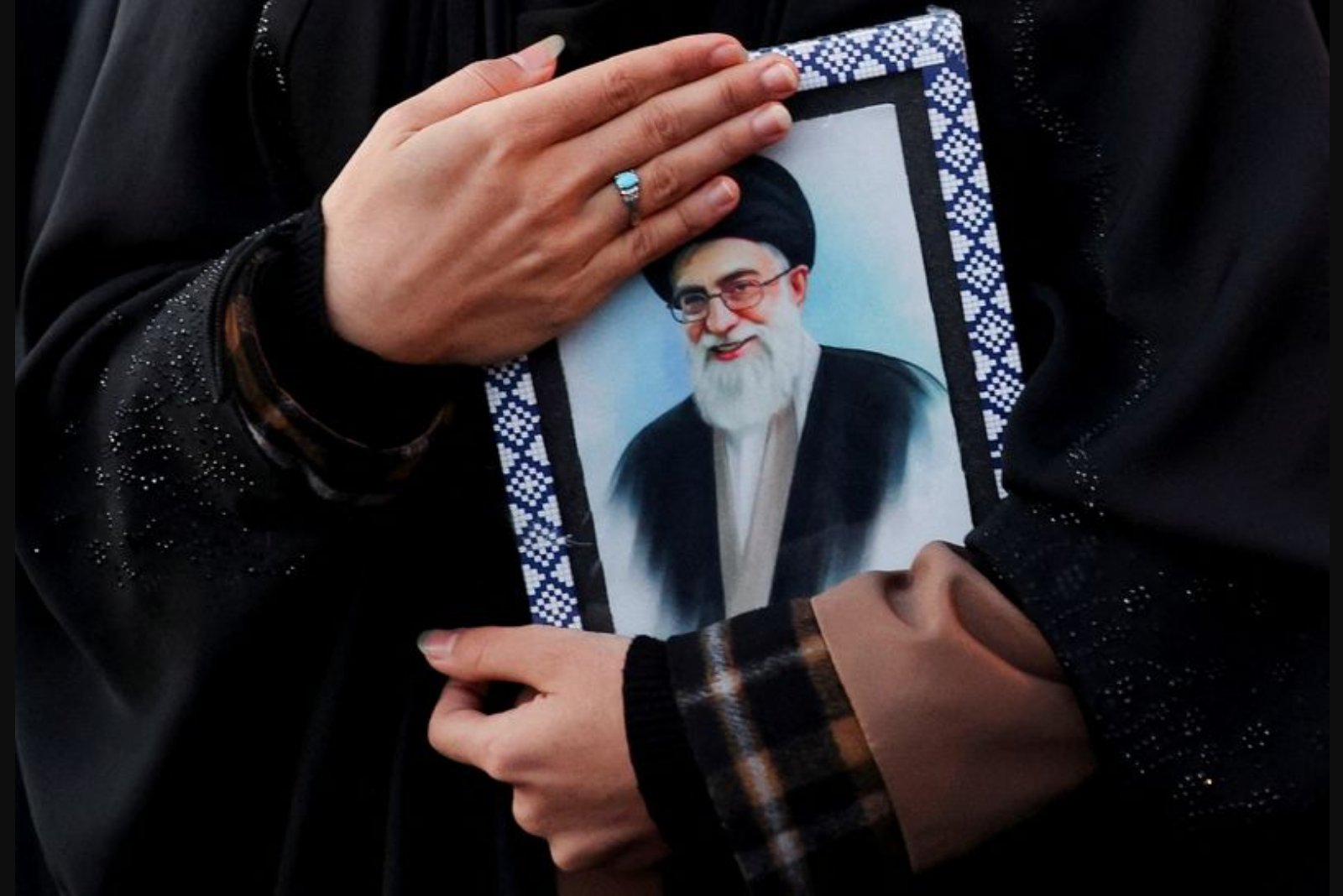
Following the killing of Iran’s Supreme Leader Ayatollah Ali Khamenei on Saturday, many senior U.S. officials are expressing skepticism that the operation conducted by U.S. and Israeli forces will lead to the rapid dismantling of Iran’s theocratic, authoritarian government that has been in place since 1979.
Before and after the operation began, U.S. leaders, including U.S. President Donald Trump, framed regime change among several objectives alongside efforts to degrade Iran’s ballistic missile and nuclear capabilities. In a video posted on Truth Social, President Trump appealed directly to Iranians, saying: "I call upon all Iranian patriots who yearn for freedom to seize this moment ... and take back your country."
Despite public statements that suggested the United States hoped to see a transformation of Iran’s political order, three U.S. officials familiar with intelligence reporting told sources consulted for this story that there is substantial doubt the battered Iranian opposition can displace the ruling theocracy in the near term. None of the officials entirely ruled out the possibility of the government’s collapse, but they emphasized it is neither likely nor probable in the immediate future.
Assessments presented to White House policymakers in the weeks prior to the operation indicated that Khamenei’s death could prompt succession by figures drawn from hard-line ranks - either senior leaders within the IRGC or equally uncompromising clerical authorities, according to two officials with knowledge of the intelligence assessments. Those findings underscore an internal expectation within U.S. intelligence that the regime could persist under equally hard-line direction rather than fragmenting into a more moderate leadership.
One U.S. official familiar with White House deliberations pointed to the IRGC’s entrenched patronage networks as a key reason why defections among senior security figures are unlikely. The official said IRGC leaders have benefited from systems designed to secure loyalty, reducing the chances that they would voluntarily capitulate even in the face of leadership decapitation.
Intelligence reporting from another U.S. agency that briefed policymakers earlier this year noted that during the massive and brutally repressed anti-government protests in January there were no recorded IRGC defections. Several U.S. officials described such defections as a logical precondition for any successful revolution, and they said the absence of those splits weighs against a swift collapse of the governing apparatus. The agencies and individuals who participated in these discussions requested anonymity to discuss sensitive intelligence material.
President Trump also signaled on Sunday an intent to reopen communications with Iran, a stance that officials interpreted as consistent with a view that the government is not expected to fall in the immediate term. The White House did not immediately provide comment when asked, and the CIA declined to comment.
Domestic Iranian leadership reaction and state media reports
State media reported that Iranian President Masoud Pezeshkian said a temporary leadership council made up of himself, the head of the judiciary and a member of the Guardian Council had assumed the duties of the supreme leadership. Security chief Ali Larijani accused the United States and Israel of attempting to dismember the country and warned that "secessionist groups" would face harsh responses if they took action, state television said, following a wave of air strikes attributed to the two countries that included damage to a girls’ primary school. Independent confirmation of the state media reports was not possible.
Interagency debate over policy implications
U.S. intelligence deliberations have extended beyond questions of succession to broader policy implications. Two U.S. officials said there has been robust debate - and no settled consensus - across agencies since January over whether Khamenei’s death would produce a meaningful shift in how Iran would engage externally, especially in negotiations with the U.S. over the nuclear program. Officials have similarly argued about the degree to which Khamenei’s removal might deter or accelerate efforts to rebuild missile and nuclear infrastructure and capacities.
Those debates reflect uncertainty about post-Khamenei decision-making and the fact that operational disruptions inflicted by strikes do not automatically translate into policy changes or a moderating of technical programs.
In January, Steve Witkoff, who served as a special envoy to Iran for the Trump administration and is considered a key ally, reportedly held multiple exchanges with Reza Pahlavi, the exiled son of Iran’s last shah. Those conversations raised questions within government ranks about whether the United States would consider supporting an Iranian opposition figure in the event of the regime’s fall. Two officials with knowledge of those conversations said that in recent weeks senior U.S. officials have become more skeptical that any Washington-backed opposition figure would be able to exercise control over the country should the government collapse.
Security forces and street mobilization
Observers and former intelligence officials say the ultimate determinant of whether the regime survives in a post-Khamenei environment will likely depend on the decisions of rank-and-file security personnel and armed units. Jonathan Panikoff, a former senior U.S. intelligence official now at the Atlantic Council think tank in Washington, summarized the dilemma: "At the end of the day, once U.S. and Israeli strikes stop, if the Iranian people come out, their success in promoting the end of the regime will depend on the rank and file standing aside or aligning with them. Otherwise, the remnants of the regime, those with the weapons, are likely to use them to keep power."
That assessment underscores why U.S. analysts are focused less on immediate public messaging and more on indicators such as loyalty within security services, the resilience of patronage networks, and the presence - or absence - of defections among armed units.
Implications for markets and sectors
While intelligence debates concentrate on political and security outcomes, officials and analysts note that uncertainty surrounding leadership and the country’s future posture toward nuclear and missile programs could have implications for sectors sensitive to geopolitical risk, including defense-related contractors, energy markets, and financial institutions that monitor sanctions and counterparty exposures. How those dynamics play out will depend heavily on whether core elements of the regime retain cohesion and whether Iran embarks on a path to reconstruct its strategic programs.