
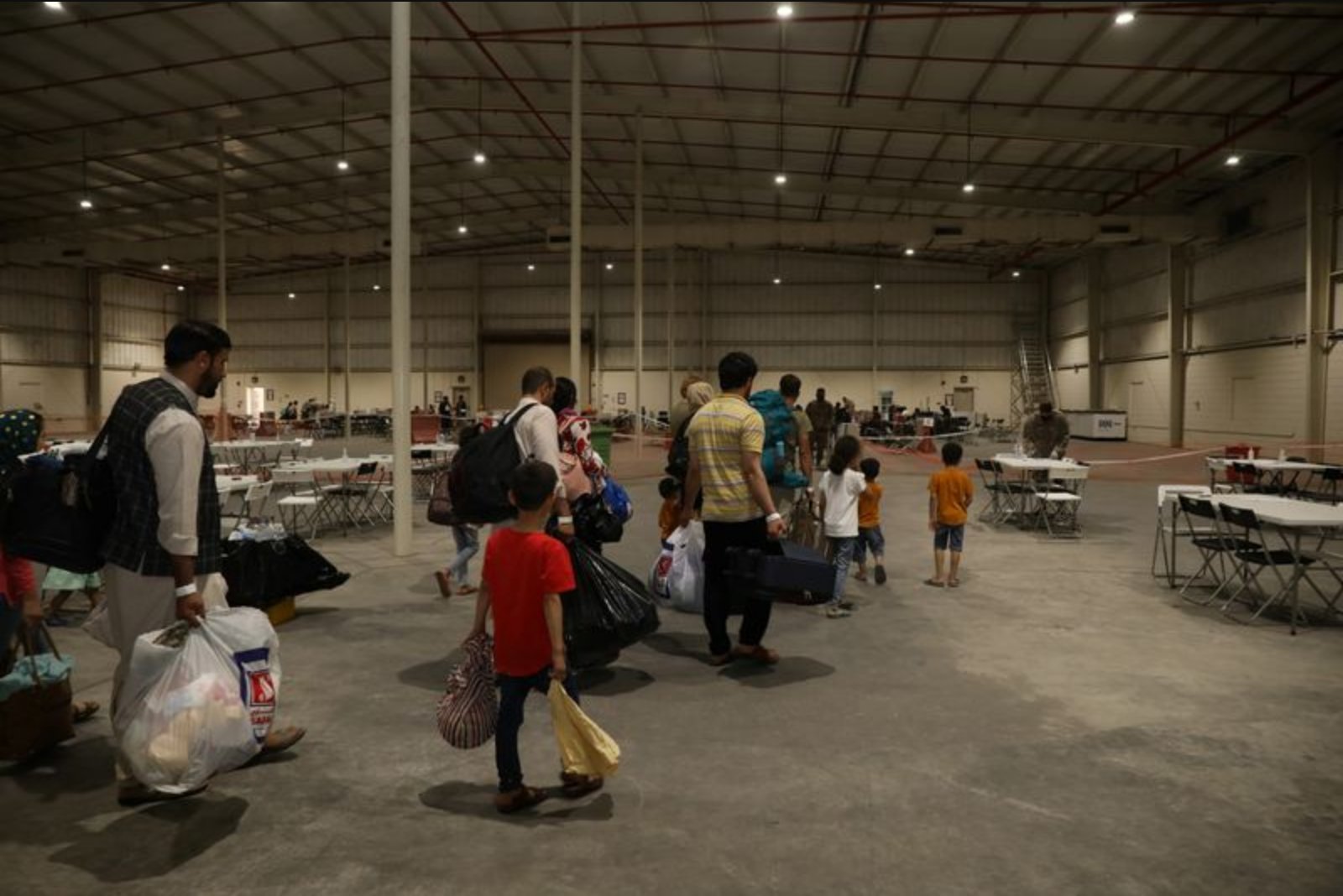
Summary: The U.S. State Department has initiated payments to some Afghans resident at Camp As Sayliyah in Qatar to facilitate their return to Afghanistan, officials said during a congressional hearing. More than 1,100 people have been held at the former U.S. Army base since at least early last year after resettlement was paused, and critics say the group includes individuals who face real danger if sent back. The plan to offer money to those who agree to depart ahead of a planned closure has drawn fierce criticism from Democrats and advocacy organizations.
The top U.S. diplomat for South and Central Asia told lawmakers that Washington has started paying some of the Afghans living at Camp As Sayliyah (CAS) in Qatar to return to Afghanistan as part of efforts to close the camp. According to testimony delivered at a hearing on Wednesday, the camp holds in excess of 1,100 people who have been unable to resettle elsewhere since at least early last year, when resettlement was halted.
The interruption of resettlement occurred after the previous administration paused the program for Afghans who feared retribution from Taliban authorities because of their ties to U.S. forces. Advocacy groups have said the population at CAS includes civilian refugees, women who worked as special operators for the U.S. in Afghanistan, and relatives of U.S. service members - groups that advocates argue would be at risk if returned to Afghanistan.
Democratic members of Congress criticized the payment plan. Sydney Kamlager-Dove, the ranking Democrat on the House Foreign Affairs subcommittee convening the hearing, described the policy as a "betrayal of our Afghan allies."
Assistant Secretary of State for South and Central Asia S. Paul Kapur told lawmakers he believed roughly 150 people had accepted the payments, but he said he did not know what happened to them after they returned. Kapur emphasized that the U.S. was not engaging in forced repatriations, saying: "We are not forcibly repatriating Afghans to Afghanistan. Some have gone of their own volition, but we’re not forcing anybody."
Kapur added the State Department is pursuing other options for those at CAS, noting efforts to negotiate relocation with third countries. "We’re looking to relocate them. We’re in negotiations with third countries to do that. Our belief is that is actually a good outcome. Keeping them indefinitely on CAS is not ... reasonable," he said. Kapur did not provide specifics about the monetary offers, and the State Department did not reply to a request for comment outside the hearing.
Advocacy organizations monitoring the situation reported figures for the payments and raised concerns about how voluntary the decisions to return truly are. Shawn VanDiver, who leads #AfghanEvac, a coalition of veterans and advocacy groups, said the offers amounted to $4,500 for a primary applicant and $1,200 for each additional person who relocates. VanDiver also told lawmakers that staff at the Qatar facility were encouraging residents to accept the payments, and that relocation to a third country remained uncertain for many.
The plan to offer financial incentives ahead of the scheduled closure of the facility at the end of March has prompted debate in Congress and among refugee advocates about the ethics and safety of returning vulnerable populations to Afghanistan under current conditions.
Key points
- More than 1,100 Afghans have been held at Camp As Sayliyah in Qatar since at least early last year, after repatriation and resettlement were paused.
- The State Department has begun paying some residents to return to Afghanistan; Assistant Secretary S. Paul Kapur said about 150 people had accepted but their post-return status is unknown.
- Advocacy groups report the payments offered are $4,500 for a main applicant and $1,200 per additional person, and they say residents were encouraged to accept despite uncertain third-country relocation.
Sectors potentially impacted: defense, diplomatic services, immigration and refugee assistance organizations, and non-governmental advocacy groups.
Risks and uncertainties
- Uncertainty over the outcomes for those who have accepted payments - the State Department acknowledged it did not know what happened to about 150 returnees. This creates risk for humanitarian and refugee assistance sectors tracking protection outcomes.
- Questions about voluntariness - advocates allege facility staff encouraged acceptance of payments, raising legal and reputational risks for agencies and contractors involved in camp management and relocation logistics.
- Reliance on third-country relocation - Kapur said the U.S. is negotiating with other countries for resettlement, but the availability and timing of such options remain unclear, affecting diplomatic planning and migration services.
Note: The article reflects the information presented during the congressional hearing and statements from advocacy groups; it does not include additional data beyond those accounts.