
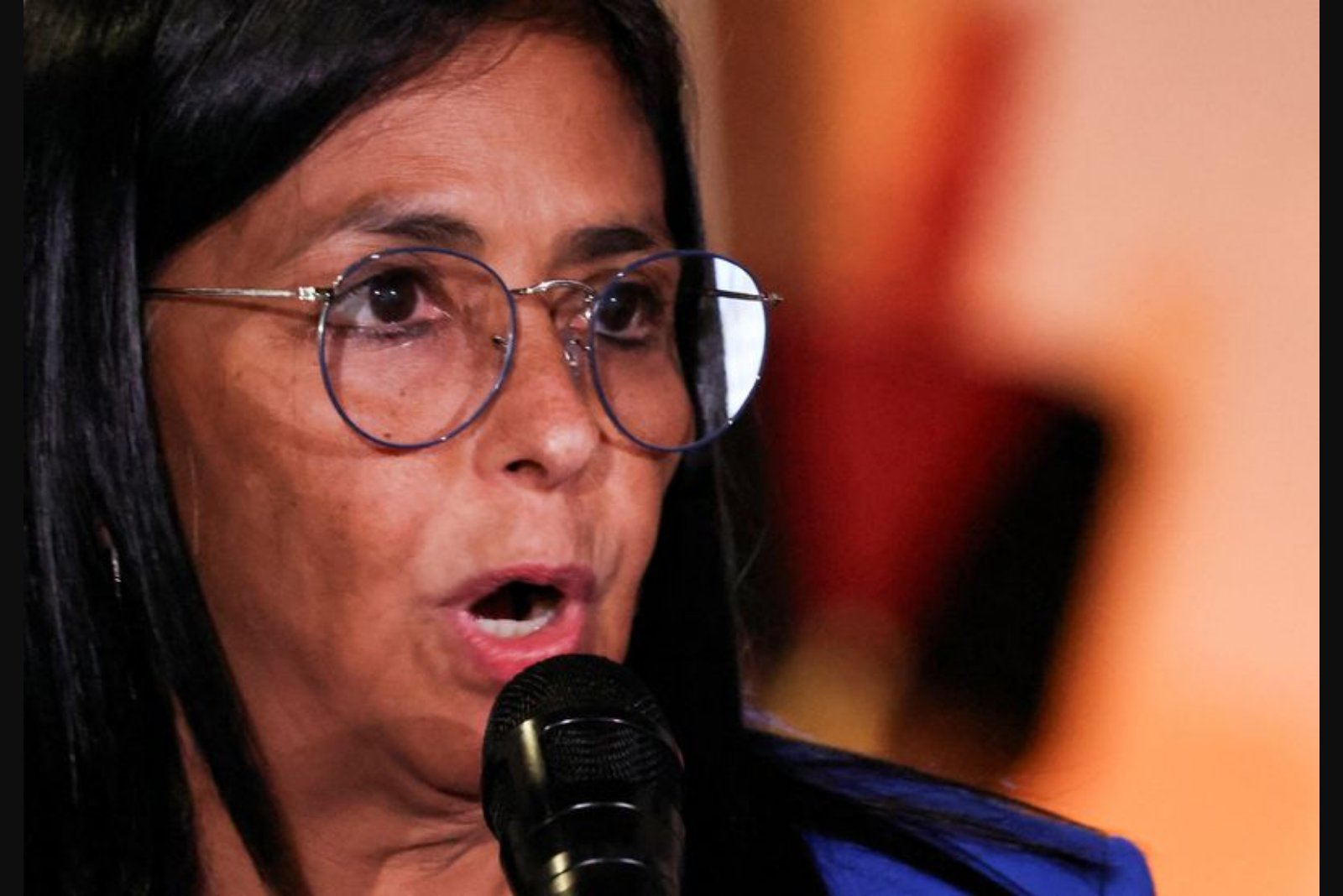
U.S. federal prosecutors in Miami have been quietly assembling a draft criminal indictment that targets Delcy Rodriguez, the interim president of Venezuela, according to multiple people briefed on the matter. The draft document outlines possible corruption and money laundering charges and has been under development for roughly two months, the sources said.
Those close to the case said prosecutors are scrutinizing allegations that Rodriguez played a role in laundering proceeds tied to Venezuela’s state oil company, Petróleos de Venezuela SA (PDVSA). The alleged timeframe for the activities under investigation runs from 2021 through 2025, the sources added.
Officials involved in the probe have, according to the people briefed, communicated directly with Rodriguez that she faces the risk of prosecution unless she continues to meet specific demands from the United States following the removal from power of former Venezuelan leader Nicolas Maduro in January. The sources said this legal threat is one of several instruments Washington is using to secure cooperation from Caracas.
The Department of Justice declined to comment on the existence or status of any indictment. After a summary of the reporting was featured on a morning news podcast, Deputy Attorney General Todd Blanche wrote on the social media platform X: "completely FALSE from @reuters. Not sure how such fake news makes its way to publication." In response to that exchange, the reporting outlet issued a statement that it stands by its coverage.
Legal steps and parallel requests to detain suspects
In a related set of actions, U.S. officials have presented Rodriguez with a list of at least seven individuals - described by sources as former senior party officials, associates and family members - whom the United States wants detained or kept in Venezuelan custody for potential extradition. The list and the U.S. request for detention of those people were first reported by Spain's ABC newspaper, according to the people briefed.
Sources said many of the people named already face indictments in the United States on charges that include money laundering and drug trafficking. U.S. authorities view detention or custody within Venezuela as a way to preserve the option of extradition to the United States for prosecution.
The request to Rodriguez was reportedly made by Laura Dogu, the newly appointed U.S. envoy to Venezuela, the people familiar with the matter told sources. The list includes prominent individuals previously linked to the Maduro government and to major financial operations within the Chavista movement.
High-profile names cited
One of the figures Washington is seeking is Alex Saab, a 54-year-old who became a prominent financial operator aligned with the Maduro government. The sources said Saab was arrested in early February and that two of them said he remains in the custody of Venezuela's intelligence service, SEBIN.
Saab's earlier legal history is noted by the people briefed: in 2020 local authorities in Cabo Verde detained him following an Interpol notice requested by the United States while he was traveling on an official mission for the Maduro government. He was extradited to the United States and faced charges that included bribery and money laundering tied to an alleged scheme that routed roughly $350 million from a corrupt Venezuelan housing construction program through the U.S. financial system. He was released in 2023 in a prisoner swap, the people said.
Two of the people familiar with the current matter said the United States has a new sealed money laundering indictment against Saab, though the status of that indictment was not immediately clear. Those sources also said that, if extradited, Saab might be able to provide information to U.S. authorities that would strengthen a criminal case against Maduro. The question of whether Saab could be extradited remains open, the people noted, because Venezuelan law bars the extradition of Venezuelan nationals and Saab was granted Venezuelan citizenship by Maduro.
Saab's U.S.-based attorney, Neil M. Schuster, did not respond to detailed questions about Saab's detention status or any potential testimony he may have provided while previously in U.S. custody, the people said.
Another prominent name on the list is Raul Gorrin, a media owner who, according to three people familiar with the matter, has been detained by SEBIN within the past month. Gorrin faces multiple federal charges in the United States, primarily alleging bribery, money laundering and corruption connected to PDVSA. Gorrin and his media company Globovisión did not respond to inquiries, and a Miami lawyer who has previously represented him, Howard Srebnick, did not immediately return a request for comment.
Context within Venezuela's leadership changes
The development comes roughly two months after U.S. special forces conducted an operation that resulted in the capture of Nicolas Maduro and his subsequent transfer to New York, where he faces federal charges including narcoterrorism and cocaine trafficking. Maduro pleaded not guilty and is being held in the United States pending trial. Since that operation, U.S. officials have turned to Rodriguez - who previously served as Maduro's vice president and is 56 years old - to help maintain stability in Venezuela while the United States seeks to secure access to the country's oil resources for American companies.
Cilia Flores, Maduro's wife, also faces federal charges including allegations tied to drug trafficking and has pleaded not guilty. In addition to Rodriguez, other senior officials who retain power in Venezuela and who have been indicted in the United States include Interior Minister Diosdado Cabello and Defense Minister Vladimir Padrino. All three are long-standing members of the United Socialist Party of Venezuela (PSUV) that was founded by the late Hugo Chávez. Cabello and Padrino have consistently denied wrongdoing.
Legal process and grand jury uncertainty
People familiar with the matter cautioned that the preparation of an indictment draft does not guarantee that formal charges will be presented to a grand jury. The presentation of a case to a grand jury is required for a finding of probable cause before an indictment would move forward, and grand juries meet in secret. The sources said they were not aware of whether prosecutors had begun presenting evidence to a grand jury.
The Venezuelan communications ministry, which handles press inquiries for the government, did not return a detailed set of questions seeking comment on the potential charges reportedly being prepared against Rodriguez.
How Washington is leveraging legal tools
According to the people briefed on the situation, the United States has layered legal pressure and diplomatic requests as part of a broader strategy to shape outcomes in post-Maduro Venezuela. The draft indictment, the list of individuals the U.S. wants kept in custody, and diplomacy by the newly assigned U.S. envoy form part of a set of tools Washington is using to seek cooperation from the new Venezuelan leadership.
The people familiar with the matter said that many of those Washington seeks to have detained or held are already the subject of U.S. indictments on allegations ranging from money laundering to drug trafficking and related offenses. Some legal obstacles remain, including Venezuela's prohibition on extraditing Venezuelan nationals, which could complicate efforts to transfer certain figures to U.S. custody.
What sources say and outstanding questions
Four people briefed on the matter spoke about the draft indictment and the list of requested detentions. The Miami U.S. Attorney's Office was identified by those people as the office preparing the evolving draft charges.
Questions remain about whether the draft indictment will be finalized and presented to a grand jury, whether any indictments will be unsealed, and whether Venezuela will detain and extradite any of the individuals named by U.S. officials. The role that any detained individuals might play in providing information to U.S. authorities - including potential testimony that could bolster criminal proceedings against Maduro or others - also remains uncertain.
As of the time the people familiar with the matter spoke, neither the Venezuelan communications ministry nor several of the individuals named on the U.S. list had provided public comment addressing the reported actions by U.S. authorities.
Reporting on this developing diplomatic and legal effort continues to evolve as officials on both sides weigh legal options and political considerations.