
Overview
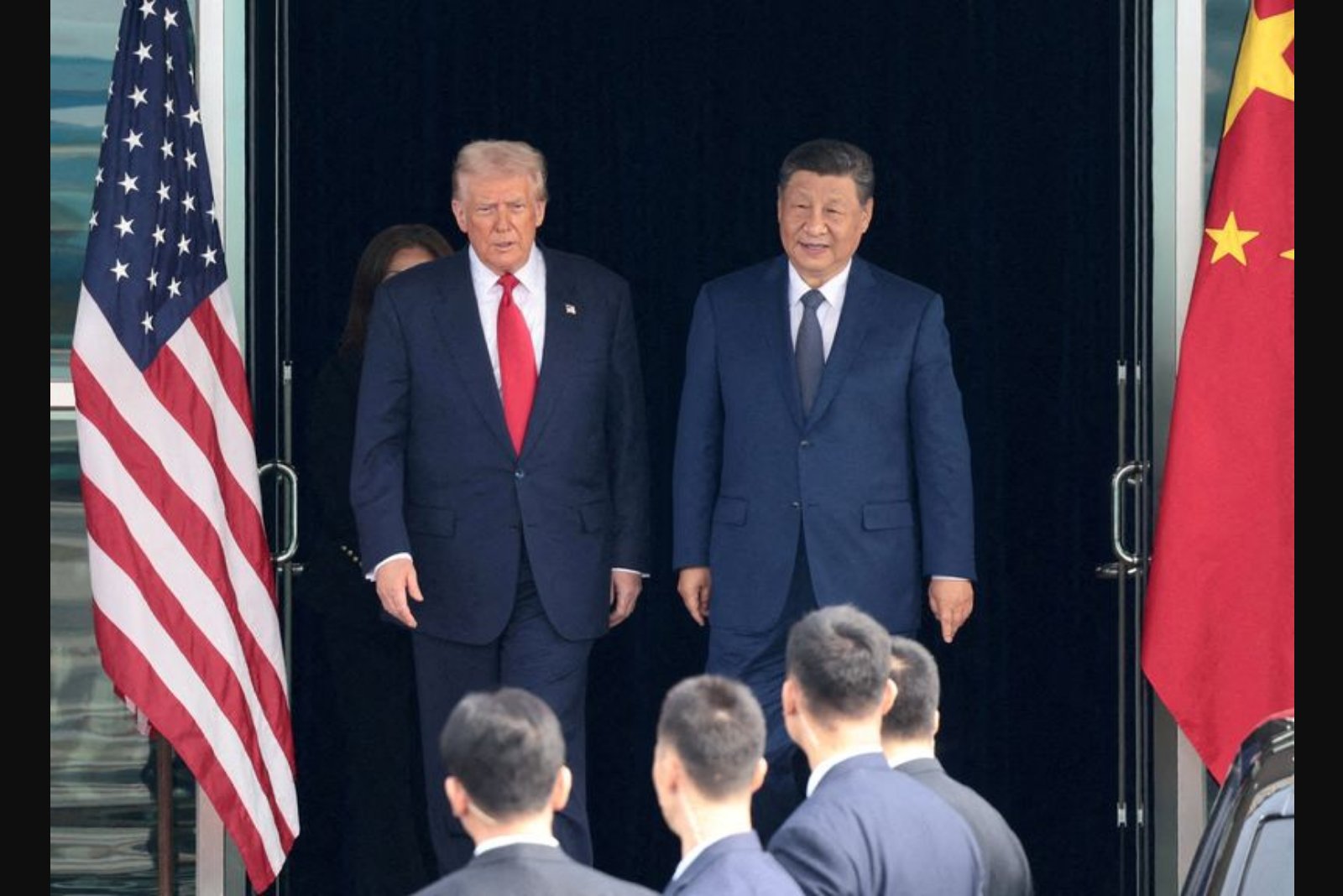
The sequence of U.S. military actions this year - including the capture of Venezuelan President Nicolas Maduro in a January raid and an air campaign that killed Iran's Supreme Leader Ayatollah Ali Khamenei - has complicated the diplomatic terrain ahead of a proposed summit between U.S. President Donald Trump and China's Xi Jinping. Trump is scheduled to travel to Beijing at the end of March, but uncertainty surrounds whether the meeting will proceed, and if it does, how the recent operations will shape talks that the U.S. has said will focus on trade.
Diplomatic tightrope for Beijing
China has publicly condemned the U.S.-led operations as "unacceptable" and has urged restraint. Even so, Beijing's official response has been measured, reflecting both limits on its ability to shape U.S. military action and the transactional nature of some of its diplomatic ties, analysts say. That posture leaves Xi facing a difficult choice: host President Trump on the world stage or step back from the proposed March 31 to April 2 meeting. China has not confirmed the summit dates.
Those dynamics have altered what appeared last week to be a weakened U.S. negotiating position after a U.S. Supreme Court decision invalidated many of Mr. Trump's tariffs. Despite that legal setback, it is now Xi who may be struggling to mount a forceful response to the largest U.S. military operation since the Iraq war.
Strategic and economic exposure
China's vulnerability in the current crisis is both concrete and symbolic. As the world's largest buyer of Iranian oil, China imported 13.4% of its total seaborne crude from Iran last year. That dependence makes China particularly exposed to any interruption in supply, especially if the Strait of Hormuz were to be blocked. Analysts warn that a near-term loss of Iranian oil would put upward pressure on prices and tighten margins for China's export-oriented manufacturing sector, which remains a backbone of the national economy.
For Beijing, the strikes are a reminder of the U.S. military's global reach. Zhao Minghao, an international relations expert at Shanghai's Fudan University, said, "The strikes on Iran and the potential regime change will severely impact China's interests." Zhao added that China is "assessing the deeper intentions behind U.S. actions in Venezuela and Iran, as the U.S. may increase pressure on China by controlling the international energy market."
U.S. timing and calculations
The White House published the dates for Mr. Trump's China trip as U.S. forces were preparing operations against Iran, and a U.S. official said Mr. Trump was "taking decisive action to eliminate major national security threats," without directly addressing implications for the China visit. A source familiar with U.S.-China discussions said the White House was still awaiting a formal invitation from Chinese officials.
Officials in Washington appear to be counting on a limited Chinese response to the Iran operation. One U.S. official expressed no expectation that China would provide material support to Iran during U.S. operations, nor that the U.S. focus on the Middle East would embolden Beijing in the short term in the Indo-Pacific, where China has pursued a major military build-up.
At the same time, U.S. planners are aware of a different risk. They worry that difficulty in rapidly replenishing stocks of munitions could reduce "medium-term deterrence" against potential Chinese military action regarding Taiwan, a concern tied to logistical strains on U.S. capabilities should the Iran operation extend.
How Beijing is likely to respond
Constrained by a limited ability to counter U.S. global military reach, Chinese leaders are expected by some analysts to step aside and allow the United States to bear the political fallout should the Middle East become more chaotic. That stance would support Beijing's broader narrative portraying Washington as reckless and destabilizing.
Zha Daojiong, an expert in energy security at Peking University, conveyed a reluctance among Chinese officials to be drawn into the conflict. He said Chinese officials would not feel compelled to aid Iran and would resist what he described as a "purely rhetorical construction" in the West that China had an alliance with Iran. "The direct parties to the conflict make their own bed and get to sleep in it," Zha said.
Implications for the summit
The prospect that Mr. Trump could still visit Beijing leaves Xi with the choice of hosting a leader whose administration has recently turned against two countries viewed as Chinese partners. Should Xi proceed with the summit, one strategic calculation open to Beijing is that a prolonged U.S. military entanglement in the Middle East could, over time, weaken Washington's capacity to project power elsewhere, potentially diminishing U.S. influence in the long term. Mr. Trump has said the Iran operation could run for about four weeks, a timeline that would bring the campaign close to the scheduled China trip.
How those calculations will resolve themselves remains unclear. China has not confirmed the meeting dates, and U.S. officials continue to await a formal invitation. The tension between mounting a firm diplomatic response and avoiding escalation that could harm China's economic interests will be central to Beijing's decision-making.
Conclusion
The recent series of U.S. military actions targeting countries that are significant to China has placed Xi Jinping in an awkward diplomatic position. Beijing's restrained public stance signals both the limits of its leverage over U.S. military choices and a calculation to protect core economic interests, especially energy supplies. In Washington, policymakers appear to be betting that China will not provide material support to Iran and that the conflict will not divert immediate Chinese ambitions in the Indo-Pacific. Yet U.S. officials are also mindful that prolonged operations could affect munitions stocks and medium-term deterrence. Whether the planned late-March summit takes place, and on what terms, will be a test of how both capitals balance strategic competition with the imperative to manage bilateral ties.