
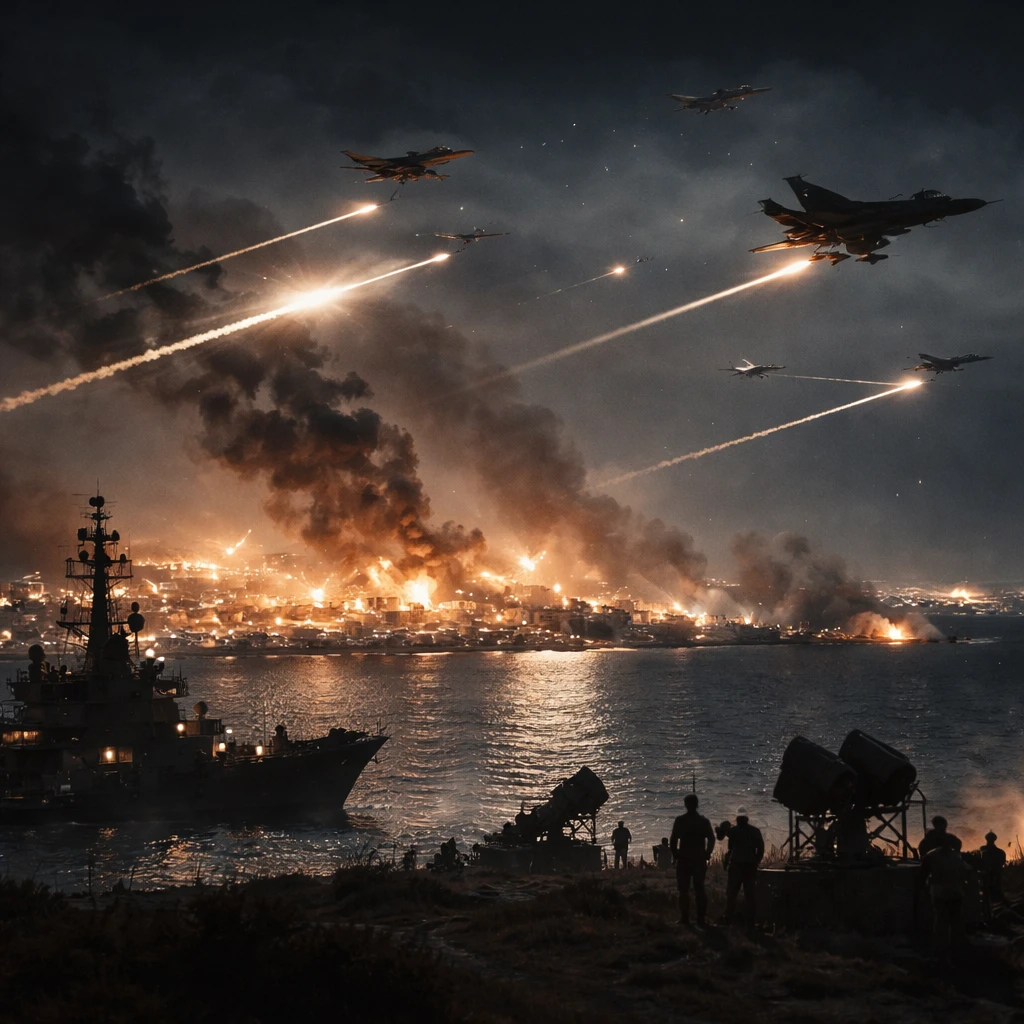
U.S. military leaders cautioned on Monday that the campaign against Iran will not be quickly resolved and that additional American casualties are expected, as air strikes carried out by the United States and Israel continued into a third consecutive day.
General Dan Caine, chairman of the Joint Chiefs of Staff, told reporters that the military aims assigned to U.S. Central Command (CENTCOM) and the broader Joint Force will require time and, in some instances, "difficult and gritty work." He emphasized that these aims are not a single overnight operation and said the United States has continued to send additional troops to the Middle East despite a recent, massive military buildup.
Caine’s remarks followed a report from the U.S. military that Kuwait’s air defenses had mistakenly shot down three American F-15E fighter jets during an Iranian attack. The episode added to the human toll from the campaign: a fourth U.S. service member died on Monday from injuries sustained in the U.S. operation against Iran.
Officials also reported that U.S. forces have intercepted hundreds of ballistic missiles that were targeting U.S. units and partner forces in the region. Those defensive efforts have been part of a rapidly intensifying U.S.-Israeli air campaign that officials said expanded on Monday and showed no clear end in sight.
At the same press briefing, U.S. Defense Secretary Pete Hegseth said military operations against Iran were not intended to create an "endless war," while acknowledging that the mission would not conclude overnight. Hegseth defined the operation’s aim as the destruction of Tehran’s missiles, navy and other security infrastructure, and reinforced the message that the campaign is meant to be distinct from past, prolonged conflicts. "This is not Iraq. This is not endless," he said.
Caine’s public comments came a day after President Donald Trump indicated that strikes against Iran could continue for as long as four weeks. The president launched the U.S. campaign alongside Israel on Saturday in what the article describes as the biggest U.S. foreign policy gamble in decades - an operation directed at an adversary the piece says had "tormented the United States and its allies for generations."
Despite the air campaign, the conservative clerical leadership in Iran has shown no indication of giving up power, according to the reporting. Military analysts cited in the account said that air power alone - without ground troops - may be insufficient to dislodge Iran’s leadership.
The strikes have been deadly for many Iranians, with scores reported killed in the operations. Several of those strikes reportedly struck apparent civilian targets, adding to concerns about the human cost of the campaign.
Context and next steps
Senior U.S. officials have framed the campaign as focused on degrading Iran’s military capabilities, in particular its missile forces and naval assets. Commanders stressed that additional forces have been deployed to the region and that the campaign will require sustained, sometimes difficult operations to meet its objectives.
At the same time, losses from the conflict have included both combat casualties and the accidental downing of U.S. aircraft by an allied air-defense system. The unfolding events underscore the hazards of an expanding air war and the uncertain path toward achieving the stated goals.