
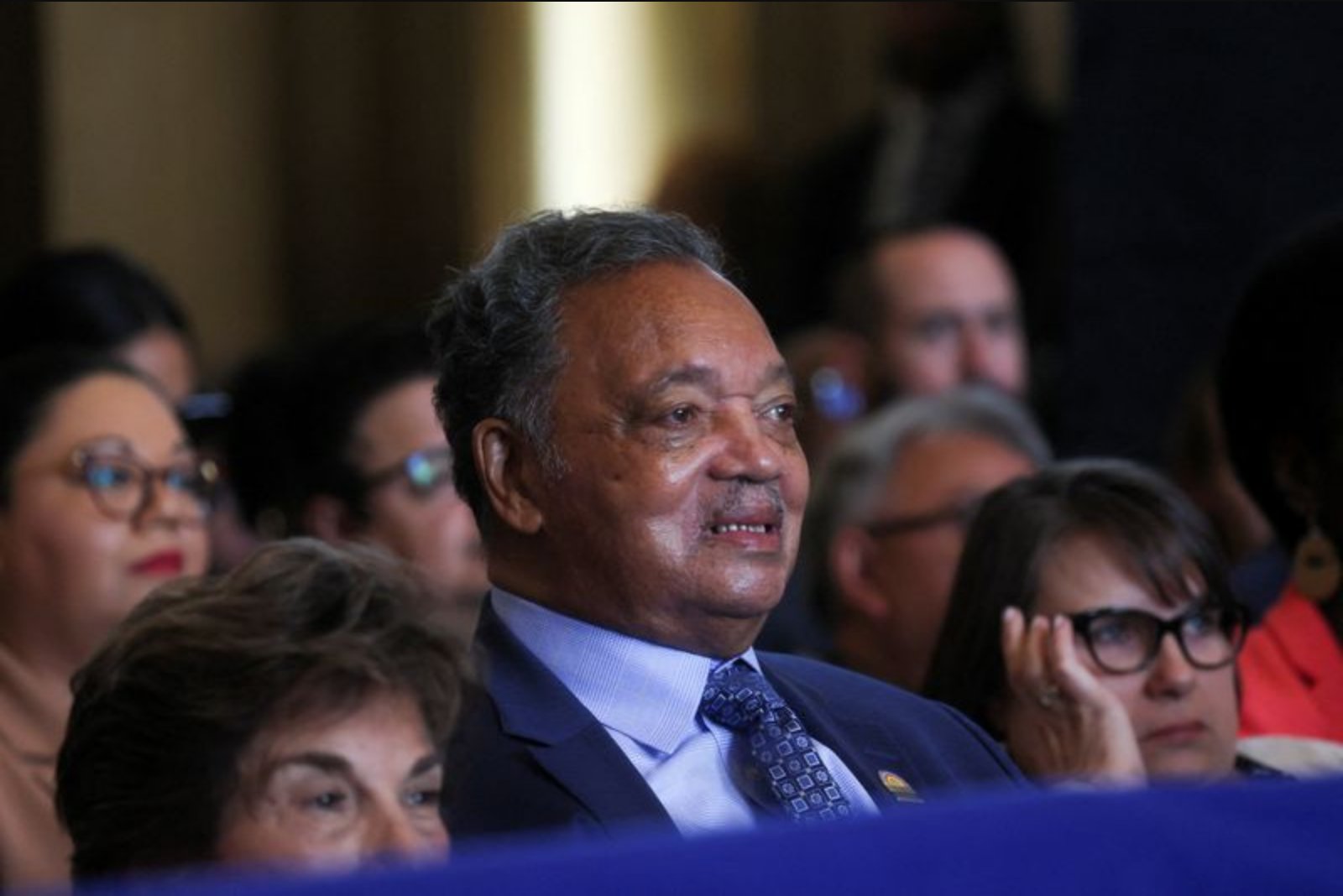
Jesse Jackson, a U.S. civil rights leader and Baptist minister who rose from the segregated South to national prominence as an ally of Martin Luther King Jr. and a two-time contender for the Democratic presidential nomination, has died at the age of 84, his family said on Tuesday.
News of his death drew immediate responses from political leaders and civil rights figures, each highlighting different aspects of his public life - his charisma, his presidential bids in the 1980s, his international activism, and his role as an advocate for those outside the corridors of power.
Donald Trump, President of the United States
"A good man, with lots of personality, grit, and ’street smarts’."
Kamala Harris, former vice president of the United States
"His presidential runs in 1984 and 1988 electrified millions of Americans and showed them what could be possible."
"From Washington, DC to the Bay Area, from the Mississippi Delta to Appalachia, from South Africa to the South Side of Chicago, Reverend Jackson gave a voice to people who were removed from power and politics."
Cyril Ramaphosa, President of South Africa
"Rev Jesse Jackson’s irrepressible campaigns against apartheid and his support for the liberation struggle was a towering contribution to the global anti-apartheid cause."
David Lammy, British deputy prime minister
"Jesse Jackson was one of the first people to call after the riots of 2011 (in English cities)... It was a privilege to share such precious time with him in Chicago and London over the years."
Rev Al Sharpton, U.S. civil rights and social justice activist
"The Reverend Jesse Louis Jackson was not simply a civil rights leader; he was a movement unto himself. He carried history in his footsteps and hope in his voice. One of the greatest honors of my life was learning at his side."
"He reminded me that faith without action is just noise. He taught me that protest must have purpose, that faith must have feet, and that justice is not seasonal, it is daily work."
The statements reflect the range of Jackson's public roles cited by respondents - from electoral politics to transnational advocacy and grassroots organizing. Leaders referenced his presidential campaigns in 1984 and 1988, his efforts related to the struggle against apartheid abroad, and his longstanding presence in American civil rights debates.
Beyond the quotes, the remarks collectively underscore how those who knew or observed Jackson characterized his approach to activism: as vocal, engaged, and aimed at elevating voices from diverse communities across the United States and beyond.
Details beyond the announcements and public reactions were not provided in the statements cited here.