
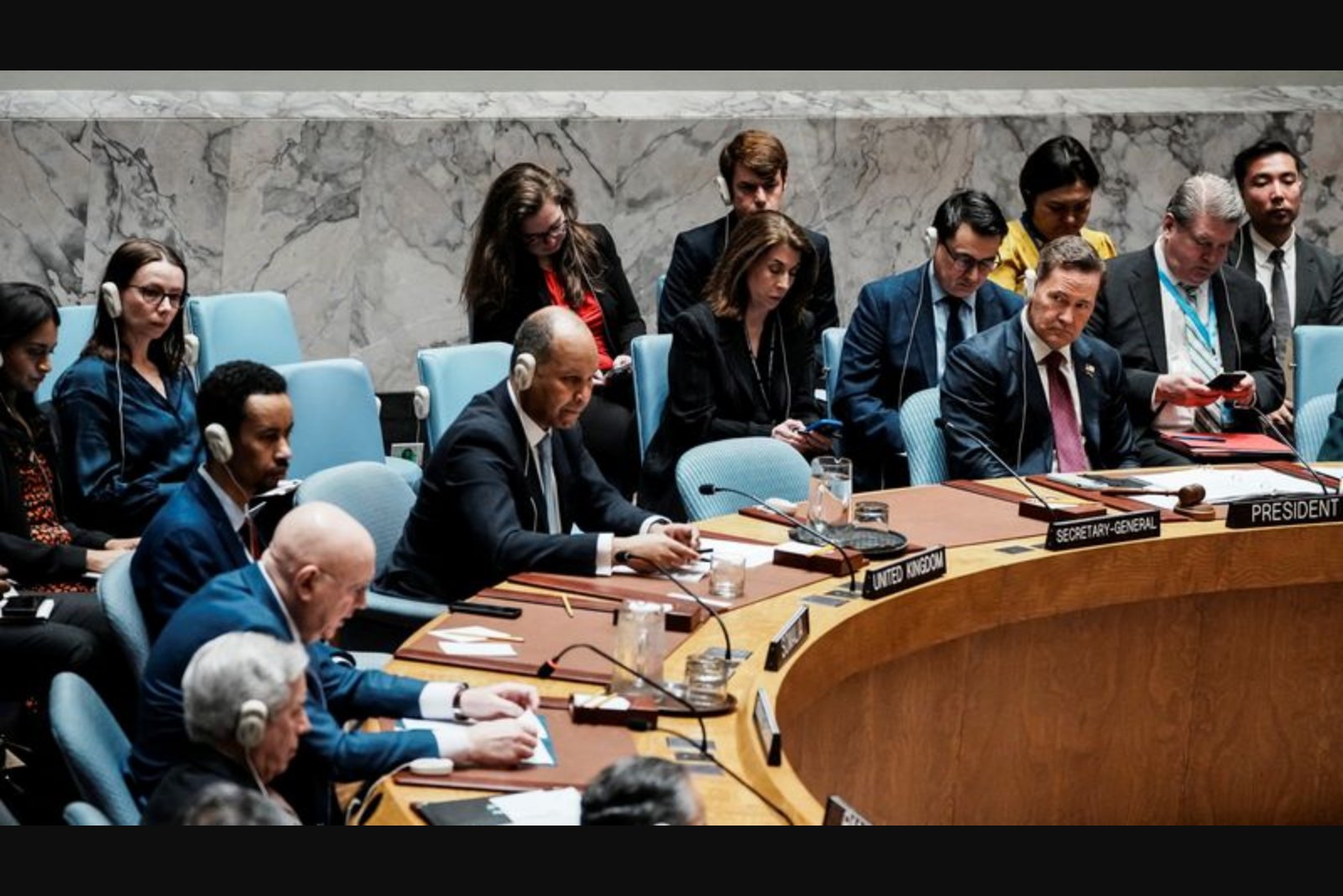
March 12 - Tensions flared at the U.N. Security Council as the United States and several Western allies confronted Russia and China over the international response to Iran's nuclear program. At the center of the debate was the so-called 1737 Committee, the body responsible for supervising U.N. sanctions on Tehran.
The council convened with the United States serving as this month's chair. Russia and China attempted to prevent discussion of the sanctions committee, but their effort failed when the council voted 11-2, with two abstentions, to proceed.
U.S. case for stricter implementation
The U.S. ambassador to the United Nations, Mike Waltz, framed the vote as a defense of the sanctions regime and accused Moscow and Beijing of seeking to shield Iran. Waltz called on all U.N. member states to take specific steps: "All member states of the United Nations should be implementing an arms embargo against Iran, banning the transfer and trade of missile technology, and freezing relevant financial assets," he said.
He further defended the measures that Washington seeks to re-impose on Tehran, arguing that they are targeted. "The U.N. provisions to be re-imposed are not arbitrary, but instead, narrowly scoped to address the threat posed by Iran’s nuclear, missile and conventional arms programs and Iran’s ongoing support for terrorism," Waltz said.
Waltz also directly accused Russia and China of opposing a functional sanctions committee "because they want to protect their partner, Iran, and continue to maintain defense cooperation that is now once again prohibited." He cited a recent statement from the U.N.'s International Atomic Energy Agency, noting that the IAEA had reaffirmed that "Iran was the only state in the world without nuclear weapons to have produced and accumulated uranium enriched up to 60 percent, and had refused to provide the IAEA access to this stockpile."
Russian and Chinese rebuttals
Russia's permanent representative to the U.N., Vasily Nebenzya, sharply rejected the U.S. framing. Nebenzya accused the United States and its allies of inflating concerns to justify military action, saying Western powers had "whipped up hysteria surrounding supposed plans Iran had to get a nuclear weapon" that, he asserted, had not been corroborated by IAEA reports. He added: "This was done in order to undertake yet another military venture against Tehran and to ensure great escalation of the situation in the Middle East and beyond,"
China's envoy, Fu Cong, placed responsibility for the escalation on Washington, labeling it the "instigator" and asserting that the U.S. had "resorted to blatant use of force against Iran during the negotiation process, which rendered the diplomatic efforts futile."
Western responses and broader context cited in the council
Britain and France told the Security Council that re-imposing sanctions on Iran was justified by Tehran’s failure to address international concerns about its nuclear program. France specifically warned that the IAEA was no longer able to guarantee the peaceful nature of the program and asserted that Tehran’s nuclear stockpile was sufficient for 10 nuclear devices.
The U.S. also invoked recent military strikes in its justification. The article of record quotes U.S. President Donald Trump as saying this month that Iran would have had a nuclear weapon within two weeks had the U.S. not struck three key nuclear sites in June - a claim that sources have said was not supported by U.S. intelligence assessments.
The Security Council session made clear the deep divisions among major powers over both the facts on the ground and the appropriate international response. Delegates exchanged direct accusations about motives and methods, and they disagreed on whether the mechanisms to monitor and enforce sanctions should be restored and empowered.
As the council moves forward, the immediate dispute focused on the operational status of the 1737 Committee and whether member states should implement a set of narrowly defined measures laid out by the United States. The arguments presented at the meeting reflected sharply divergent interpretations of the same technical findings reported by the IAEA and of recent military actions taken by the United States.