
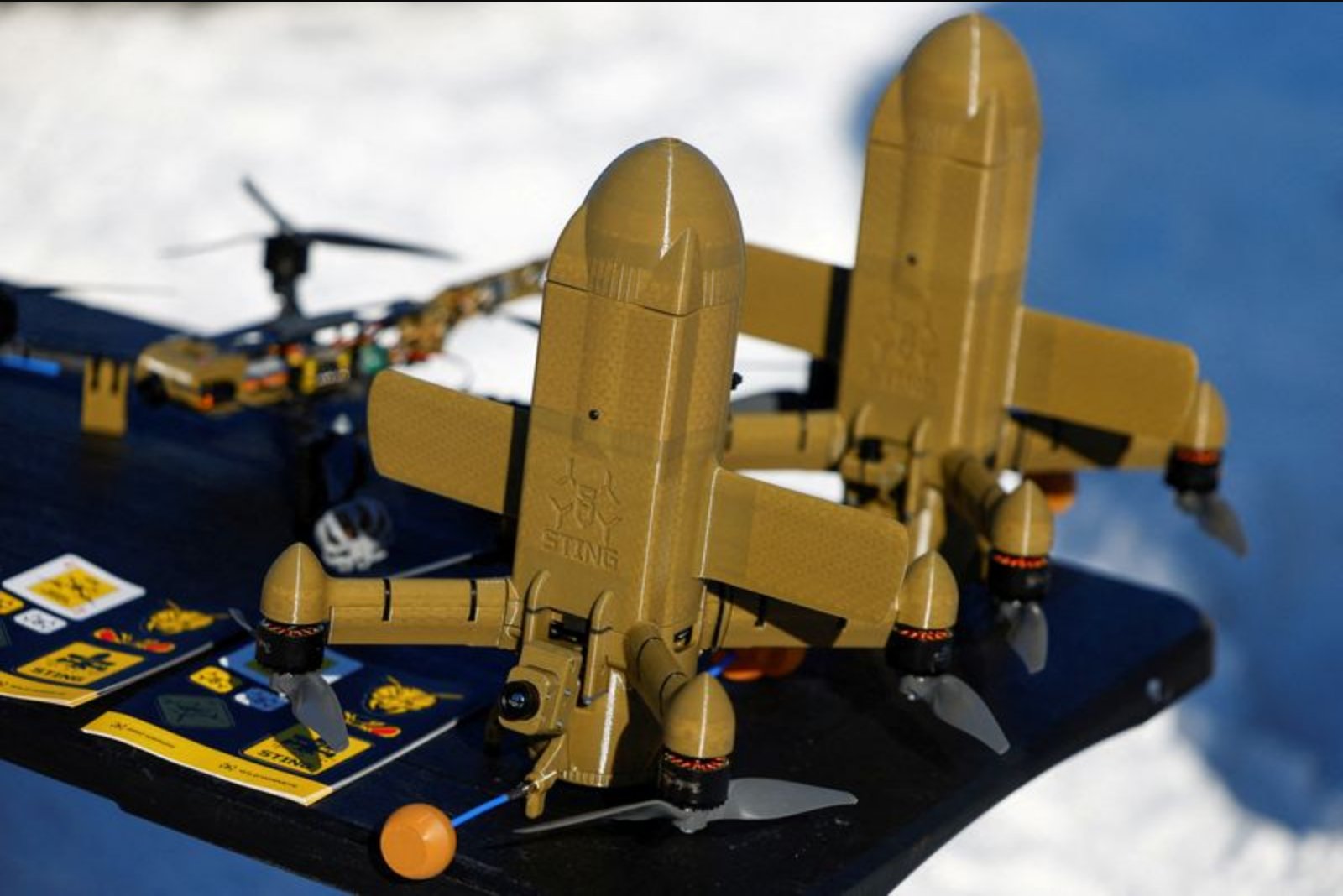
The United States and Qatar have been holding initial government-level talks with Ukraine concerning the acquisition of Ukrainian interceptor drone systems as a cost-effective option to defeat Iranian Shahed kamikaze drones in the Gulf, a source familiar with the matter said.
Those exchanges are still at an early stage and involve officials rather than private companies. The technology under discussion includes not only interceptor drones but also systems designed to detect incoming hostile unmanned aerial vehicles and to interfere with their command and control signals, the source said.
Qatar's International Media Office did not reply to a request for comment. The Pentagon declined to comment on the talks.
Kyiv's public comments and conditions
Ukraine's president has acknowledged requests from the United States for assistance in downing Shahed drones. He said he had ordered that necessary resources be made available and that Ukrainian specialists be deployed to ensure security for any such operations, but he did not provide further operational details or explicitly name Ukrainian interceptor drones as the response.
The president also indicated that other countries in the Middle East had made similar requests. He was explicit that Ukraine would proceed only if any transfer or cooperation did not weaken Ukraine's capacity to defend itself against Russia's invasion. Separately, he said he would consider swapping Ukrainian interceptor drones for air defence missiles.
Diplomatic outreach to Gulf states
A Western diplomat based in the Gulf said a Ukrainian delegation travelled to Doha this week to meet Qatari officials and share Kyiv's experience in defending against drone attacks. The same diplomat added that another Ukrainian delegation visited Abu Dhabi.
The diplomat's comments come against a backdrop of heavy Iranian strikes on Gulf countries. Tehran has fired hundreds of missiles and drones at those states after the United States and Israel carried out a large-scale campaign of air strikes on Iran on Saturday that, according to the reporting, killed much of the Islamic Republic's senior leadership. Gulf countries have intercepted most of those incoming weapons, relying heavily on the U.S.-made PAC-3 Patriot systems.
Ukraine's battlefield experience and capacity constraints
Over the course of its four-year conflict with Russia, Ukraine has developed relatively inexpensive techniques for defeating Shahed-type unmanned aerial vehicles. Kyiv says Russia has launched some 19,000 long-range drones at Ukraine this winter, most of which Ukrainian forces have shot down.
Those lower-cost interception methods are attractive to Gulf states given the financial and inventory pressures on Patriot interceptors. The United States and its Gulf partners have used hundreds of air-defence missiles since the Iran conflict escalated, and each of those missiles carries a multimillion-dollar price tag.
Production constraints compound the problem. Lockheed Martin currently produces roughly 600 PAC-3 missiles annually and plans to raise output to 2,000 a year under a seven-year arrangement with the U.S. defence establishment. Meanwhile, Kyiv has been operating with depleted stocks of such missiles for months, prompting concern that it may struggle to counter Russian ballistic missiles, against which the Patriot system is the only effective defence in its arsenal.
Mechanics of potential transfers and international partners
One of the people involved in parallel discussions said Britain is assisting Ukraine in early-stage talks with Gulf states about deploying Ukrainian interceptor drones against Shaheds. Some interceptors could come from Project Octopus, a joint interceptor-drone venture between London and Kyiv. Britain's Ministry of Defence did not respond to questions, and Ukrspecsystems, the Ukrainian company behind the Octopus manufacturing site in the United Kingdom, declined to comment.
After hostilities in Iran intensified, Ukraine's SBU security service warned domestic companies not to sell weapons to Middle Eastern buyers without Kyiv's explicit permission, the source said. Requests for comment to the SBU and Ukraine's defence ministry went unanswered.
Operational and training challenges
Taras Tymochko of the Come Back Alive foundation, which has purchased tens of thousands of interceptor drones with donated funds, cautioned that it is unclear who other than Ukrainian crews could operate many of these systems. He said removing experienced Ukrainian pilots from their front-line duties and sending them to the Middle East would be difficult.
"There is a significant need to scale up existing training capacities in Ukraine to share experience with our partners," Tymochko said.
Conversations across the region
The Ukrainian president said he had spoken with the leaders of the United Arab Emirates, Qatar, Bahrain, Jordan and Kuwait, without providing details of those conversations. He has also floated the idea of exchanging Ukrainian interceptor drones for Patriot missiles.
As the talks remain preliminary, the pace and scope of any transfer would depend on whether Ukrainian authorities determine such steps would preserve their own defensive needs and on how training and security arrangements could be implemented without diverting critical personnel and materiel from the fight with Russia.