
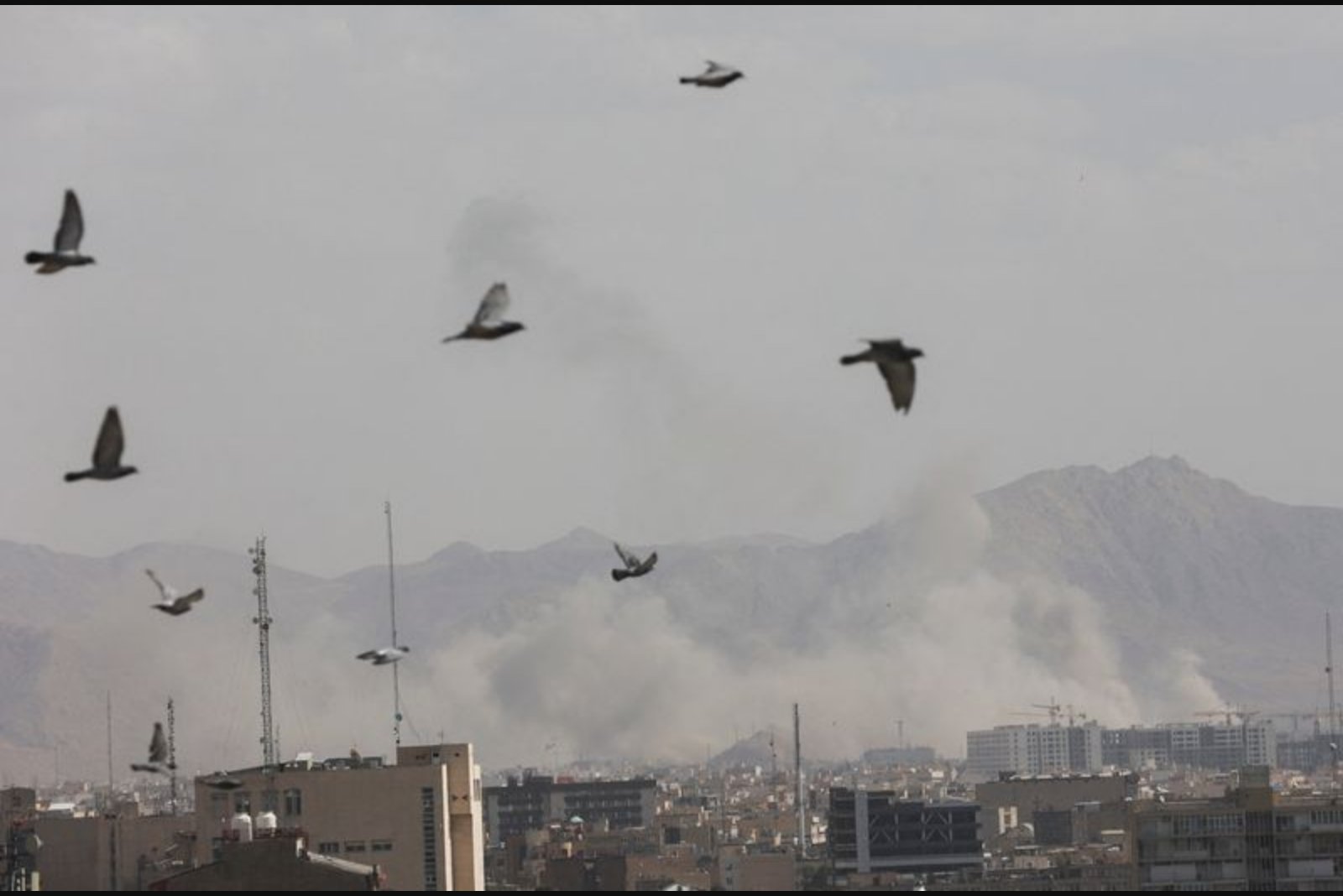
The United States and Israel carried out what senior officials have described as their most ambitious operations against Iran in decades on Saturday. The strikes, according to U.S. and Israeli statements, killed Iran’s Supreme Leader Ayatollah Ali Khamenei. The U.S. president presented the action as serving multiple strategic objectives, while some claims underpinning those objectives remain disputed or lack detailed public evidence.
What U.S. leaders say they intended
President Donald Trump addressed the nation briefly during his State of the Union earlier in the week and then issued a video message on Saturday explaining the rationale behind the operation. He cited a set of core goals the administration says motivated the attack.
- Preventing Iran from acquiring a nuclear weapon - Trump reiterated that Iran must never obtain a nuclear weapon. He said he had "obliterated" Iran’s nuclear program in strikes last June and that Tehran had attempted to rebuild that capability. One rationale provided for the June bombings, officials said, was that Iran was edging closer to the capacity to produce a nuclear weapon. The United Nations’ International Atomic Energy Agency and the U.S. intelligence community have separately assessed that Iran shut down a weapons development program in 2003. Iran denies ever seeking nuclear weapons and, as a party to the Non-Proliferation Treaty, asserts the right to enrich uranium for civilian use. Western powers argue there is no credible civilian justification for the enrichment levels Iran has produced and the IAEA has described the matter as of serious concern. The article notes that no other country has enriched to such levels without eventually producing nuclear weapons.
- Containing Iran’s missile program - Trump flagged advances in Iran’s missile capabilities as an escalating threat. He said Iran had attempted "to continue developing long-range missiles that can now threaten our very good friends and allies in Europe, our troops stationed overseas, and could soon reach the American homeland." The president provided no additional public detail to substantiate these allegations. Iranian state media has claimed Tehran is developing a missile capable of reaching the United States, a claim the article reports but does not independently verify.
- Eliminating threats posed by Iran and its proxies - The president framed the strikes as defensive actions to protect Americans and allied forces. He described the Iranian regime as "vicious" and accused it of activities that directly endanger the United States, U.S. troops, overseas bases and allied countries. In his remarks he referenced a series of historical and more recent incidents he views as examples of Iranian aggression - including Iran’s 1979 takeover of the U.S. Embassy in Tehran and the hostage crisis that followed, a 1983 attack on a U.S. Marine barracks in Beirut that killed 241 American military personnel that U.S. leaders attribute to Iranian proxies, and what he termed countless other actions against U.S. forces and international shipping lanes. Trump also cited Iran’s support for Hamas, the group that carried out a cross-border attack on Israel on October 7, 2023.
- Punishing the treatment of protesters - In his State of the Union and again on Saturday, Trump accused Iran of killing thousands of its own citizens during recent unrest. He repeated a claim that at least 32,000 protesters had been killed in recent months, an assertion that the article notes could not be independently verified. The U.S.-based monitoring group HRANA has reported 7,007 verified deaths with 11,744 cases under review. Iran’s foreign minister released a figure of 3,117 killed in the unrest. An Iranian official told news outlets last month that authorities had verified at least 5,000 deaths, including about 500 security personnel. The article presents these differing tallies without adjudicating between them.
- Calling for regime change - The president urged Iranians to rise up against their leaders, telling the country’s citizens that "the hour of your freedom is at hand" and urging them to take over their government when U.S. action concluded. He added a warning that "the heavy and pinpoint bombing ... will continue, uninterrupted throughout the week or, as long as necessary to achieve our objective of PEACE THROUGHOUT THE MIDDLE EAST AND, INDEED, THE WORLD!"
Claims about casualties and confirmation
President Trump announced from his Mar-a-Lago residence that Supreme Leader Ayatollah Ali Khamenei had died in the strikes. Earlier, Israeli Prime Minister Benjamin Netanyahu said Khamenei’s compound had been destroyed, and a senior Israeli official told news agencies that Khamenei’s body had been found. Iranian state media later confirmed that Khamenei had been killed in the attack. The article reports these sequential announcements as the publicly stated account of events.
Evidence, gaps and contested assertions
The administration’s stated objectives rest on a mix of public claims, historical incidents, and assertions that have varying degrees of independent confirmation. The article notes that the IAEA and U.S. intelligence have previously assessed Iran’s weapons program activities from earlier decades, and records competing figures on recent protest deaths from multiple sources. On the issue of missile development, the president offered allegations without publicly provided technical details; the article also records that Iranian state media has claimed capability development without independent verification presented here.
Immediate posture and warnings
While calling for Iranians to overturn their government, the president warned that bombing would continue as long as necessary to achieve his stated objectives. The article records that the U.S. was monitoring operations from the president’s Mar-a-Lago resort during the action and that he communicated both the policy goals and a readiness to sustain military pressure.
Summary of the factual record presented
The piece reports that U.S. and Israeli forces executed major strikes that both governments say killed Iran’s supreme leader. The administration articulated a multi-pronged rationale centered on preventing nuclear weaponization, halting missile development, protecting Americans and allies from Iranian threats and proxy actions, holding Iran accountable for the treatment of protesters, and encouraging regime change in Tehran. Several of the president’s assertions are presented alongside contrasting or limited corroborating information, particularly on casualty counts and technical claims about weapons programs.