
Overview
Investigators and human-rights groups working to document alleged Russian war crimes in Ukraine report that recent U.S. decisions to curtail overseas-development assistance have hindered their ability to gather evidence, support prosecutions and help victims. Field operatives who once travelled widely to interview survivors and to collect battlefield and forensic material have had to scale back or suspend activities after Washington paused or terminated multiple funding streams directed at accountability and rule-of-law programs in Ukraine.
On the ground in Izium
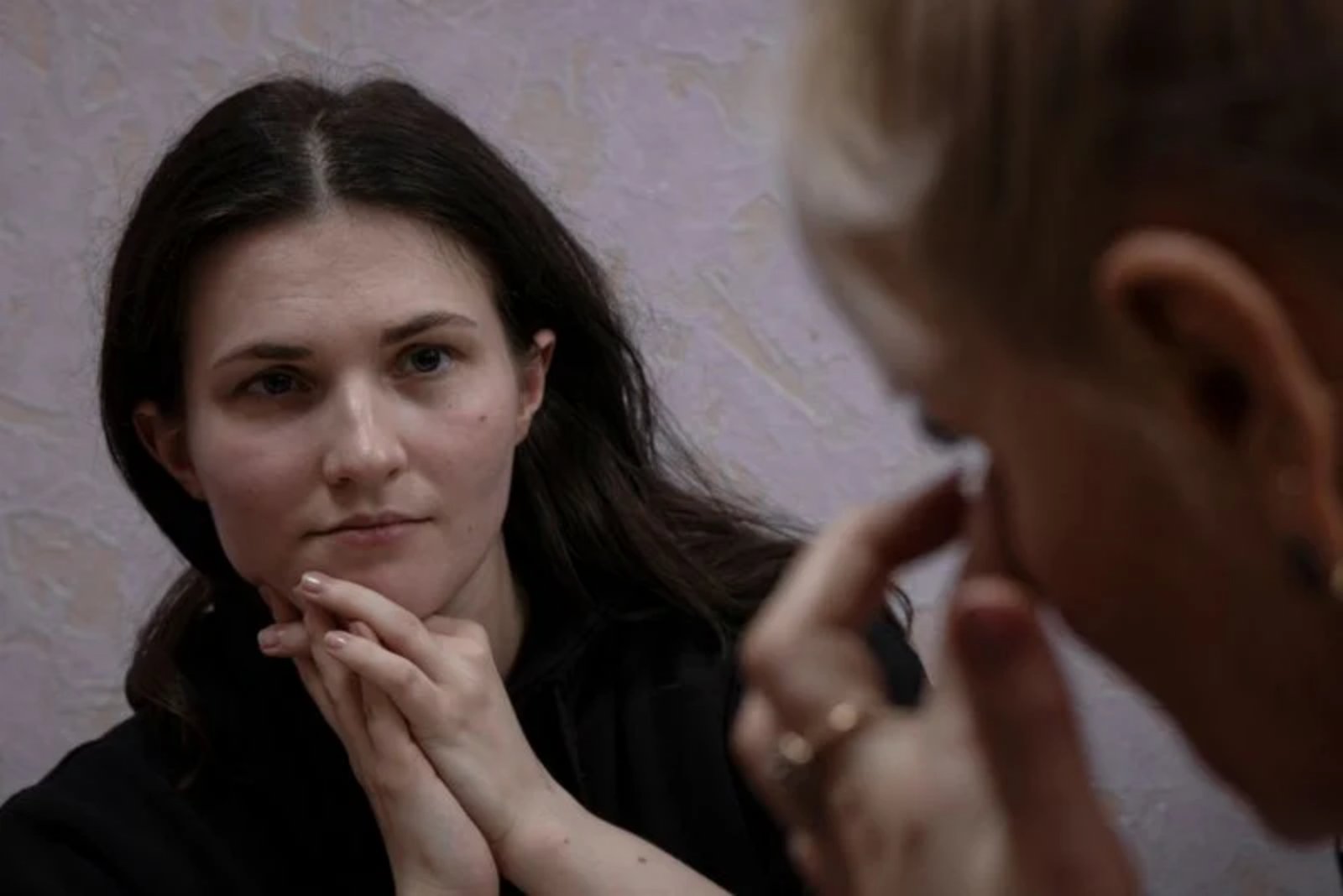
In the northeastern Ukrainian town of Izium, an area that still exhibits the physical damage of the 2022 Russian occupation - shattered bridges, flattened buildings and countryside pockmarked by conflict - a war-crimes investigator made a difficult journey in winter conditions to document testimony. Roksolana Makar, who works for a Ukrainian nonprofit focused on documenting atrocities, travelled over icy roads and beneath the constant risk of drone strikes to meet a woman who recounted detention and abuse.
The woman, who gave her name as Alla and is 55 years old, described being held for 10 days in 2022 at a battery plant where she said Russian soldiers beat her, subjected her to electric shocks, suffocated her using a gas mask and raped her. "I asked them to kill me because I couldn’t take it anymore," Alla said during the interview. Reuters could not independently verify her account. The Kremlin and Russia’s defense ministry did not respond to questions about her or other individual incidents described in this report. Russia has repeatedly denied committing war crimes and has characterized such accusations as Western propaganda.
Why witnesses and investigators race against time
Makar and others conducting similar work emphasize the urgency of preserving testimony before memories fade and material evidence is lost or destroyed. Large-scale documentation, archiving and legal support are necessary steps to build cases that could be prosecuted in Ukrainian courts, European national courts or at the International Criminal Court (ICC) in The Hague. The Ukrainian Prosecutor General’s Office reports it has opened more than 230,000 war-crimes cases since Russia launched its full-scale invasion in 2022; allegations logged include attacks on civilians and civilian infrastructure, abductions and deportations of children, torture and sexual violence.
U.S. policy changes and their immediate effects
Investigators, legal experts and justice-sector officials describe a chain of program suspensions, staff layoffs and halted reconstruction efforts after the U.S. administration paused or ended significant pieces of overseas-development assistance during a broader policy shift that reprioritized funding. According to interviews with current and former U.S. officials, and a review of government data, tens of millions of dollars that had been directed toward accountability and justice work in Ukraine were among the funds cut when the U.S. administration advanced an "America first" agenda and reduced foreign-development aid.
Those reductions have affected a wide network of organizations. Truth Hounds, the Ukrainian nonprofit for which Makar works, reported laying off staff, suspending an archiving project intended to preserve testimony and deferring international-law training for judges and prosecutors. The organization had been documenting alleged war crimes since 2014 and, according to its co-executive director Dmytro Koval, had logged some 17,000 allegations across Ukraine. Truth Hounds had relied on U.S. funding for roughly a third of its budget since 2023, and that aid loss slowed its operations.
Scope of U.S.-funded work and the scale of reductions
Researchers and investigators tracked U.S. funding streams that were at least substantially earmarked for accounting and justice work related to the war in Ukraine. Reuters reviewed public announcements, government documents and watchdog reports, and interviewed more than two dozen sources to tally more than $283 million in U.S. funding directed at programs tied to documenting, investigating and pursuing accountability for war crimes in Ukraine since 2022. Determining precise disbursement dates and amounts proved difficult because support has flowed through multiple U.S. agencies, covered different time frames, and was often delivered through grants shared among several organizations.
While it could not be established exactly how much of the $283 million had been disbursed at the time a January 2025 pause on foreign-development assistance was ordered pending a review, investigators found that programs representing at least 40% of that tracked spending were terminated or allowed to expire. That figure is presented as a conservative estimate; the tally is likely an undercount but is the most comprehensive assessment compiled to date by these interviews and document reviews.
Specific program disruptions documented by investigators
Truth Hounds - layoffs, halted archiving and deferred training for justice-sector professionals after loss of U.S. funding covering roughly one-third of its 2023 budget.
Foreign experts who had assisted Ukrainian prosecutors in collecting and analyzing battlefield evidence - travel suspended because State Department support to the prosecutors was reduced, according to sources acquainted with the issue.
A courthouse reconstruction project - plans stopped after the U.S. Agency for International Development (USAID) was reportedly dismantled and a $62-million program to strengthen the Ukrainian justice system was terminated, according to a source familiar with USAID operations.
Yale School of Public Health’s Humanitarian Research Lab - State withheld approximately $8 million, leaving the lab facing a funding gap and projecting it would run out of money in August without restored support, according to the lab's executive director, Nathaniel Raymond.
Consequences for prosecutions and evidence-gathering
Even when U.S. funding was at higher levels during the previous administration, the demand for arrests and prosecutions overwhelmed Ukrainian capacity. As of April 1, Ukrainian prosecutors reported 252 war-crimes convictions, the identification of 1,175 suspects and the indictment of 842 individuals. High-ranking suspects could be targeted at the ICC, which has sought the arrest of President Vladimir Putin. Cases are also being pursued in U.S. and European courts.
Officials and experts say U.S. reductions have constrained the number of foreign experts who can travel to Ukraine to assist with forensic analysis, open-source investigations and the transfer of institutional knowledge that underpinned earlier progress. One senior source in Ukraine estimated that about half of the country’s U.S.-funded projects promoting war-crimes accountability and rule of law were affected by the cuts.
New U.S. initiatives and partial restorations
The State Department announced one new program in March, offering up to $25 million to support the return of missing Ukrainian children - a cause noted as a priority by first lady Melania Trump. Recipients of that grant had not been announced at the time of reporting. The announcement followed the cutting of other programs that served similar objectives, including a project at Yale that had tracked thousands of missing Ukrainian children to locations inside Russia and in Russian-occupied territory.
Broader U.S. policy shifts affecting global justice work
Observers and participants in the accountability ecosystem point to a wider U.S. retreat from certain mechanisms for addressing mass atrocities and human-rights violations. Among the steps taken by the current U.S. administration, according to sources and public records: closure of a State Department office that had coordinated global responses to mass atrocities since 1997; disbanding a Justice Department team that helped Ukraine prosecute war crimes; withdrawal from a multinational group building cases against Russian officials; and the imposition of sanctions on ICC officials related to investigations into alleged crimes in other conflicts. Critics say these moves create gaps in international cooperation that previously supported evidence collection, legal strategy and prosecutorial assistance for countries facing large-scale abuses.
International partners step in but cannot fully replace lost U.S. support
European and British officials and organizations have pledged continued support for accountability efforts in Ukraine. Britain announced an additional £5 million to support justice for victims of Ukrainian war crimes and £1.2 million to assist with verifying and tracing illegally deported children. The European Union said member states had allocated €10 million to create a special tribunal to try senior Russian leaders for aggression and contributed €1 million to develop an international claims commission to secure compensation for Kyiv. In May, the EU also announced €50 million to bolster Ukraine’s child-protection system and to pursue justice for abducted children.
Despite these pledges, practitioners in the field said the lost U.S. aid will be difficult to replace. Wayne Jordash, deputy lead of an Atrocity Crimes Advisory Group (ACA) established by the U.S., EU and Britain to support the Ukrainian prosecutor’s office, said remaining funding gaps have hurt core initiatives. State Department audits and reporting showed that two of three core organizations in the ACA initiative lost U.S. support last year, including Jordash’s own Global Rights Compliance foundation.
Investigations of child abductions and digital tracking work
Some of the most sensitive and technically demanding work involves tracing children alleged to have been deported or transferred to sites in Russia and Russian-occupied territory. Yale’s Humanitarian Research Lab used satellite imagery, material from Russian social media and other open-source data to identify sites where they believe children were taken and placed. Their research, which has been used by Ukrainian prosecutors and aid groups, identified more than 200 such sites and tracked thousands of children to those locations. Ukrainian authorities say they have documented more than 20,500 child deportations or forced transfers and that just over 2,000 children have been returned. Yale researchers estimate as many as 35,000 children may have been taken; Russian authorities reject accusations of abduction, saying children were evacuated for safety.
Yuliia Usenko, Ukraine’s lead prosecutor for crimes against children, described Yale’s digital investigations as "invaluable," particularly because many alleged scenes of crime are in territory to which Ukrainian teams do not have access. The digital evidence and pattern-mapping undertaken by academic and nongovernmental groups have been used to support lines of inquiry that could demonstrate whether a deliberate policy of deportation and assimilation was pursued.
How aid reductions hit grassroots assistance efforts
Nonprofit organizations operating in frontline communities say the analytical work conducted by groups such as Yale and by international legal advisors was central to reuniting children with families and to documenting cases for future legal action. The Emile Foundation, which operates in frontline villages, has used Yale’s research to support family reunifications. Mariam Lambert, co-founder of the Netherlands-based foundation, warned that without such analytic work the process of reuniting children and compiling evidence could experience "many years of setbacks."
Personal stories: Families searching for answers
The human consequences of program suspensions are evident in the stories of parents still searching for children and loved ones. Hanna Zamyshliaieva last saw her son, Anton Volkovych, on January 14, 2022, at a boarding school for children with special needs in Oleshky in the Kherson region. He was 19 and required constant care because of a neurological disorder. After Russian forces occupied the area that February, students and some staff were transferred to locations further inside Russian-occupied territory. Of the 87 pupils at Oleshky before the occupation, 13 have returned, according to Emile Foundation figures. Zamyshliaieva’s foundation received a tip about Anton’s possible whereabouts in March, but there has been no confirmation from Russian authorities. She remains in daily uncertainty over whether he survived during the years without the care he had received at the school. "I just want to hold him," she said.
Another family seeking closure is that of Vladyslav, the son of Tetiana Popovych, who disappeared from Bucha during the early days of the war. Popovych retraced his movements with neighbors and with information from prisoners of war released later. One witness reported seeing Vladyslav hiding during artillery fire, and another said he had been wounded and treated by a local resident before Russian forces captured and beat them. A released prisoner later told Popovych they had shared a detention cell in Vyazma in Russia, and she believes he remains there. Popovych said her priority is accountability: "For me it is important that everyone is punished, that everyone is found, no matter how many years have passed. I will fight for this until the end."
Voices from the legal and international community
Beth Van Schaack, who served as ambassador-at-large for global criminal justice under the previous U.S. administration, warned that deep aid reductions "could lead to a lot of victims being denied justice." Experts working inside and outside Ukrainian institutions echoed the concern that the erosion of funding and institutional support makes it more difficult for investigators to follow leads, to preserve chain-of-custody for evidence, and to train judges and prosecutors to handle complex atrocity crimes.
Dmytro Koval of Truth Hounds said the organization’s slowed pace will mean fewer investigations opened and fewer archival materials preserved for future prosecutions. "Some important lines of inquiry will not be opened at all," he said, describing the constraints his group now faces.
Wayne Jordash, of the Atrocity Crimes Advisory Group, highlighted the fine balance required to sustain prosecutorial work. The ACA had previously provided expertise and case analysis that helped the Ukrainian prosecutor’s office make decisions about which cases to pursue and how to cluster evidence to build indictments that could reach high-level officials. Jordash said the loss of U.S. funding to two of three core organizations in the initiative last year weakened the capacity of the advisory group to provide comprehensive support.
Official U.S. response and stated reallocations
The U.S. State Department said Washington is shifting the financial burden of the war’s response to Europe and other "willing partners," while affirming that it still provides substantial assistance to Ukraine, including programs focused on "war crimes, justice and accountability for atrocities." The department pointed to continued activity in some areas even as other streams were curtailed but did not provide detailed, program-by-program disclosure of which funds were cut versus sustained or newly committed.
The U.S. Justice Department stated it remains committed to supporting accountability for war crimes. The U.S. government has launched one new child-return program worth up to $25 million, though recipients had not been named at the time of reporting.
Responses from other international partners
British and EU authorities said they remain committed to pursuing justice for victims of alleged Russian atrocities. In addition to British contributions, the EU announced support for a special tribunal and an international claims commission, and it earmarked funds for child-protection and abducted-children initiatives. EU foreign affairs spokesperson Anitta Hipper said member states were allocating resources to hold Russia accountable. Hipper emphasized the EU’s commitment to pursue justice and compensation mechanisms for Kyiv, signaling ongoing European engagement even as U.S. funding priorities shift.
Limits to accountability absent sustained support
Practitioners warn that the immediate damage from funding cuts is compounded by longer-term risks. Suspension of archiving and investigative projects risks the permanent loss of testimony and corroborating material. Reduced international expert support may delay or degrade forensic and open-source analysis that helps link field-level incidents to higher-level policy or command responsibility. Courtroom training and institution-building work stop being incremental investments and instead become gaps that will be costly and time-consuming to refill if funding is later restored.
Where things stand
The picture that emerges from interviews with more than 40 members of the network that had received U.S. support is one of constrained operations, interrupted projects and uncertain timelines. From grassroots fieldwork in towns like Izium to sophisticated digital investigations of allegedly deported children, organizations that had depended on U.S. funding report cutbacks and program suspensions. Even as other donors increase their contributions, practitioners say the expertise, institutional connections and specific program investments that were supported by the United States are not easily or quickly replaced.
Closing reflections
For survivors and families still seeking answers and for the investigators working to assemble the complex mosaic of evidence that could underpin future trials, the consequences of reduced funding are immediate and personal. Investigators like Makar continue to travel to interview witnesses in dangerous and damaged communities, and prosecutors like Yuliia Usenko continue to pursue lines of inquiry that rely on digital analysis and international cooperation. Yet those efforts now face a narrower operating environment, with fewer staff, less travel and diminished capacity to archive and analyze material at scale. For many engaged in this work, the question is not only whether individual cases can be advanced, but whether the larger structure of accountability and memory will be preserved in a way that allows victims to seek redress and societies to hold perpetrators to account.
Exchange rates cited in conversations with some international partners: ($1 = 0.7430 pounds) ($1 = 0.8577 euros)