
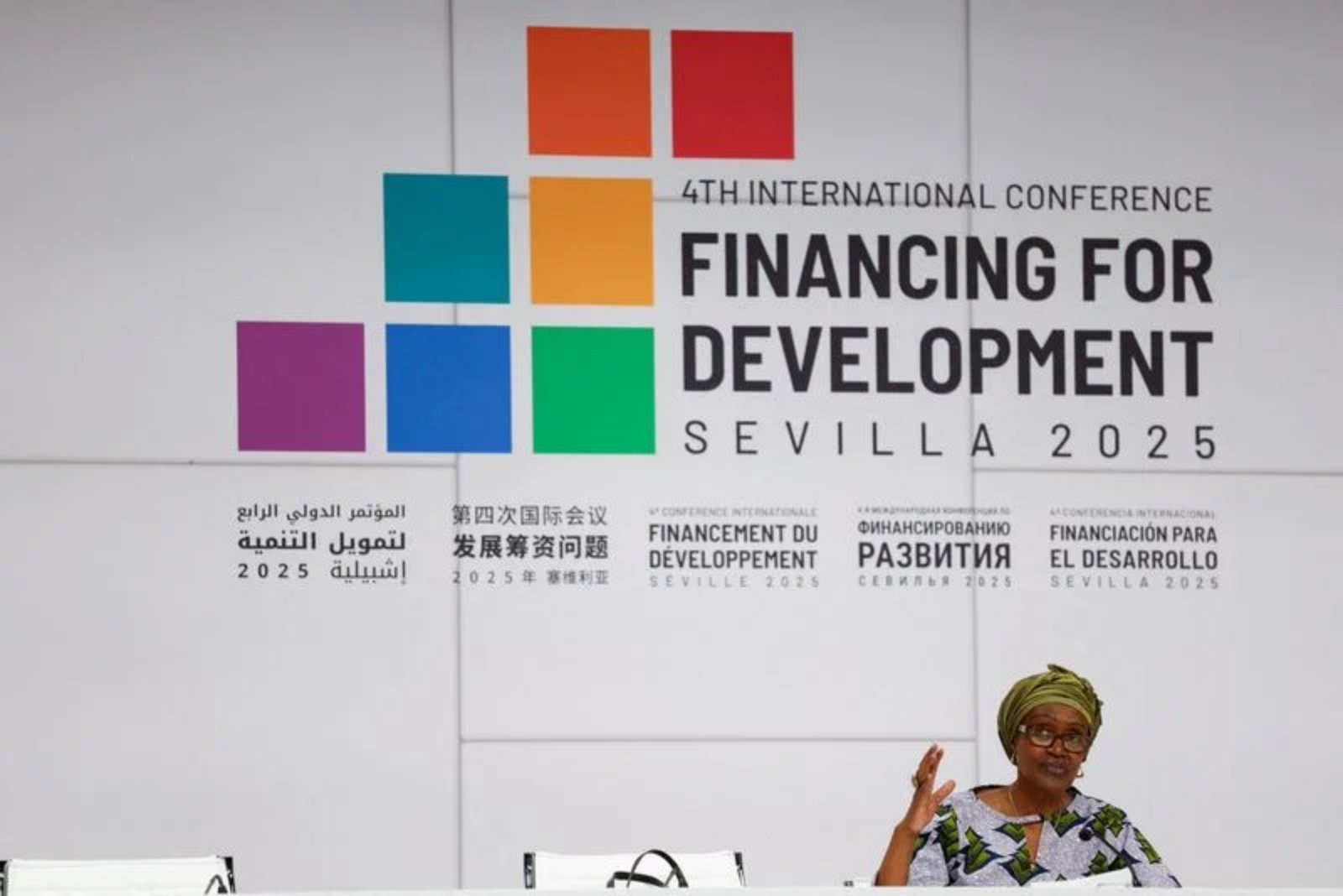
Winnie Byanyima, head of the Joint United Nations Programme on HIV/AIDS (UNAIDS), expressed deep concern and sadness on Monday regarding the United States' plan to reduce HIV/AIDS assistance to South Africa, the country with the world's largest number of people living with HIV.
Speaking at a U.N. news briefing ahead of a high-level U.N. conference on HIV/AIDS, Byanyima said removing U.S. support would strip vulnerable populations of life-saving services and urged Washington to reconsider the move. "I'm sad about that," she said when directly asked about the U.S. action. "Taking it away is taking away life-saving support from the most vulnerable people. So, that is sad. And I would ask the United States to reconsider their position."
In an emailed statement, the U.S. State Department confirmed that the United States has "decided to initiate a phased drawdown" of the President's Emergency Plan for AIDS Relief (PEPFAR) in South Africa, citing what it described as South Africa's failure to make demonstrable progress on policy requests by the administration. The statement added that PEPFAR was never intended to be permanent and noted that South Africa "is a middle-income country and is more than capable of supporting its own health programs."
According to reporting cited by U.S. sources last week, the State Department's decision was linked to demands the administration had made of Pretoria. Those demands reportedly included steps to reduce South Africa's partnership with Iran, to end Black Economic Empowerment policies, and to address occurrences of the "Kill the Boer" anti-apartheid chants.
The U.S. President previously froze many foreign aid programs early in his presidency, before reinstating some lifesaving assistance, including parts of PEPFAR.
Byanyima highlighted the scale of the issue in South Africa, noting the country has about 8 million people living with HIV - the highest national total in the world. While South Africa does not depend on U.S. funding for its HIV medication, the UNAIDS chief said PEPFAR had previously provided over $400 million a year to the country and funded the salaries of around 15,000 health workers. She added that the U.S. program had been supplying up to 17% of South Africa's HIV funding.
Beyond South Africa, Byanyima warned that broader reductions in global development assistance from traditional donors in Europe and North America are already affecting services and could reverse decades of progress against the disease. "Please do not take money away because you are taking lives away. Have a planned transition," she said, urging donor nations to manage reductions in a way that protects vulnerable populations.
The UNAIDS director pointed to global targets and uneven progress in the response. She noted there is a goal to end AIDS as a public health threat by 2030 and that the global response has achieved significant gains, including getting treatment to 32.1 million of roughly 40 million people living with the virus that causes AIDS. However, she cautioned that gains are fragile and unevenly distributed.
UNAIDS data show that 9 million people still lack treatment, and that 1.2 million people were newly infected last year. Byanyima warned that recent funding cuts have already begun to disrupt services in some settings and could precipitate a rebound in infections. She pointed to declines in prevention and testing: HIV testing in countries with high infection rates has fallen by 22%, and in some places condom distribution has dropped by as much as 90%.
"We are seeing early signs of serious reversals in our progress... the trend that has been going down may now reverse and start rising," she said, emphasizing the potential for setbacks if funding and services are withdrawn too quickly or without planned transitions.
As this dispute over funding unfolds, the core facts remain: the U.S. has announced a phased drawdown of PEPFAR in South Africa due to unmet policy requests by the South African government; UNAIDS warns that the withdrawal could jeopardize life-saving services and reverse advances against HIV/AIDS; and data cited by UNAIDS show substantial unmet needs globally, with millions still without treatment and significant recent declines in testing and prevention distribution.