
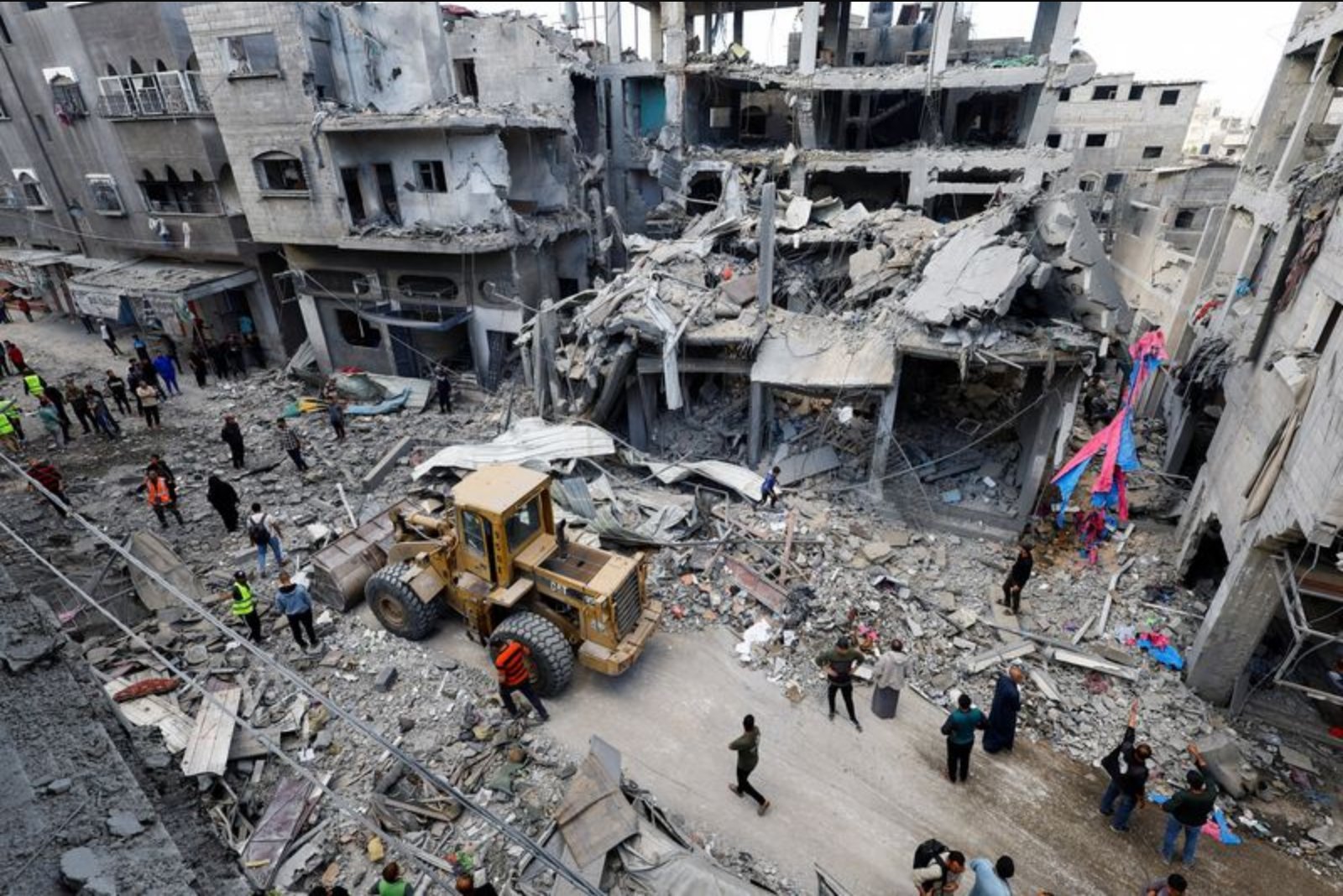
The lead envoy for Gaza appointed by the Board of Peace addressed the U.N. Security Council and warned that the enclave’s current fractured condition risks becoming permanent unless a ceasefire is implemented and sustained. He said the result could be more than two million people confined to under half of Gaza’s territory unless the cycle of fighting is broken.
U.S. President Donald Trump established the Board of Peace to supervise his plan to end the two-year war in Gaza and to coordinate rebuilding efforts. The envoy reported that efforts to carry out that plan have effectively stalled. According to the envoy, Hamas has declined to surrender its arms and to cede administrative control, while Israeli forces continue to occupy a substantial portion of Gaza - an area representing about 60% of the 365-square-kilometre (140-square-mile) territory.
He highlighted the population pressure already present in the territory prior to the conflict, noting that Gaza was among the most densely populated places in the world. He warned that, without change, the present conditions could calcify into a long-term arrangement in which Hamas retains military and administrative control over roughly two million people concentrated in less than half of Gaza's land.
"The risk is that the deteriorating status quo becomes permanent - a divided Gaza, Hamas holding military and administrative control over 2 million people across less than half the territory," he told the Security Council in New York.
He added that such an outcome would condemn another generation of Gazans to life in tents and would rule out credible Israeli security arrangements as well as any viable route to Palestinian statehood. "This is a version of the future that Israelis, Palestinians and the region should all fear and all mobilise to avoid," he said.
In his report to the Security Council, the envoy identified Hamas' refusal to relinquish weapons and control as the "principal obstacle" to implementing the Board of Peace plan. At the same time, he acknowledged ongoing violations of the ceasefire by Israeli forces, including killings, and pointed to a funding shortfall hampering reconstruction efforts.
"Reconstruction financing will not follow where weapons have not been laid down. No investment, no movement, no horizon," he told the council, underlining the link between disarmament and the flow of funds necessary to rebuild the territory.
Hamas spokesman Hazem Qassem responded to the envoy's remarks by calling them an "attempt to create justifications for the occupation’s escalation against the people of the Gaza Strip and for tightening the siege imposed on them."
Aid organisations say that deliveries of humanitarian supplies into Gaza remain limited despite assurances that assistance would increase under any ceasefire, illustrating continued constraints on the territory’s immediate relief needs even as questions about long-term reconstruction financing persist.
Financial and sector implications
The envoy's emphasis on reconstruction financing highlights how disarmament and security arrangements are tied directly to investment flows. A funding gap and sustained insecurity constrain sectors tied to rebuilding and services, including construction, infrastructure development, humanitarian logistics, and financial intermediaries that would channel reconstruction capital.