
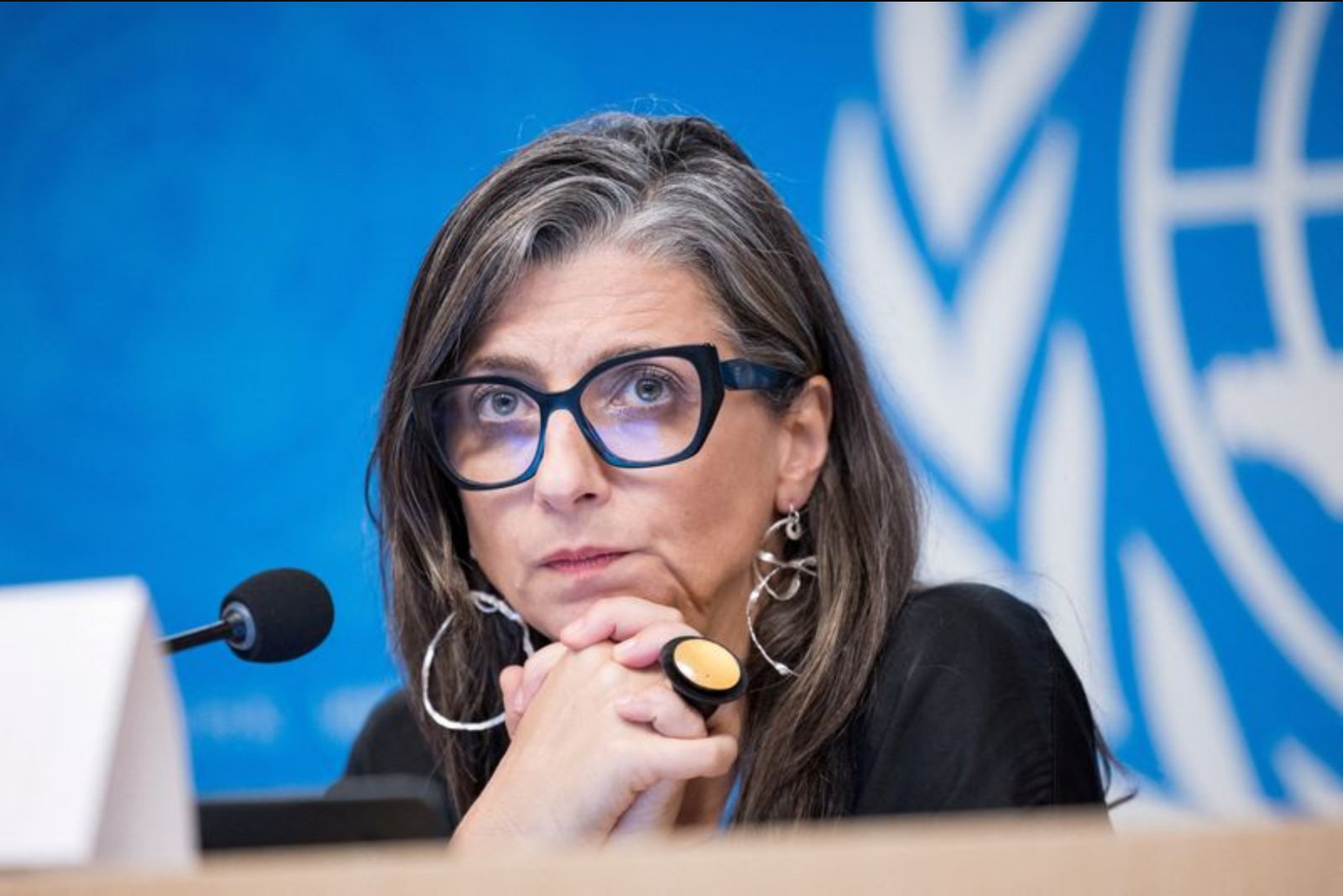
GENEVA, Feb 26 - The U.N. Special Rapporteur for human rights in the occupied Palestinian territories said on Thursday that a wave of attacks directed at her has been "toxic" and harmful to both her personal life and her ability to carry out her duties. The comments came after a number of European governments publicly called for her resignation following criticism she has levelled at Israel.
The rapporteur, Francesca Albanese, an Italian lawyer, told journalists via video link from Jordan that remarks she has made were taken out of context and misconstrued. She described the past days, weeks and months as personally damaging for her and her family.
A letter sent by the permanent mission of Israel in Geneva to the president of the U.N. Human Rights Council on 15 February stated that Albanese had flagrantly violated the U.N.'s code of conduct and that, "as long as she holds a U.N. mandate, she fundamentally undermines the credibility and moral authority of the United Nations." The letter also accused her of repeatedly sharing antisemitic tropes - an allegation Albanese has denied.
In recent weeks, Germany, France, Italy and other European states publicly demanded that Albanese step down because of her public statements about Israel. The ambassador to the French mission to the U.N. in Geneva reiterated concerns expressed by the French foreign minister about what he termed "extremely problematic statements" by a U.N. Special Rapporteur - language widely seen as referring to Albanese, though the ambassador did not name her.
Céline Jurgensen, addressing delegates at the U.N. Human Rights Council, underscored that "all those who speak under the auspices of the United Nations - including Special Rapporteurs - must exercise the restraint, moderation, and discretion required by their mandate." Her remarks highlighted expectations placed on independent experts operating within U.N. frameworks.
Albanese pointed to sanctions imposed on her by the United States in July as part of what she characterized as a broader strategy by the current U.S. administration to undercut international accountability mechanisms. The U.S. action followed a report to the Human Rights Council that the United States said reflected "illegitimate and shameful efforts to prompt (International Criminal Court) action against U.S. and Israeli officials, companies, and executives."
Responding to those measures and the broader campaign of criticism, Albanese said: "These smears, the sanctions, the continuous attacks from all over, from those very states who should use that energy as stamina to go after those who are accused by the highest court in the world of war crimes, crimes against humanity and genocide." She framed the criticism she faces as misdirected energy away from addressing allegations before international judicial bodies.
The president of the U.N. Human Rights Council, Sidharto Reza Suryodipuro, on Monday expressed concern and regret about personal attacks directed "against certain mandate holders" at the Council and reiterated his support for them. He stressed that their independence and protection remain essential to the "effectiveness, credibility and legitimacy of the council's collective action."
The episode has prompted public exchanges between member states and has raised questions within the Council about how to balance expectations of impartiality among mandate holders with the responsibilities they have when addressing highly contested conflicts. Albanese has denied the allegations of antisemitism and said her statements have been distorted in public debate.
Contextual note: The sequence of public statements, formal communications to the Council's president and the imposition of sanctions have created a high-profile dispute involving national missions, the rapporteur and U.N. leadership, with interlocutors expressing divergent views on the appropriate boundaries of commentary by U.N. mandate holders.