
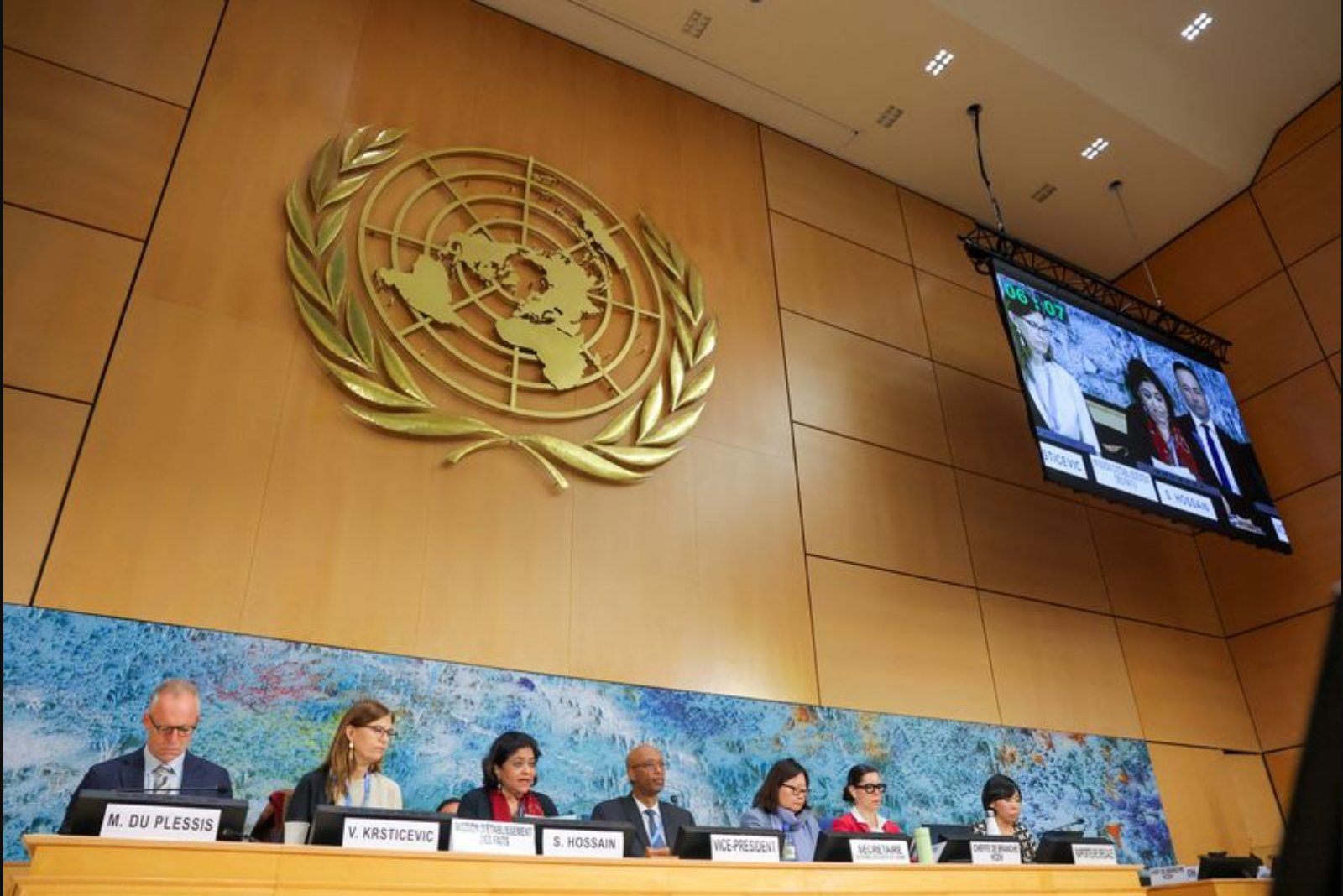
The chair of an independent U.N. inquiry told the U.N. Human Rights Council that investigators have found reasonable grounds to conclude an Israeli airstrike on a Tehran prison last year amounted to a war crime.
Sara Hossain, who leads the Independent International Fact-Finding Mission on Iran, said the mission concluded that Israeli forces - in carrying out airstrikes on Evin prison - intentionally directed attacks against a civilian object. The mission presented its latest report to the council, which documents civilian casualties and damage to detention facilities.
Iranian authorities reported that more than 70 people were killed when Israel struck Evin prison last June during a period of air combat with Iran. Hossain told the council her mission had recorded 80 deaths in the incident, including one child and eight women. The mission’s findings are based on interviews with victims and witnesses, analysis of satellite imagery and other documentary evidence, according to the report presented on Monday.
Evin prison is widely known for holding political prisoners. The facility has also sustained damage in the more recent U.S.-Israeli air strikes, the report said, raising acute concerns for the safety and welfare of detainees. The list of detainees at risk cited by the report includes an identified British couple.
"We found reasonable grounds to believe that, in carrying out the airstrikes on Evin prison, Israel committed the war crime of intentionally directing attacks against a civilian object..."
Hossain used the presentation to highlight the broader human toll and to warn about downstream effects of external military action. She condemned the mounting civilian deaths inside Iran and said the mission was worried that the ongoing campaign of bombings by U.S.-Israeli forces risked prompting Iranian authorities to intensify domestic repression. The report points to an increase in executions after the strikes last year as a concerning indicator.
"The core lesson drawn from our investigations in this context is clear: external military action does not provide accountability or bring meaningful change. Instead, it risks intensifying domestic repression ..." Hossain said in her remarks to the council.
Mai Sato, a U.N.-appointed rights expert focusing on Iran, also addressed the council and flagged serious humanitarian concerns in prisons. Sato said families have been unable to contact relatives rounded up during mass protests in January. She added that food and medicines are in increasingly short supply inside detention facilities, a condition that raises alarm for the wellbeing of those detained.
Iran’s ambassador to the U.N., Ali Bahreini, called on the international community to condemn the U.S.-Israeli strikes, and said they had killed more than 1,300 people in Iran. The mission’s report, and the concerns raised at the council, come as Israel has disengaged from the U.N. Human Rights Council; the country has left its seat empty and did not participate in the session.
There was no immediate response to requests for comment from Israel’s prime minister’s office, the Foreign Ministry or the military, according to the report’s notation of outreach attempts.
The U.N. mission’s findings center on documented casualties, physical damage to a prison housing political detainees, and the potential for further repression tied to continuing external military strikes. The presentation to the council combined witness testimony, imagery and documentary review in its assessment.