
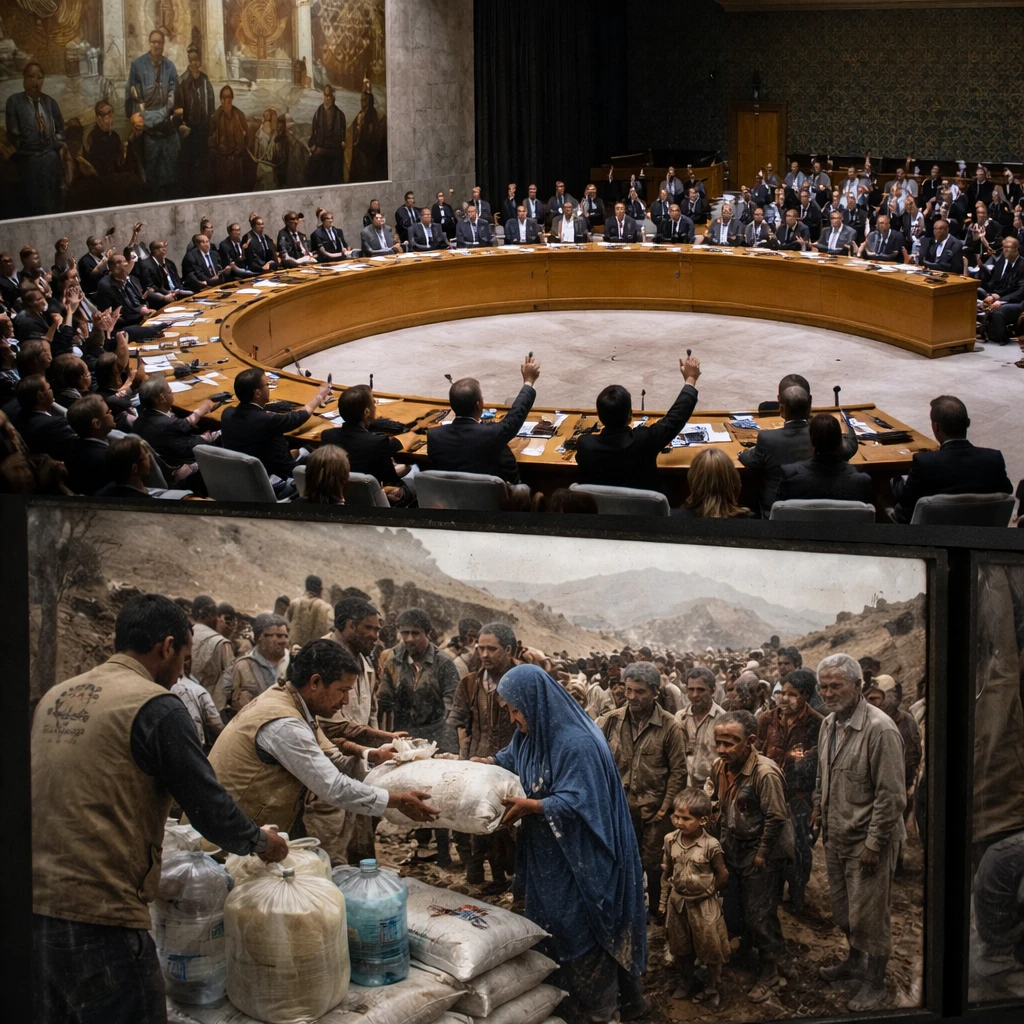
On March 16, the U.N. Security Council voted to prolong the mandate of the United Nations Assistance Mission in Afghanistan (UNAMA) for three months, a significantly shorter interval than the mission's usual year-long renewals. The abbreviated extension followed a U.S. request to conduct a review of assistance and engagement in Afghanistan under the Taliban.
UNAMA was established in 2002 after U.S.-led forces removed the first Taliban government. Since then, its mandate has typically been renewed annually, with the exception of a six-month extension in 2021 that aimed to assess what adjustments might be necessary after the Taliban regained control.
China, which carries the responsibility for drafting U.N. resolutions concerning Afghanistan, said the three-month extension was adopted with attention to "considering the desire of some Council members to make appropriate adjustments to UNAMA’s mandate" and to "ensure sufficient time for serious discussions and the adoption of a responsible decision."
At the Security Council meeting the previous week, the U.S. ambassador to the United Nations, Mike Waltz, highlighted several concerns. Waltz noted that UNAMA's budget is the largest of any special U.N. mission worldwide and said the Council "must consider carefully the funds we collectively provide for this mission’s budget." He also accused the Taliban of obstructing UNAMA's work, pointed to what he described as the group's use of "hostage diplomacy" in detaining innocent Americans, and criticized "unconscionable" restrictions on women’s rights.
An independent monitoring organisation, the Security Council Report, said China initially put forward a proposal for a one-year renewal that most Council members supported. However, a U.N. official told journalists that the United States would only accept a three-month technical rollover.
The extension takes place against a backdrop of severe humanitarian need across Afghanistan under Taliban rule. Georgette Gagnon, the temporary head of UNAMA, told the Council last week that Afghanistan faces "urgent" humanitarian requirements and that the crisis has worsened as funding has declined. Humanitarian agencies have outlined plans to assist 17.5 million Afghans in 2026 through an appeal seeking $1.71 billion; according to the U.N., this appeal is only around 10% funded at present.
The U.N. World Food Programme reports that more than 17 million Afghans, roughly one-third of the population, are confronting acute food shortages, including about 4.7 million people at emergency levels of hunger.
The United States has taken several policy positions referenced during the Council discussion. According to statements relayed at the meeting, Washington has reduced its worldwide aid budget in President Donald Trump’s second term, maintained sanctions on the Taliban, and declined to approve the return of approximately $4 billion of Afghan central bank assets held in a Swiss-based trust fund.
The short-term renewal of UNAMA's mandate leaves open the prospect of further debate in the Security Council about the scope, funding and operational latitude of the mission, while humanitarian appeals for Afghanistan remain significantly underfunded.