
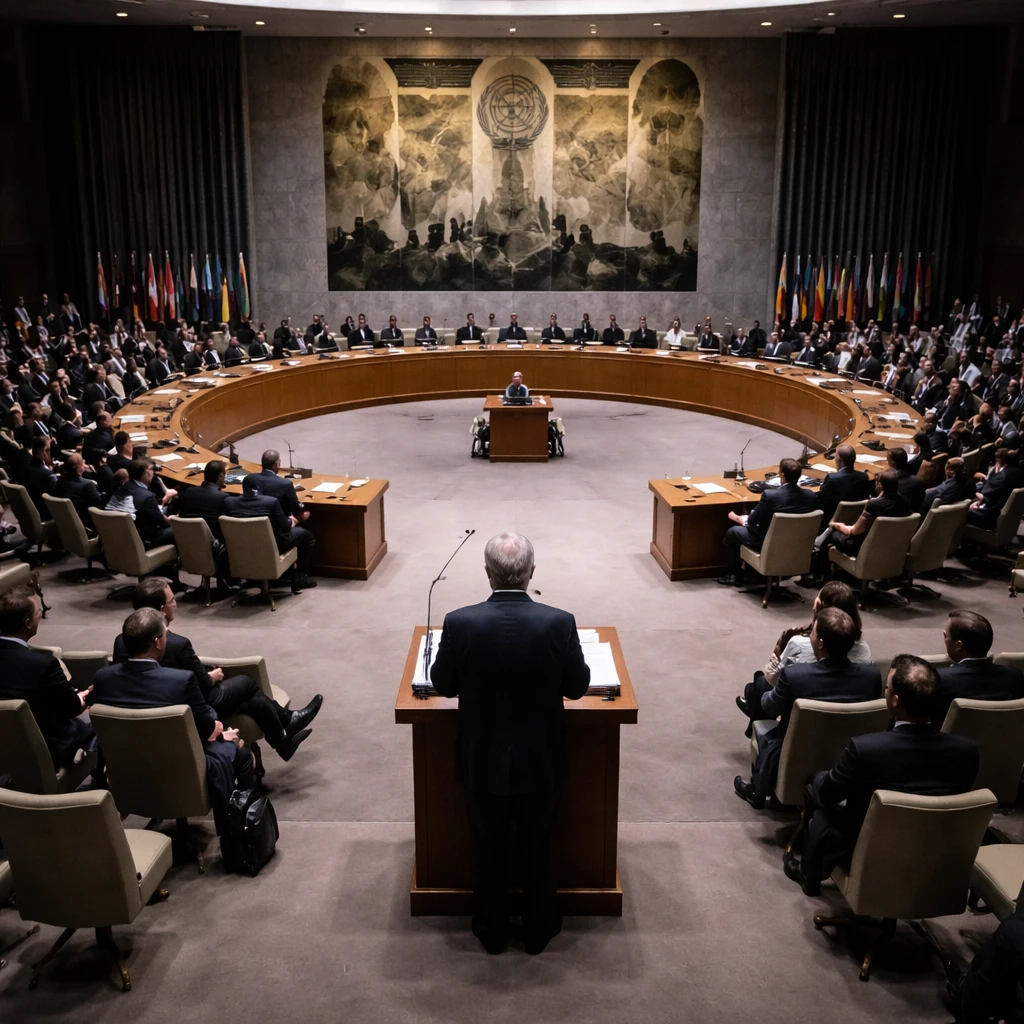
Four years after the onset of Russia's full-scale invasion of Ukraine, U.N. Secretary-General Antonio Guterres characterized the conflict as "a stain on our collective conscience" and reiterated an urgent plea for an immediate ceasefire.
Delivering remarks for a session of the United Nations Security Council convened to mark the fourth anniversary of the invasion, Guterres acknowledged ongoing efforts by the United States and other parties to secure an end to the fighting. He stressed, however, that more concrete steps were required to de-escalate hostilities and to create the diplomatic space necessary for negotiations.
Reading from prepared comments on his behalf, Rosemary DiCarlo, the U.N. under-secretary-general for peacebuilding, conveyed Guterres' assessment of the human toll and the broader consequences of the conflict. "We have witnessed the cascading consequences of this blatant violation of international law," he said, citing U.N. tallies that record more than 15,000 civilian deaths and over 41,000 civilians wounded since the war began. Among those killed or hurt, he said, are 3,200 children.
Guterres also sounded the alarm about direct threats to nuclear safety. He warned that continued fighting posed risks to the safe and secure operation of Ukraine's nuclear sites and declared: "This unconscionable game of nuclear roulette must cease immediately."
On the humanitarian front, the secretary-general urged U.N. member states to ensure full funding for aid operations. He underlined that any negotiated settlement must respect the sovereignty, independence and territorial integrity of Ukraine within its internationally recognized borders.
"Enough with the death. Enough with the destruction. Enough with the broken lives and shattered futures," he said. "It is time for an immediate, full and unconditional ceasefire - the first step toward a just peace that saves lives and ends the endless suffering."
Guterres' remarks combined a moral appeal with specific calls to action: concrete de-escalation measures, secure financing for humanitarian relief and a diplomatic outcome that upholds internationally recognized borders. The presentation to the Security Council was framed as both a commemoration of the passage of time since the invasion and as a renewed push for international measures to limit harm and pave the way for talks.
Summary of key elements in Guterres' address:
- Characterization of the war as "a stain on our collective conscience."
- U.N.-reported civilian casualties: over 15,000 killed and more than 41,000 injured, with 3,200 children among those killed or hurt.
- Warning about risks to Ukraine's nuclear sites and a demand that the "game of nuclear roulette" stop.
- Call for full funding of humanitarian assistance and insistence that any settlement must uphold Ukraine's sovereignty, independence and territorial integrity within its internationally recognized borders.